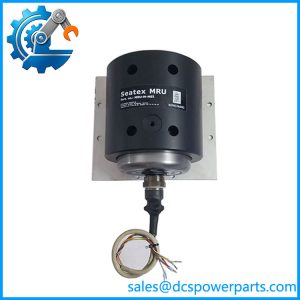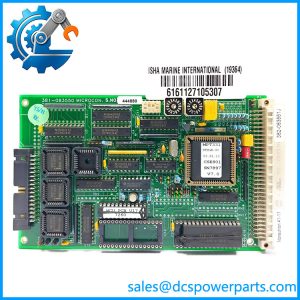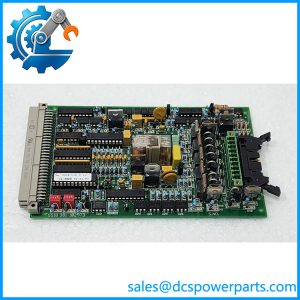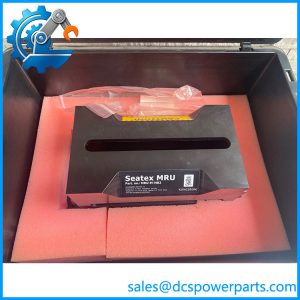
Description
Product Overview
The Kongsberg MRU-E-JB3 is the dedicated junction box used with Kongsberg’s 5th Generation Motion Reference Unit equipment. It should not be confused with the MRU sensor itself. Its job is to provide the practical electrical and signal interface between the sensor, power source, and external navigation, motion-compensation, or vessel-control equipment. Kongsberg documentation identifies the MRU-E-JB3 as the 5th Generation MRU junction box, with provisions for serial communication, analog outputs, Ethernet, and AC power input.
In a working installation, the Kongsberg MRU-E-JB3 sits between the MRU and the host system, reducing the wiring complexity around the sensor connection. The Seapath 130 documentation, for example, specifies the MRU-E-JB3 as the connection point for MRU power and signal wiring, including 24 V supply, differential serial signals, logical ground, and 1PPS input. This matters during replacement work because connector compatibility alone does not prove functional compatibility; the MRU generation, cable arrangement, interface configuration, and intended signal paths still need to be checked.
Physically, the junction box is approximately 226 mm long, 126 mm wide, and 90 mm high, with Kongsberg’s engineering drawing identifying the enclosure as IP66. The 5th Generation MRU architecture also introduced JB3 as the standard junction box, while Kongsberg notes that an older JB1 can still connect to a 5th Generation MRU with certain functionality unavailable. For a DCS system upgrade, vessel retrofit, or legacy replacement, that distinction is important: replacing the junction box without checking the complete MRU interface can leave required communication or analog functions unavailable.
Product Introduction
A common retrofit mistake is treating the junction box as nothing more than a passive terminal enclosure. The Kongsberg MRU-E-JB3 is part of the MRU interface architecture, accepting 100–240 VAC and providing the MRU with 24 VDC power while supporting Ethernet and serial connections.
For a DCS system upgrade or legacy replacement, the JB3 is particularly relevant when moving toward a 5th Generation Kongsberg MRU installation. The exact cable and interface configuration still needs to be checked against the installed MRU and host equipment.
Key Technical Specifications
| Parameter | Value |
|---|---|
| Product Model | MRU-E-JB3 |
| Manufacturer | Kongsberg Seatex |
| Product Type | MRU Junction Box / Interface Unit |
| Product Series | 5th Generation MRU |
| AC Input | 100–240 VAC, 50/60 Hz |
| MRU Output Supply | 24 VDC |
| Serial Communication | Supported; MRU interface documentation specifies serial connections |
| Ethernet | Supported |
| Analog Outputs | Supported through the JB3 architecture |
| Enclosure Protection | IP66 |
| Dimensions | Approx. 226 × 126 × 90 mm |
| Weight | Approx. 2.0–2.27 kg, depending on documented configuration |
| Primary Application | Marine MRU, Seapath, motion-reference and motion-compensation systems |
Kongsberg’s installation material identifies the JB3 as supporting serial communication, analog outputs, Ethernet, and AC power input. The published engineering drawing specifies IP66 protection and the approximate enclosure dimensions.
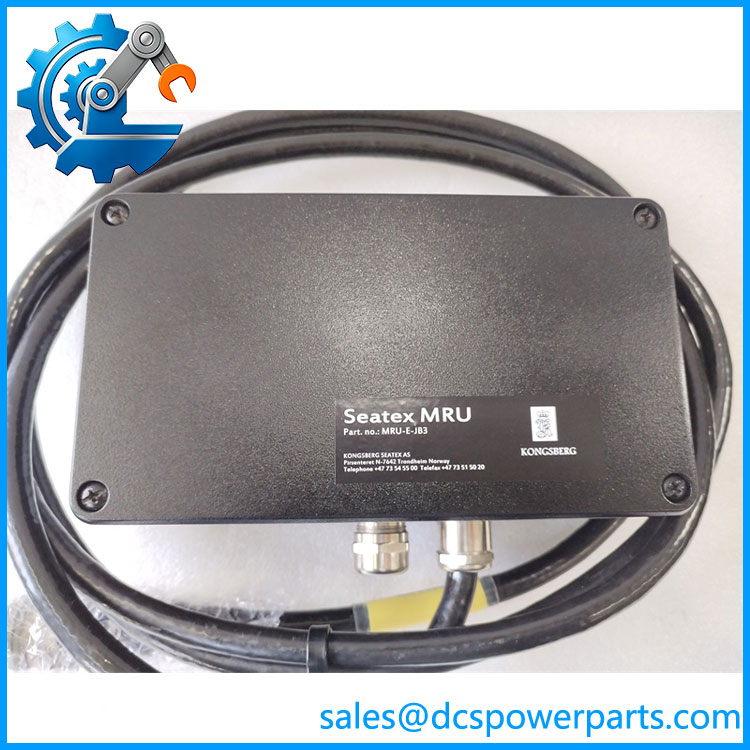
MRU-E-JB3
Related Products
- MRU 5 — A 5th Generation Motion Reference Unit designed to work within the JB3 interface architecture. The sensor performs the actual motion measurement; the handles the associated interface and power functions.
- MRU E — A 5th Generation MRU variant intended for marine motion-reference applications. Compatibility should be confirmed against the specific sensor revision and installed cabling.
- MRU H — Another 5th Generation MRU option. It uses the same broader JB3 ecosystem, but sensor performance and application characteristics differ from the MRU-E configuration.
- MRU-E-JB1 — Earlier-generation junction-box arrangement. Kongsberg states that a 5th Generation MRU can connect to the older JB1, but COM2 and analog outputs are not available through that arrangement.
- MRU-E-CS8 — 5th Generation MRU cable designed for the communication and power connections associated with the newer MRU architecture.
- MRU-T-015 — Test/interface cable used during certain MRU service and software-upgrade procedures. Kongsberg documentation also identifies the JB3 as an alternative connection path during upgrades.
- MRU-E-CE1 — Peer-to-peer Ethernet cable used when connecting an MRU directly to a PC during configuration or software-service work.
- MRU-E-P24 — 24 VDC power supply option used for direct MRU service configurations when the junction box is not being used.
Frequently Asked Questions
Can I replace an older MRU-E-JB1 with the ?
Not as a simple assumption. The JB1 and JB3 belong to different MRU-generation arrangements. Kongsberg specifically notes that a 5th Generation MRU can operate with an older JB1, but COM2 and analog outputs are unavailable through the JB1 configuration.
For a replacement project, verify:
- Installed MRU generation.
- Existing cable part number.
- Required serial interfaces.
- Whether analog outputs are required.
- Ethernet communication requirements.
Can I hot-swap the ?
Treat it as a powered electrical assembly, not a hot-swappable PLC I/O module. Power should be isolated before disconnecting or replacing the junction box unless the vessel’s approved installation procedure specifically permits live replacement.
The practical risk is not just connector damage. Incorrect termination or shield handling can produce unstable MRU data; Kongsberg’s HMS 300 documentation specifically discusses shield termination at the .
Does the support firmware v3.1?
The itself should not be treated like the MRU sensor firmware target. Kongsberg’s software-upgrade documentation describes upgrading the MRU sensor through MRC+ software, including specific MRU software revisions.
If a project specifies “firmware v3.1,” identify whether that requirement refers to the MRU sensor, MRC+ software, or another host component before approving the junction box as a replacement.
Will replacing the junction box erase my MRU configuration or motion logic?
Replacing the physical junction box does not inherently mean that the MRU sensor configuration is erased. The configuration resides in the associated system components rather than being equivalent to PLC logic stored in a conventional I/O module.
Still, record the existing configuration before replacement and verify communications afterward. This is especially important where vector-arm, output-format, IP, serial-port, or timing settings are involved.
Is a New Surplus authentic?
“New surplus” describes condition, not OEM provenance by itself. For procurement acceptance, inspect the Kongsberg/Seatex identification label, part number, revision information, enclosure condition, connectors, terminal hardware, and any visible manufacturing markings.
For a controlled spare, I would also document the part number and revision from the physical unit before installation. That creates a traceable baseline if the vessel later develops an interface fault.
Is the compatible with a 5th Generation Kongsberg MRU?
Yes, that is the intended product architecture. Kongsberg identifies the JB3 as the junction box supplied with its 5th Generation MRU system.
Compatibility should still be checked at the complete system level because cable type, MRU revision, host equipment, communication method, and required outputs affect the actual installation.
What warranty should I expect with a surplus ?
Warranty coverage depends on the seller’s specific supply terms and test procedure; it should not be inferred solely from the Kongsberg part number. For a critical marine spare, request the actual warranty period, DOA procedure, test scope, and whether the supplied unit has been electrically inspected before acceptance.