Description
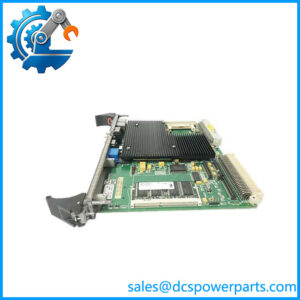
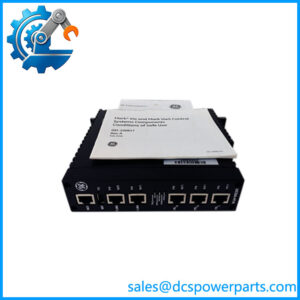
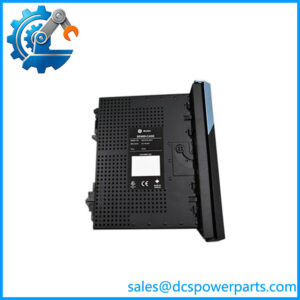
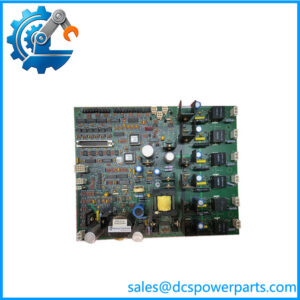
GE IS200EHPAG1ABB Exciter Gate Pulse Amplifier Board
Product Introduction
The General Electric IS200EHPAG1ABB is an Exciter Gate Pulse Amplifier Board used in GE EX2100 excitation-control systems. Its functional designation is EHPA, and its primary role is to receive gate commands from the ESEL Exciter Selector circuitry, amplify those commands, and provide the isolated firing signals required by the silicon-controlled rectifiers in the excitation power bridge. GE documentation indexes the IS200EHPAG1A as a Gate Pulse Amplifier, while part-specific technical records identify the G1 configuration with 100 mm SCR power-bridge applications.
The GE IS200EHPAG1ABB is not a general-purpose PLC output card and should not be treated as a conventional digital-output module. It sits much closer to the power-conversion stage of the excitation system. Available part-specific documentation describes six differential gate-command pairs arriving from the ESEL through a 37-pin D-sub connection, with six isolated SCR gate outputs routed through J1–J6. The board also participates in excitation-system monitoring, including current-conduction feedback, bridge cooling-air monitoring, line-filter fuse detection, and bridge-temperature monitoring.
For replacement work, the complete GE IS200EHPAG1ABB identifier matters. The EHPA family has related hardware variants, and the G1 configuration is specifically associated with the 100 mm system. The available technical record identifies a nominal 125 VDC source, with an approximately 80–140 VDC input range reported for the board. The original cabinet drawings should take precedence when verifying actual supply wiring, SCR bridge arrangement, connector assignments, and protection circuits.
Technical Specifications
| Parameter | Specification |
|---|---|
| Product Model | IS200EHPAG1ABB |
| Manufacturer | General Electric |
| Product Type | Exciter Gate Pulse Amplifier Board |
| Functional Acronym | EHPA |
| Product Family | EX2100 Excitation Control |
| Board Configuration | G1 |
| Primary Application | Excitation power-conversion cabinet |
| Power Bridge Application | 100 mm SCR bridge |
| Maximum SCR Gate Channels | 6 |
| Gate Command Inputs | 6 differential pairs |
| Gate Command Source | ESEL Exciter Selector |
| Gate Command Connector | 37-pin D-sub, J7 |
| SCR Gate Outputs | J1–J6 |
| Gate Output Type | Isolated SCR gate firing interface |
| Board Supply | 125 VDC nominal |
| Reported DC Supply Range | Approximately 80–140 VDC |
| Monitoring Functions | Current conduction, bridge airflow, line-filter fuse, bridge temperature |
| Control Architecture | Simplex or redundant EHPA applications are documented for the family |
| Installation Location | Power Conversion Cabinet |
| Primary System | GE EX2100 Excitation Control |
| Related Documentation | GEH-6632 and EX2100 excitation documentation |
| Operating Temperature | Verify from the applicable cabinet/system specification |
| Protection Rating | Board-level IP rating is not established; cabinet enclosure governs environmental protection |
The six-channel and 125 VDC figures above come from part-specific EHPA documentation. Do not substitute generic Mark VI I/O specifications for this board.
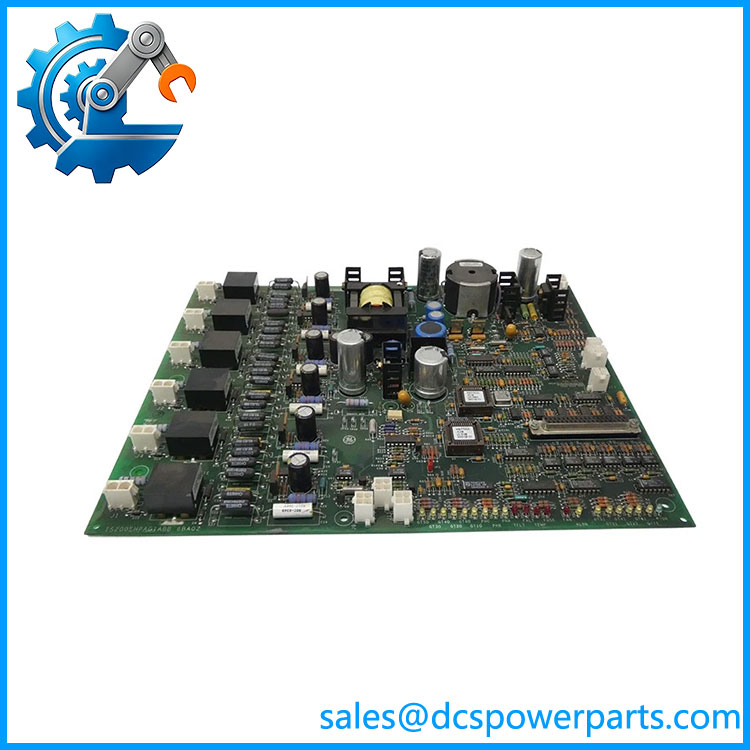
IS200EHPAG1ABB
Main Features and Engineering Considerations
1. Direct SCR gate-pulse function
The defining function of the IS200EHPAG1ABB is amplification and isolation of gate-firing commands for the excitation SCR bridge. The ESEL supplies the gate commands, while the EHPA provides the interface between low-level control circuitry and the SCR firing stage. This makes the board an important boundary between control electronics and the excitation power-conversion hardware.
2. Six SCR gate interfaces
Available documentation identifies six gate outputs, corresponding to the six SCR positions supported by the applicable bridge arrangement. Each gate connection should be treated as a dedicated circuit. Swapping gate/cathode wiring or using an incorrect connector assignment can prevent proper bridge firing and may create a serious power-stage fault.
3. 100 mm bridge compatibility
One of the most important identification points is the 100 mm SCR bridge application. The EHPA board should not be selected simply because another GE excitation board also carries the EHPA designation. The EGPA family is associated with different applications, while the EHPA is documented for 100 mm systems.
4. Monitoring beyond gate firing
The board also interfaces with several excitation-system feedback and monitoring functions. These include conduction-current feedback, cooling-air flow, line-filter fuse status, and bridge-temperature monitoring. A fault attributed to the EHPA therefore deserves circuit-level troubleshooting rather than immediate board replacement.
5. High-voltage maintenance considerations
The EHPA operates in the excitation power-conversion cabinet and interfaces directly with SCR gate circuitry. Maintenance personnel should follow the site-specific isolation and discharge procedure before removing connectors or the board. The presence of a nominal 125 VDC board supply does not represent the full electrical hazard of the surrounding excitation power stage.
6. Procurement and revision control
For procurement, specify in full. Check the board label, revision markings, ESEL compatibility, 100 mm SCR bridge arrangement, connector condition, and cabinet wiring. Do not use a listing that merely describes the item as an “analog I/O termination board”; that classification is inconsistent with the documented EHPA function and should not be used for engineering selection.
Application Scenarios
- GE EX2100 excitation-control systems
- Generator excitation power converters
- 100 mm SCR excitation bridges
- SCR gate-firing control
- Excitation power-conversion cabinets
- Generator voltage-regulation systems
- Simplex excitation configurations
- Redundant excitation-control configurations
Engineer’s Guide: Field Pitfalls
Do not treat as a normal digital-output board.
It is a gate-pulse amplifier associated directly with the SCR power bridge.
Verify the 100 mm bridge arrangement.
The EHPA family is specifically associated with 100 mm systems. A visually similar excitation board may have a different power-stage application.
Check the ESEL interface.
The gate commands originate from the ESEL Exciter Selector circuitry. A gate-firing problem may originate upstream rather than in the EHPA itself.
Verify all six gate circuits.
The board supports up to six SCR gate outputs. Connector identification and gate/cathode wiring should be checked against the original cabinet drawings.
Do not assume the surrounding system is 125 VDC.
The approximately 125 VDC figure refers to the EHPA board supply. It should not be interpreted as the voltage of the excitation power bridge.
Inspect monitoring circuits before condemning the board.
Conduction feedback, cooling-air status, filter-fuse detection, and temperature monitoring are part of the EHPA interface. A problem in any connected circuit can produce symptoms that appear to be board-related.
Match the full suffix.
Use rather than ordering only IS200EHPAG1A. Hardware revision and modification codes can matter in legacy excitation equipment.
Frequently Asked Questions
What is ?
is a General Electric Exciter Gate Pulse Amplifier Board used in the EX2100 excitation-control system. Its primary function is to amplify and isolate gate commands for SCRs in the excitation power bridge.
What does EHPA stand for?
EHPA identifies the Exciter High Voltage Pulse Amplifier / Exciter Gate Pulse Amplifier function within the excitation architecture.
How many SCRs can the board control?
The documented EHPA configuration provides gate-pulse interfaces for up to six SCRs.
What board sends the gate commands?
The gate commands are associated with the ESEL Exciter Selector board. The EHPA then amplifies and routes the firing signals to the SCR gate circuits.
What is the EHPA board used for?
It is used in the excitation power-conversion cabinet for SCR gate firing and associated excitation bridge monitoring. The IS200EHPAG1A family is specifically documented as a Gate Pulse Amplifier for .
What supply voltage is associated with ?
Part-specific documentation reports 125 VDC nominal, with an approximately 80–140 VDC range. Verify the actual cabinet supply before applying power to a replacement board.
Is the same as an analog I/O termination board?
No. Some secondary listings incorrectly classify the part that way. The available EHPA documentation identifies it as a Gate Pulse Amplifier Board associated with excitation control and SCR firing.
What should be checked before purchasing a replacement?
Confirm the complete part number, board revision, 100 mm SCR bridge configuration, ESEL interface, six gate circuits, connector condition, and the cabinet-specific supply and monitoring wiring.
Procurement Note
For a legacy installation, should be treated as power-conversion interface hardware, not generic control I/O. The critical compatibility checks are the EHPA/G1 configuration, 100 mm SCR bridge, ESEL interface, six gate circuits, board revision, and cabinet wiring. A functional test should cover the gate-pulse path and associated feedback/monitoring circuits before the board is returned to service.