Description
Horner Electric HE693SNP232R | SNP to RS-232 Adapter
Key Technical Specifications
| Parameter | Specification |
|---|---|
| Product Model | HE693SNP232R |
| Base Adapter Model | HE693SNP232 |
| Manufacturer | Horner Electric / Horner APG |
| Product Type | SNP-to-RS-232 Adapter |
| PLC Interface | 15-pin SNP port |
| Serial Interface | 9-pin RS-232 |
| PLC Connection | CPU rack power-supply programming port |
| Power Source | PLC programming port |
| Nominal Adapter Supply | 5 VDC |
| Documented Supply Current | 25 mA maximum in original documentation; later revision records specify up to 100 mA |
| RS-232 Signals | TXD, RXD, GND, CTS, RTS |
| SNP Signals | Differential TX/RX and hardware-handshake signals |
| Communication Role | Physical/interface conversion |
| Typical Host | PC or other RS-232 equipment |
| Application | GE Fanuc SNP programming/communications |
| Product Status | Legacy |
The original HE693SNP232 documentation states that the adapter receives power directly from the programming port and provides a 15-pin SNP connection and 9-pin RS-232 connection. A later MAN0079 revision specifies the same basic architecture while giving a higher maximum current figure, so the actual adapter revision should be checked if power loading is important.
Product Introduction
The Horner Electric HE693SNP232R is a compact serial interface adapter designed for connecting RS-232 equipment to the SNP communications/programming interface used by GE Fanuc PLC systems. The adapter bridges the PLC-side 15-pin SNP connection and a conventional 9-pin RS-232 port, allowing a programming computer or other serial device to communicate with the PLC.
This is not a generic RS-232 level converter. Its practical purpose is tied to the SNP interface and pinout used by the GE Fanuc/Horner control environment. Horner documentation also identifies the HE693SNP232 as suitable for program loading on certain GE Fanuc Series 90-30-related systems.
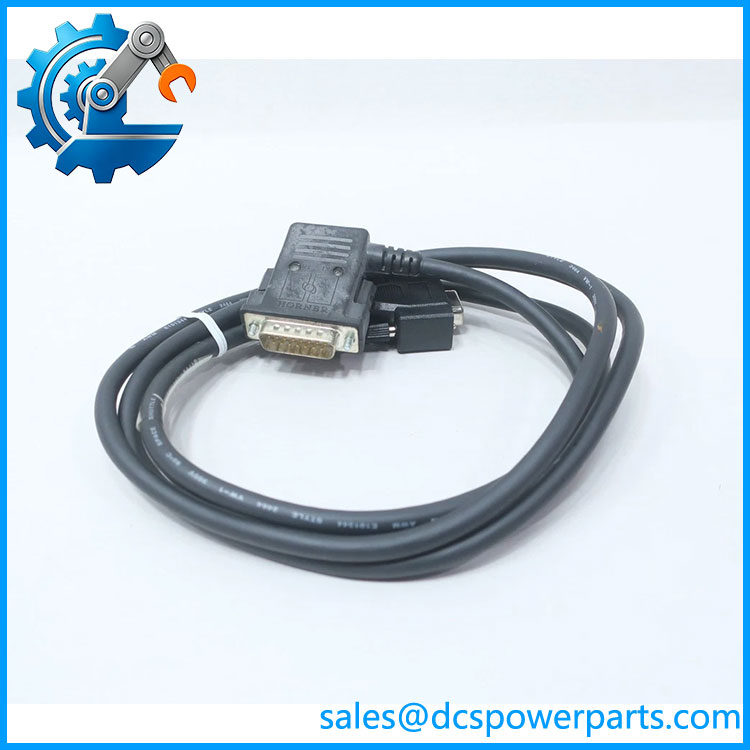
HE693SNP232R
Engineering Pain Point
The main field risk is replacing this adapter with a generic RS-232/RS-485 converter. Although the underlying electrical signaling can look similar, the HE693SNP232 has a specific 15-pin SNP pinout, differential transmit/receive connections, and hardware-handshake signals. A converter that only supports TX/RX/GND may therefore fail even though the PC recognizes the serial port.
Typical Applications
- GE Fanuc Series 90-30 programming: Connects a PC running compatible programming software to the PLC programming interface.
- PLC maintenance: Provides a serial connection for troubleshooting, configuration, and program transfer.
- Legacy controller servicing: Useful when an installed GE Fanuc system still depends on its SNP communications interface.
- Horner legacy equipment: The adapter is also referenced in Horner documentation for connecting RS-232 equipment to compatible controller communications ports.
Technical Pitfalls to Avoid
- Do not treat it as a generic RS-485 converter.
The PLC-side interface is a defined SNP connection with dedicated differential and handshake signals. - Verify the 15-pin connector wiring.
The documented SNP interface uses separate TXD+/TXD− and RXD+/RXD− connections, together with CTS and RTS signals. - Check RS-232 hardware handshaking.
The 9-pin side provides TXD, RXD, GND, CTS, and RTS. A simplified three-wire serial cable may not reproduce the required communication arrangement. - Do not assume the current specification from one manual revision applies to every unit.
The original documentation lists a maximum of 25 mA at 5 VDC, while a later revision records up to 100 mA at 5 VDC. For an existing installation, use the adapter revision and current documentation applicable to that hardware. - Separate the adapter from the programming software.
HE693SNP232R provides the communications interface; it does not replace the GE Fanuc programming software or establish the PLC’s application configuration. - Check the exact assembly designation.
Horner’s official documentation identifies the base product as HE693SNP232, while secondary records specifically list HE693SNP232R as an SNP-to-RS-232 adapter/cable assembly. For a procurement replacement, compare the physical unit, connector arrangement, and label rather than assuming every suffix is electrically identical.
Related Products
- Horner HE693SNP232 — Base SNP-to-RS-232 adapter documented by Horner; this is the core adapter designation associated with HE693SNP232R.
- Horner HE693SNPCBL — SNP-related cable assembly documented alongside the adapter.
- Horner HE693XTADP — XT adapter associated with the documentation for older 25-pin RS-232 equipment.
- Horner HE693SNPMPX — SNP multiplexer for GE Fanuc Series 90; it performs a different communications function.
- Horner HE693SNP900 — SNP interface module in the same legacy HE693 communications family.
- Horner HE693RSM232 — Another Horner serial interface adapter; Horner documentation specifically distinguishes it from for certain debugging applications.
- GE Fanuc Series 90-30 CPU — PLC platform commonly using the SNP programming interface.
- Horner HE693SER300 — Legacy sequence-of-events recorder that uses the for PC-to-RS-485/PLC communications during configuration.
Procurement and Replacement Note
For , verify the complete label, 15-pin SNP connector, 9-pin RS-232 interface, cable/assembly arrangement, and hardware revision before approving a replacement.
The important distinction is that this is a protocol/interface-specific PLC communications adapter, not simply an RS-232 cable. Horner’s legacy documentation confirms the architecture, while the detailed pinout shows dedicated differential transmit/receive and hardware-handshake connections.
For an installed GE Fanuc system, retain the original cable configuration whenever possible. If replacing the unit with another interface device, verify the SNP pinout, RS-232 handshaking, 5 VDC power source, and programming-software compatibility before attempting PLC communication.