Description
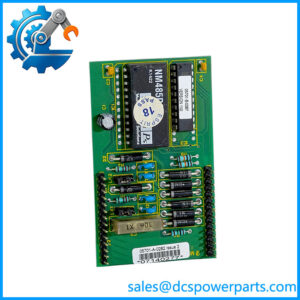
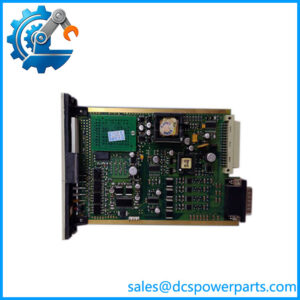
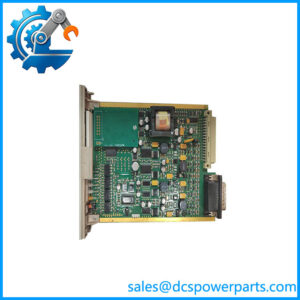
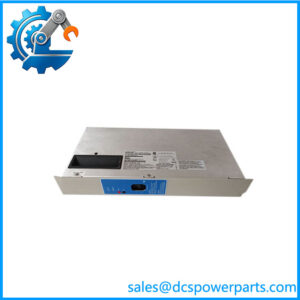
Honeywell FC-RUSIO-3224 Universal Safe I/O Module
Product Overview
The Honeywell FC-RUSIO-3224 is a 32-channel Universal Safe I/O device used within Honeywell Safety Manager architectures. Its defining characteristic is that the 32 channels are not permanently divided into fixed digital-input, digital-output, or analog-I/O groups. Honeywell documents each channel as configurable through Safety Builder for digital input, digital input with loop monitoring, digital output with loop monitoring, active 0–20 mA or 4–20 mA analog input, or active 0–20 mA or 4–20 mA analog output. This gives the engineering team considerably more flexibility when designing or modifying safety-system I/O than a collection of fixed-function cards.
In the Honeywell Safety Manager architecture, the FC-RUSIO-3224 operates as a remote safety I/O device rather than as a standalone PLC controller. It communicates with the Safety Manager Controller through two 100 Mbaud Ethernet links and is installed on a compatible I/O Termination Assembly. Honeywell states that the RUSIO-3224 can be used for applications up to SIL 3 when the overall safety system and application are designed in accordance with the applicable IEC 61508/61511 requirements. For redundant operation, Honeywell specifies two RUSIO-3224 modules.
The electrical side is equally important during procurement. The module uses a 24 VDC supply with a documented -15% to +30% operating range, while the module itself can draw up to 300 mA excluding field load according to the hardware data reproduced from the Honeywell reference. The documented operating range is -40°C to +70°C outside the module, with internal temperature limits extending to +90°C.
Product Introduction — Non-Templated
A fixed-function safety I/O card forces the system designer to decide the I/O mix before the cabinet is built. FC-RUSIO-3224 takes a different approach: its 32 channels are software-configurable, allowing the same hardware platform to handle discrete and analog safety signals within the supported channel functions. That is particularly useful when safety-system I/O requirements change between project phases.
For a Safety Manager upgrade, cabinet modification, or legacy replacement, the critical issue is not simply finding another . The module belongs on a compatible IOTA and must match the Safety Builder / Safety Manager software environment, hardware revision, redundancy arrangement, and field configuration. Honeywell documentation also records historical issues tied to specific hardware revisions, so revision control should be part of the procurement check.
Key Technical Specifications
| Parameter | Value |
|---|---|
| Product Model | FC- |
| Manufacturer | Honeywell |
| Product Type | Universal Safe I/O device |
| Channel Count | 32 |
| Supply Voltage | 24 VDC, -15% to +30% |
| Maximum Supply Current | 300 mA, excluding field load |
| Digital Input | Configurable, with or without loop monitoring |
| Digital Output | Configurable, with loop monitoring |
| Analog Input | Active 0–20 mA or 4–20 mA |
| Analog Output | Active 0–20 mA or 4–20 mA |
| Safety Capability | Applications up to SIL 3 under applicable IEC 61508/61511 architecture |
| Controller Communication | Two 100 Mbaud Ethernet links |
| Configuration Software | Honeywell Safety Builder |
| Installation | Honeywell IOTA |
| Operating Temperature, Outside | -40°C to +70°C |
| Operating Temperature, Inside | -40°C to +90°C |
| Storage Temperature | -40°C to +85°C |
| Relative Humidity | 10–95%, non-condensing |
| Pollution Degree | 2 or better |
| Dimensions | Approximately 145 × 165.1 × 72.4 mm |
| Weight | Approximately 0.66 kg |
The 32-channel universal configuration and dual Ethernet architecture are directly documented by Honeywell. The 24 VDC supply range, current consumption, dimensions, and weight are also consistent with published hardware-reference data.
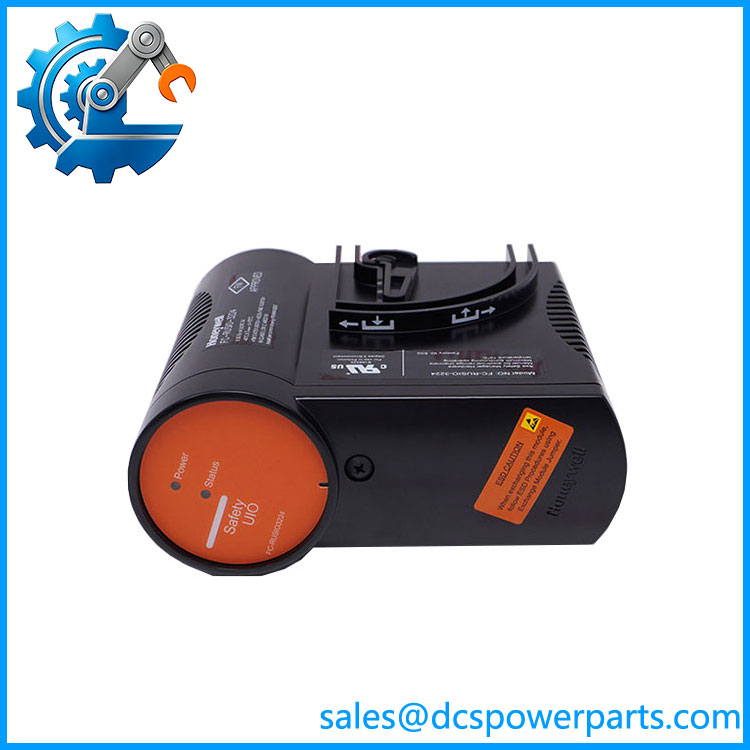
FC-RUSI0-3224
Major Features / Practical Advantages
32 Universal Safety I/O Channels
The most significant engineering characteristic is the universal channel architecture. A single FC- provides 32 configurable channels rather than forcing the project to stock separate fixed-function safety modules for every signal type. Each channel can be configured for supported digital or analog functions through Safety Builder.
That flexibility has a practical procurement benefit. Spare strategy can be simplified because one module can cover several supported I/O requirements. It does not, however, mean every possible signal can be connected to every channel without checking the application rules, field termination hardware, loop-monitoring requirements, and Safety Builder configuration.
Safety-Related Architecture
Honeywell identifies the for applications up to SIL 3 under IEC 61508/61511. This should not be interpreted as “the module alone makes the installation SIL 3.” The achieved safety integrity level belongs to the complete safety function, including sensors, logic solver, I/O, final elements, diagnostics, proof-test procedures, and application engineering.
That distinction matters during a replacement project. Installing a physically compatible spare does not by itself demonstrate that the safety function remains valid.
Dual Ethernet Communication
The provides two 100 Mbaud Ethernet links for communication with the Safety Manager Controller. This is part of the module’s safety-system communication architecture and should not be confused with a generic Ethernet/Modbus interface. Honeywell’s hardware reference specifically identifies the links as communication paths to the Safety Manager Controller.
For procurement, this means that a generic 24 VDC remote-I/O module cannot substitute for the FC- simply because it has the same number of channels.
Honeywell IOTA Installation
The module is designed to be installed on an I/O Termination Assembly. Honeywell’s documentation identifies the as a device requiring an IOTA rather than a standalone field-wiring module.
This is one of the first things to verify when replacing a failed unit. A loose module purchased without checking the existing IOTA and cabinet configuration can create a mechanical or wiring problem even when the module number itself is correct.
24 VDC Field Architecture
The FC- uses a 24 VDC supply with an operating tolerance of -15% to +30%. Published hardware information specifies maximum module supply current of 300 mA excluding field load.
The field-load qualification is important. The 300 mA figure should not be used as the complete cabinet power-budget value because external field devices and their associated loads are not included.
Temperature and Cabinet Environment
The documented outside-module operating range extends from -40°C to +70°C, while the inside-module temperature specification reaches +90°C. Storage is specified from -40°C to +85°C, with 10–95% relative humidity without condensation.
For high-temperature cabinets, do not evaluate the module using ambient room temperature alone. Internal dissipation, field loads, cabinet airflow, and neighboring modules can affect the actual temperature experienced by the electronics.
Hardware Revision Control
Honeywell’s historical Safety Manager notifications specifically identify FC- and FC-RUSLS-3224 hardware revision 1.4 or lower in a documented power-cycle issue. This is a good example of why procurement should record the complete hardware revision rather than accepting a part number-only match.
A replacement with a different hardware revision is not automatically bad, but it should be checked against the applicable Honeywell release and compatibility documentation before installation.
Related Products
- Honeywell FC-RUSLS-3224 — Related Safety Manager safe I/O device. It belongs to the same broader RUSIO/RUSLS family, but the exact application and configuration should be checked before treating it as an interchangeable spare. Honeywell’s own documentation groups the two products in Safety Manager notifications.
- Honeywell FC-PDIO01 — Safety digital I/O module for applications where fixed digital safety I/O is required rather than universal analog/digital channel configuration. Honeywell lists it alongside the in the Safety I/O architecture.
- Honeywell FC-PUIO01 — Another Universal Safety I/O module within the Safety Manager/Universal Marshalling architecture. Verify I/O capacity, IOTA, and system release before substitution.
- Honeywell FC-IOTA-(N)R24 — I/O Termination Assembly associated with the FC- in Honeywell’s Universal Marshalling documentation. It is infrastructure for the module rather than a functional replacement for it.
- Honeywell Safety Manager Controller — The safety controller communicating with the through its Ethernet links. The is an I/O device within this architecture, not the Safety Manager logic solver itself.
Frequently Asked Questions
Is FC- an analog input module?
Not specifically. It is a universal safety I/O module. Honeywell documents 32 channels that can be configured as digital inputs, monitored digital inputs, monitored digital outputs, active 0–20 mA/4–20 mA analog inputs, or active 0–20 mA/4–20 mA analog outputs.
Can I use only one FC- for a redundant configuration?
No, not when implementing the documented redundant RUSIO configuration. Honeywell specifies to achieve redundancy.
Can I hot-swap this module?
Do not treat it as an unrestricted hot-swap device. Honeywell’s hardware procedure specifies turning the applicable IOTA POWER switch off before removing the module, loosening the locking screw, operating the removal levers, and then removing the module. Installation follows the reverse sequence with power off until the module is secured.
For an operating safety system, follow the approved maintenance/bypass procedure for the specific Safety Manager installation.
Does FC- support firmware v3.1?
The part number alone does not establish firmware v3.1. Honeywell publishes Safety Builder and Safety Manager release information associated with FC-. For example, Honeywell’s documentation lists FC- version information for specific Safety Manager/Safety Manager SC releases.
For a replacement, record the installed module’s hardware revision and software environment instead of assuming firmware compatibility from the model number.
Can I connect the directly to a standard PLC?
It should not be treated as a generic PLC remote-I/O module. Honeywell documents the two 100 Mbaud Ethernet links specifically for communication with a Safety Manager Controller. The module’s safety behavior is tied to the Honeywell Safety Manager architecture and Safety Builder configuration.
What is the supply voltage?
The documented supply is 24 VDC with -15% to +30% tolerance. Published data also specify a maximum module supply current of 300 mA excluding field load.
Can a New Surplus FC- be installed as a direct replacement?
It can be considered only after configuration and revision checks. Verify the hardware revision, Safety Manager/Safety Manager SC release, Safety Builder compatibility, IOTA type, redundancy arrangement, channel configuration, and stored application data. A part-number match alone is not sufficient evidence for a safety-system replacement.
Procurement Note
For procurement, the minimum verification package should include:
- Complete part number and nameplate photograph.
- Hardware revision.
- Existing Safety Manager or Safety Manager SC release.
- Safety Builder version used for the project.
- IOTA part number and cabinet arrangement.
- Redundant or non-redundant architecture.
- Channel-by-channel I/O configuration.
- Existing safety application/configuration backup.
- Physical connector and locking-hardware condition.
- Power-cycle and diagnostic history where available.
Do not accept descriptions such as “32 inputs / 24 outputs” as an identification of this device. Honeywell’s own hardware reference defines the FC- as 32 universal safety I/O channels, with the channel function established through Safety Builder.
For a safety-system spare, the hardware revision is also worth recording. Honeywell has published historical notifications specifically referencing FC- hardware revisions, which makes revision-level verification more than a paperwork exercise.