Description
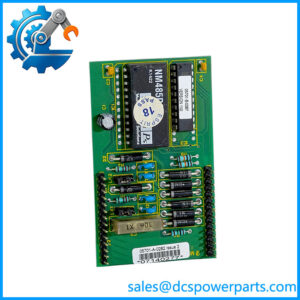
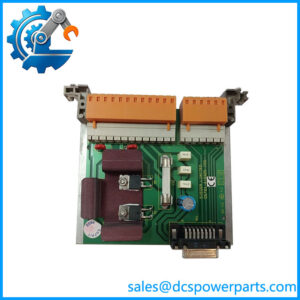
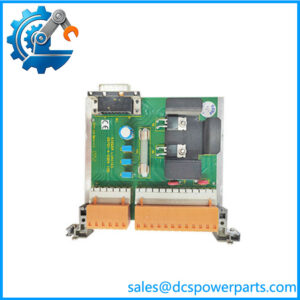
The Honeywell 51306673-100 EPNI is an Enhanced Process Network Interface module designed for Honeywell legacy distributed control systems. It provides network communication capability for exchanging process information between system nodes, operator stations, and other control components.
The Honeywell 51306673-100 EPNI is part of the communication layer of the Honeywell TDC 3000/TPS architecture. Unlike controller modules that execute control strategies or I/O modules that connect directly to field instruments, the EPNI manages system-level communication paths required for coordinated operation of distributed control components.
The Honeywell 51306673-100 EPNI is commonly maintained in long-running industrial installations where Honeywell legacy systems remain active. Replacement requires verification of system revision, network configuration, node addressing, and compatibility with the installed DCS software environment.
Key Technical Specifications
| Parameter | Specification |
|---|---|
| Product Model | EPNI |
| Part Number | 51306673-100 |
| Manufacturer | Honeywell |
| Product Family | TDC 3000 / TPS |
| Product Type | Enhanced Process Network Interface Module |
| Primary Function | Process network communication interface |
| System Architecture | Honeywell distributed control system |
| Network Function | Data exchange between DCS nodes |
| Communication Role | Network interface and message handling |
| Installation | Honeywell card file / control rack |
| Backplane Interface | TDC 3000 internal bus |
| Power Supply | Rack supplied DC power |
| Diagnostics | Module status and communication monitoring |
| Configuration | System database and software dependent |
| Application Areas | Refining, chemical processing, power generation, manufacturing |
| Operating Environment | Industrial control cabinet |
Product Introduction
Honeywell 51306673-100 EPNI Product Introduction
Honeywell 51306673-100 EPNI is a communication interface module used within Honeywell TDC 3000 and TPS distributed control system environments. It provides the connection layer required for communication between process control nodes, allowing information exchange across the installed automation architecture.
The Honeywell 51306673-100 EPNI supports system-level communication functions rather than direct field signal processing. It operates within the DCS infrastructure to maintain communication paths between controllers, operator interfaces, engineering tools, and other network-connected components.
The Honeywell 51306673-100 EPNI is typically found in process plants where Honeywell TDC 3000 systems continue to operate as part of critical production infrastructure. These systems often remain in service due to extensive application development, validated control strategies, and significant field integration.
For replacement activities, engineers should confirm the installed EPNI revision, system software compatibility, network topology, and configuration database. Communication hardware is closely linked with the overall DCS architecture, so a direct hardware swap may require additional system verification.
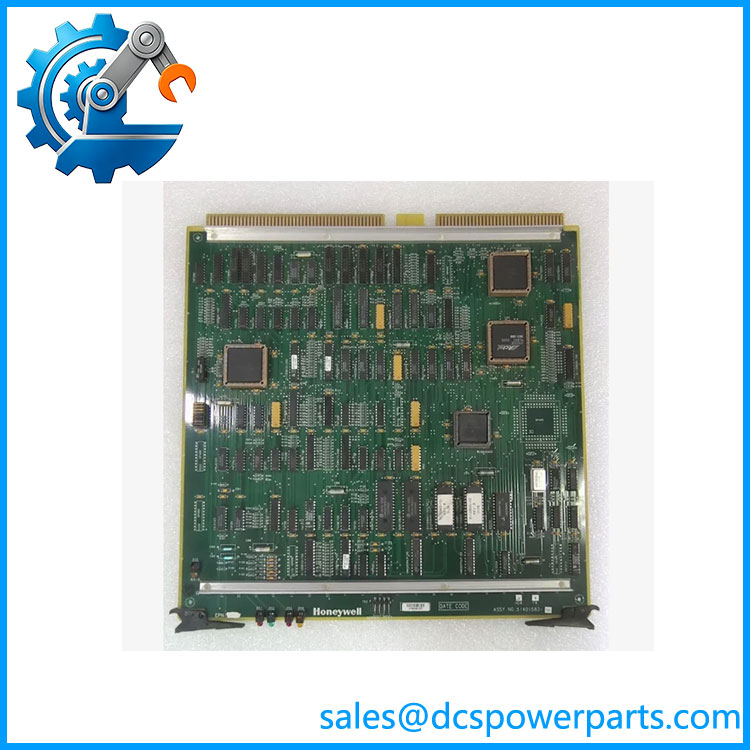
51401583-100
Application Scenarios & Field Pitfalls (The Engineer’s Perspective)
Engineering Pain Point
A legacy Honeywell DCS begins showing intermittent communication alarms, missing node data, or delayed operator updates. Individual controllers may appear normal, but network communication faults affect multiple areas of the plant.
A failed or unstable network interface module can create symptoms across the entire control system because many functions depend on reliable data exchange.
Typical Applications
Oil & Gas Processing
Used for:
- Refinery process networks
- Compressor control systems
- Pipeline monitoring
- Operator station communication
Chemical Industry
Applied for:
- Batch processing systems
- Process unit coordination
- Alarm and event communication
Power Generation
Used in:
- Boiler control systems
- Turbine auxiliary systems
- Plant monitoring networks
Manufacturing Facilities
Applied for:
- Continuous production systems
- Legacy automation networks
- Distributed operator interfaces
Technical Pitfalls to Avoid
1. Verify System Compatibility
Before replacement, confirm:
- TDC 3000/TPS software revision
- EPNI hardware revision
- Network configuration
- Node assignment
2. Check Backplane and Rack Condition
Communication problems may originate from:
- Loose card connections
- Aging rack connectors
- Power instability
- Backplane degradation
3. Confirm Network Configuration
Review:
- Node addresses
- Communication parameters
- Network topology
- Connected system devices
4. Record Existing Settings
Before removing the module:
- Document configuration parameters
- Record module location
- Verify replacement revision
- Save available system information
Related Products
- Honeywell 51401583-100 EPNI
Earlier EPNI module variant used in Honeywell TDC 3000 communication architectures. - Honeywell 51306672 Series Communication Modules
Related network interface hardware used within Honeywell process control systems. - Honeywell 51401584 Series Network Interface Modules
Associated communication hardware for legacy TDC 3000/TPS environments. - Honeywell TDC 3000 LCN Modules
Network and control modules supporting Honeywell Local Control Network systems. - Honeywell TPS Process Network Hardware
Communication components used for maintaining legacy distributed control installations. - Honeywell TDC 3000 Distributed Control System
Classic process automation platform widely used in continuous industrial operations.