Description
HITACHI AEH020A
Product Introduction
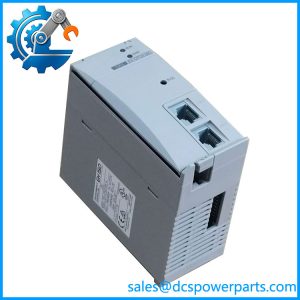
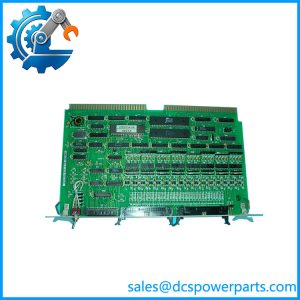
The HITACHI AEH020A is identified in available industrial automation records as a Hitachi analog input circuit card used for industrial control applications. Its primary role is to receive analog field information and make that information available to the associated control system for monitoring, regulation, sequencing, or process supervision. Exact application architecture should be confirmed against the equipment documentation because publicly available references do not provide a sufficiently reliable original Hitachi datasheet for the complete AEH020A specification. One independent automation spare-parts source specifically identifies the unit as a “HITACHI ANALOG INPUT” card, which is a more credible functional description than several generic listings that incorrectly classify the same model as a DCS processor or general-purpose control module.
The HITACHI AEH020A should therefore be treated as an input-side automation component rather than assumed to be a standalone PLC, CPU, communication processor, or drive. Hitachi’s broader MICRO-EH documentation confirms that the company’s small PLC architecture uses dedicated input/output functions and analog capabilities, but that general information should not be used to assign MICRO-EH compatibility to AEH020A without checking the original system documentation.
From a maintenance perspective, the HITACHI AEH020A is best handled as an exact-replacement component. The card’s connector arrangement, electrical input range, channel allocation, rack or carrier position, scaling method, and associated firmware or configuration can materially affect interchangeability. Current web listings contain conflicting claims for the number of I/O channels, communication interfaces, power requirements, dimensions, and environmental ratings. Those figures should not be copied into a purchase specification unless they are confirmed from the installed unit’s nameplate, Hitachi documentation, or an approved system drawing.
Technical Specifications
| Parameter | Specification |
|---|---|
| Product Model | |
| Manufacturer | HITACHI |
| Product Type | Analog input / industrial control circuit card |
| Primary Function | Analog field-signal acquisition |
| Application | Industrial automation and control |
| Input Signal Type | Analog; exact signal range requires verification |
| Number of Channels | Not reliably verified from original documentation |
| Communication Protocol | Not reliably verified |
| Communication Interface | Not reliably verified |
| Working Voltage | Not reliably verified |
| Power Consumption | Not reliably verified |
| Operating Temperature | Not reliably verified |
| Installation Method | System/rack or carrier installation; exact mounting arrangement requires verification |
| Protection Rating | Not reliably verified |
| Accuracy / Resolution | Not reliably verified |
| Manufacturer Documentation | Original technical documentation should be used for final specification |
Specification Verification Warning
This model is a good example of why procurement should not rely on automatically generated spare-part specifications. Current online records variously claim 4 input/4 output channels, 16 digital inputs/16 digital outputs, MODBUS/CAN interfaces, 24 VDC supply, and even different processor and memory configurations. These descriptions cannot all describe the same hardware.
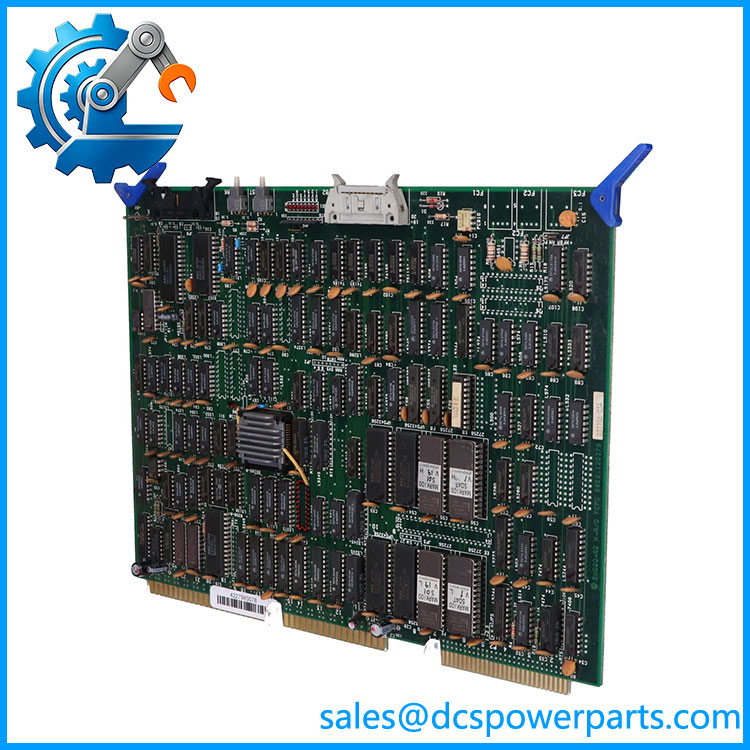
For a replacement purchase, the model number alone is not sufficient evidence for the complete electrical specification. The safest identification method is to compare the card label, connector layout, installed system/rack location, and the original Hitachi equipment documentation.
HITACHI AEH020A
Main Features and Engineering Considerations
Analog Input Function
Available product records consistently point toward an analog-input function. The card should therefore be evaluated according to the actual field signals connected to it rather than being treated as a generic digital control card. The critical parameters are the signal type, input range, channel count, isolation arrangement, scaling, and reference configuration.
Exact Hardware Matching
With older Hitachi control hardware, the physical model number is only one part of the replacement check. Connector position, board revision, carrier compatibility, terminal arrangement, and system configuration should all be compared. A visually similar circuit card is not necessarily electrically interchangeable.
Avoid Unverified Communication Claims
Several online listings assign MODBUS, CANbus, CANopen, or DeviceNet interfaces to . These claims are inconsistent with one another and are not supported by a reliable original Hitachi specification located during this search.
For that reason, communication protocol should be listed as “to be verified” rather than inserted into a purchase order as a confirmed characteristic.
Legacy-System Procurement
If this card is being sourced for an operating plant, procurement should focus on exact-part verification and functional testing rather than simply matching the printed model number. For a used or surplus unit, inspect the PCB for corrosion, damaged connectors, repaired traces, heat damage, and revision differences. Where possible, perform an input-channel test using the same signal range and wiring arrangement used by the installed system.
Documentation Matters
Hitachi’s MICRO-EH family remains documented as a compact PLC architecture with integrated PLC functions and analog I/O capabilities, but that does not establish that belongs to that exact family. The original machine or controller model should therefore be established before selecting a substitute.
Application Scenarios
- Industrial analog signal monitoring
- Process-variable acquisition
- Machine control systems
- Factory automation equipment
- Legacy Hitachi control systems
- Replacement of failed analog input hardware
- Maintenance spares for installed Hitachi automation equipment
Engineer’s Guide: Field Pitfalls
1. Do not assume the input range.
Voltage and current ranges such as 0–10 V or 4–20 mA should be confirmed from the actual Hitachi system documentation.
2. Do not assume channel count from reseller listings.
Published records disagree significantly. Verify the terminal layout and original hardware documentation.
3. Check the complete assembly.
If plugs into a carrier, rack, terminal board, or dedicated controller, verify the complete assembly rather than purchasing the card in isolation.
4. Check revision markings.
An identical base model with a different hardware revision may not always be a direct substitute.
5. Test before installation where possible.
For a critical production system, bench-test each available analog channel using a calibrated source before installing the spare.
Frequently Asked Questions
Is HITACHI an analog input module?
Available exact-model records identify as a Hitachi analog input/circuit card. The detailed channel and electrical specifications still require confirmation from the original Hitachi documentation or installed hardware.
Is a PLC CPU?
It should not be described as a PLC CPU based on the evidence currently available. The stronger exact-model identification points to an analog-input card.
Does support MODBUS?
This cannot be confirmed reliably. Some reseller pages claim MODBUS or other communication protocols, but their specifications conflict with other listings.
What voltage does use?
The operating voltage is not sufficiently verified from an original Hitachi source. Do not specify 24 VDC solely from third-party listings.
How should I verify a replacement?
Compare the complete part number, PCB revision, connector arrangement, host system/controller model, rack position, terminal wiring, and original Hitachi documentation. A clear photograph of the nameplate and PCB markings is the most practical way to resolve remaining identification uncertainty.
Procurement Note
For a critical Hitachi legacy system, I would classify as an exact-identification purchase, not a generic “equivalent module” purchase. The available public data is too inconsistent to responsibly promise electrical interchangeability from the model number alone. If you have the physical , the safest next step is to verify the nameplate and board markings against the installed system before approving a replacement.