Description
HIMA Z7128 Cable Plug
Product Introduction
In a HIMA safety cabinet, the connector interface is part of the control-system wiring architecture, not just a commodity plug. HIMA Z7128 is identified in multiple industrial references as a cable plug used with HIMA safety automation hardware. Its job is to provide the physical and electrical connection between the associated system hardware and the connected cable assembly. Exact application depends on the complete Z7128 configuration and the HIMA equipment to which it is fitted.
This distinction matters during maintenance. Some online catalogs incorrectly classify HIMA Z7128 as an input/output or communication module and attach generic PLC specifications to it. Those claims are not consistent with the more specific cable-plug references. For a brownfield HIMA system, engineers should match the complete connector designation, cable length, termination arrangement, and mating hardware rather than substituting a generic connector based only on physical appearance.
Key Technical Specifications
| Parameter | HIMA Z7128 |
|---|---|
| Product Model | Z7128 |
| Manufacturer | HIMA |
| Product Type | Cable Plug |
| Application | HIMA safety automation system |
| Primary Function | Cable / field-wiring interface |
| System Association | HIMA safety-system hardware |
| Configuration | Configuration-dependent |
| Cable Assembly | Configuration-dependent |
| Connector Arrangement | Configuration-dependent |
| Mounting / Connection | Mating connection to associated HIMA hardware |
| Safety Application | Used within HIMA safety-system installations |
| Exact Electrical Ratings | Verify against the complete configuration and applicable HIMA documentation |
| Condition | Verify actual inventory condition before purchase |
The available exact-part references do not provide enough reliable evidence to assign generic voltage, current, IP-rating, Ethernet, or I/O-channel specifications to the base designation. Those values should not be copied from unrelated HIMA modules.
Major Features and Advantages
Dedicated HIMA Cable Interface
The primary value of the is its role as a purpose-designed connection component for HIMA safety-system hardware. It is not intended to execute safety logic, process analog signals, or provide a programmable communication function. Its purpose is much more straightforward: establish the required cable connection to the associated HIMA equipment.
That distinction becomes important when a maintenance team is searching a legacy parts database. A catalog may place under “I/O module,” “control module,” or even “communication module,” but the more specific product references identify it as a cable plug. Procurement should therefore begin with the physical connector and cable assembly requirements, not generic module specifications.
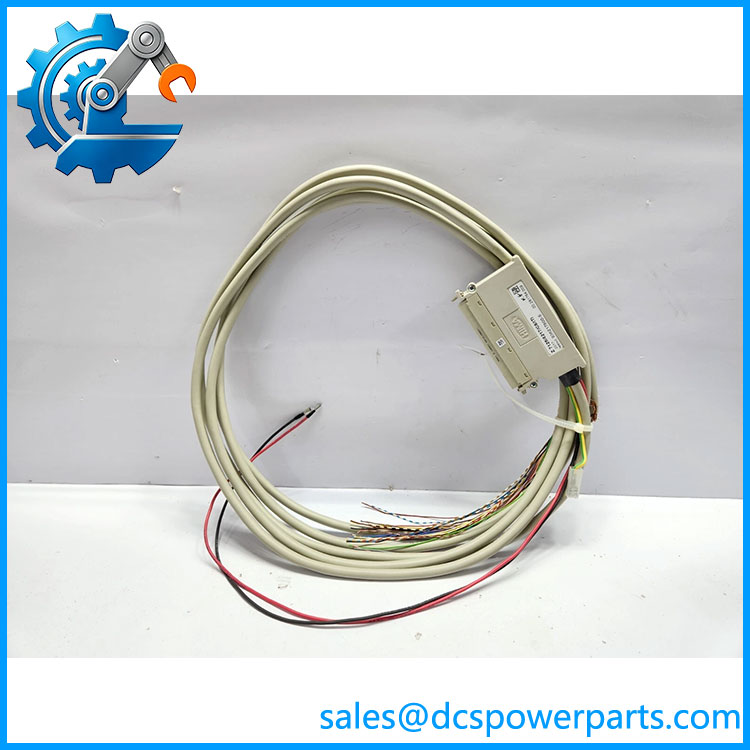
Z7128
Useful for Legacy Safety-System Maintenance
HIMA installations can remain in service for many years, particularly in process, power, oil and gas, and other safety-critical facilities. A small connector component can become a surprisingly important maintenance spare when the original cable assembly or terminal interface is damaged.
Keeping the exact configuration available can reduce the temptation to improvise a connector replacement. In a safety-related cabinet, improvised wiring can create problems that are difficult to detect during normal operation but become significant during proof testing or fault conditions.
Configuration Matching Matters
The base designation should not automatically be treated as a complete procurement description. Related references show configurations such as /6217/C5/ITI, including a 5-meter cable and transmitter supply. Other variants carry different suffixes or revision markings.
That means the suffix can be as important as the base number. Before ordering, compare the label on the installed connector, the cabinet drawing, the cable length, and the mating equipment.
Simplifies Maintenance Identification
Because the component is associated with a specific HIMA hardware interface, the part number provides a much better maintenance reference than a generic description such as “safety connector.” When a shutdown spare is being prepared, recording the complete configuration alongside the connected HIMA module can prevent an avoidable mismatch.
Application Scenarios & Pain Points
The is most relevant to maintenance situations where the physical cable interface is part of an existing HIMA safety installation.
- HIMA safety-system cabinet maintenance: Used as the cable-side interface associated with HIMA safety hardware.
- Legacy system replacement: Useful when an original connector or cable assembly has become damaged and the existing system must remain unchanged.
- Shutdown spare preparation: Maintaining the exact connector configuration can reduce wiring changes during a planned outage.
- Field wiring service: A dedicated cable plug can make replacement more controlled than rebuilding an existing connector assembly from generic components.
A common field problem is ordering from a database description that says “I/O module.” That is the wrong starting point. First identify the physical component, then compare the complete part marking and connected HIMA equipment.
Related HIMA Products
The following references may appear in the same maintenance environment, but they should not be treated as automatic substitutes:
- Z7136 — another HIMA cable-plug/interface reference.
- Z7138 — HIMA system hardware reference appearing alongside in industrial catalogs.
- Z7149 — another HIMA I/O-related hardware reference.
- Z7150 — HIMA HIQuad X system cable-plug reference.
- /6217/C5/ITI — configured cable plug with a 5-meter cable and transmitter supply.
- /6217/R2 — another configuration reported as a safety-system terminal/interface component.
- /6217/C5/ITI/R2 C — configured cable-plug variant carrying additional configuration information.
The related references demonstrate why the complete suffix should be captured from the installed hardware before procurement.
Engineer’s Guide — Field Pitfalls to Avoid
1. Do not buy as if it were an I/O card.
The strongest exact-part references identify as a cable plug. Generic I/O specifications appearing in some catalogs should not be treated as verified specifications for this component.
2. Record the complete part marking.
may appear as part of a longer configuration such as /6217/C5/ITI. The suffix can identify cable length and other assembly details.
3. Check the mating hardware.
A connector that looks physically similar may not have the same pin assignment, cable termination, or mechanical keying. Verify the mating HIMA module and cabinet documentation.
4. Do not infer electrical ratings from another HIMA connector.
Some reseller pages publish voltage, current, IP, and certification figures for , but the available sources do not establish those values reliably for every configuration. Treat such figures as configuration-specific until confirmed by the applicable HIMA documentation.
5. Inspect the cable, not just the plug.
For configured cable assemblies, check cable length, insulation condition, termination, shield arrangement, and connector body condition. A visually good connector attached to a damaged cable is not a satisfactory maintenance spare.
6. Do not assume SIL applies directly to the connector.
The can be used within HIMA safety-system architectures, but the safety integrity of a complete safety function depends on the entire certified architecture and installation. A connector itself should not be described as independently providing SIL 3 simply because the connected HIMA system may have SIL-rated functions.
FAQ
What is the HIMA ?
The HIMA is identified primarily as a cable plug / cable interface component for HIMA safety automation hardware. It is not best described as a standalone CPU or programmable I/O module.
Is HIMA an I/O module?
The available evidence does not support treating the base designation as an I/O module. Several reseller catalogs use that classification, but more specific exact-part listings consistently identify as a cable plug.
Does include a cable?
That depends on the configuration. A documented variant, /6217/C5/ITI, is described as a cable plug wired with a 5-meter cable and transmitter supply. The base marking alone should not be assumed to include the same cable configuration.
Can I replace with another connector?
Not without checking the complete configuration. Verify the mating HIMA equipment, connector arrangement, pin assignment, cable requirements, and cabinet drawings before approving an alternative.
What should I provide when requesting a replacement?
Provide the complete part number printed on the connector or cable assembly, including all suffixes, plus a clear photograph of the installed component and the HIMA module it connects to. This is much more useful than specifying only “HIMA .”
Is a current-production HIMA component?
The available web evidence is dominated by maintenance and industrial spare-part listings rather than a current HIMA product catalog entry. I would therefore treat as a legacy-system maintenance component unless current manufacturer documentation confirms production status. Actual inventory condition should also be verified independently.