Description
Product Overview
In legacy industrial computers, display hardware can be a critical part of the operator interface, diagnostic console, or embedded equipment assembly. When a board fails, replacing it with a visually similar circuit card may not restore operation if the display interface, bus connections, or hardware revision differs. The GESPAC GESVDU-1D-8946 appears to belong to GESPAC’s legacy VDU board family, based on the model designation and records for the related GESVDU-1D board. The precise function of the -8946 assembly has not been confirmed in a manufacturer datasheet.
The GESPAC GESVDU-1D-8946 should therefore be specified by its complete part number and original equipment context. Available listings associate the model with GE, but the broader GESVDU family is linked to GESPAC, a manufacturer of legacy computer and interface boards. Publicly available records do not establish a reliable pinout, supply voltage, video standard, resolution, or bus specification for this exact assembly. For maintenance teams, confirming the PCB markings, connector layout, and installed system is more reliable than using generic descriptions of industrial I/O modules.
Key Technical Specifications
| Parameter | Specification |
|---|---|
| Product Model | GESVDU-1D-8946 |
| Manufacturer / Brand | GESPAC association; some listings identify the brand as GE |
| Product Type | Legacy electronic circuit board; exact function requires confirmation |
| Product Family | GESVDU / VDU-1D |
| Primary Function | Not verified for the complete -8946 assembly |
| Processor | Not verified |
| Memory | Not verified |
| Working Voltage | Not verified |
| Communication Protocol | Not verified |
| Interface Type | Board-level connectors; exact interface not confirmed |
| Video Output Standard | Not verified |
| Display Resolution | Not verified |
| Working Temperature | Not verified |
| Installation Method | Must be determined from the original chassis and board documentation |
| Protection Rating | No enclosure IP rating verified |
| Operating Accuracy | Not applicable unless the confirmed function includes measurement or control |
| Lifecycle Status | Appears to be legacy hardware; current manufacturer status not confirmed |
Important: Do not use generic online claims of 12–48 VDC input, 5 VDC output, or 10 A output current as specifications for this board. The sources reviewed do not establish those ratings for GESVDU-1D-8946.
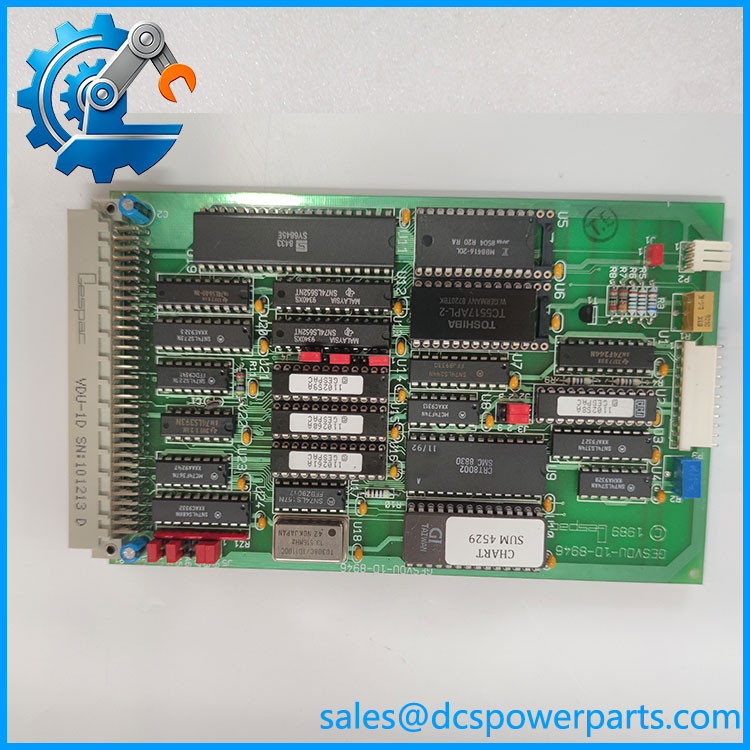
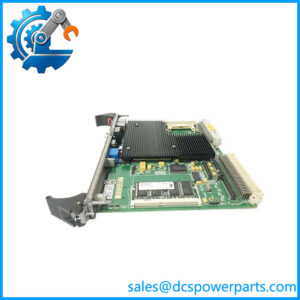
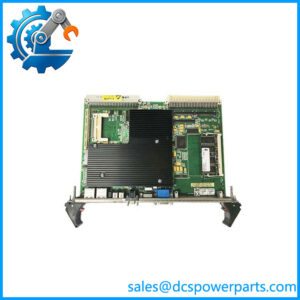
GESVDU-1D-8946
Major Features and Advantages
Legacy board identification
The complete model number provides the starting point for matching the board to existing equipment. The related GESVDU-1D designation is useful for identification, but the -8946 suffix should be preserved in procurement records because it may identify a particular assembly or revision.
Potential display-system relevance
The VDU designation suggests a video display unit or display-related function, although this interpretation remains unverified for the exact part. Confirm the role through the equipment bill of materials, original schematic, or board markings before assigning it to a display subsystem.
Preservation of existing equipment
For legacy machinery, replacing a failed board with the exact original assembly may reduce the need for changes to the chassis, connectors, and application hardware. That benefit depends on confirming the replacement’s electrical and functional equivalence.
Traceable replacement procurement
A board label, PCB revision, connector photographs, and known host-system model help distinguish visually similar legacy cards. These details are particularly useful when the original manufacturer documentation is incomplete.
Condition and testing transparency
Because the exact specification is not established, functional test evidence matters. A supplier should state whether the board has received visual inspection only, a power-on test, or a test in compatible equipment. These are different levels of evidence and should not be treated as equivalent.
Application Scenarios and Common Pain Points
Potential application contexts should be confirmed against the original equipment:
- Legacy display systems: If the VDU identification is correct, the board may be associated with display generation or display-interface functions.
- Industrial computer maintenance: Identification and replacement of a legacy circuit card in an existing computer or control assembly.
- Equipment refurbishment: Preservation of an established hardware configuration when redesigning the complete system is not practical.
- Spare-parts management: Tracking a specific board and assembly suffix for maintenance planning.
Common procurement risks include confusing the board with a generic digital I/O module, assuming that a similar connector proves compatibility, overlooking assembly suffixes, and applying an unverified power supply. A board that physically fits may still have a different electrical interface or functional role.
Related Products and Components
The following products are related by manufacturer or board naming family, but none should be considered a direct replacement without technical confirmation.
| Model | General identification | Relationship |
|---|---|---|
| GESPAC VDU board designation | Closest family-level match | |
| GESVDU-1C | Earlier or alternate VDU family designation | Related model; differences need verification |
| VDU-1D | GESPAC board designation appearing in legacy listings | Useful for cross-checking board identity |
| GESVIG4W | Graphic output board for a monitor | Related display/graphics function, not a confirmed substitute |
| GESBUS-6A | GESPAC six-slot bus board | Potentially relevant to the host hardware architecture |
| GESBUS-4M | GESPAC backplane board | Related system hardware; interface compatibility must be checked |
| GESMPU-2A | GESPAC CPU control board | Different function within a legacy computer system |
| GESMFI-1 | GESPAC multifunction interface board | Related legacy interface hardware |
These model identities are based on legacy product records. Confirm exact suffixes and system compatibility from the original documentation before selecting associated components.
Engineer’s Guide: Three Checks Before Replacement
1. Confirm the complete assembly number. Photograph the label and PCB markings. Verify -8946 rather than relying on alone.
2. Identify the actual function and electrical interface. Use the original schematic or equipment manual to establish the board’s role, power requirements, connector pinout, and signal type. Do not energize the board based on unverified voltage claims.
3. Require an appropriate functional test. Ask whether the board was tested in compatible equipment and what functions were checked. For a display-related board, the test should verify the relevant display or interface behavior rather than merely confirming that power is present.
Frequently Asked Questions
1. What is the GESPAC -8946?
It is a legacy circuit-board model associated with the family. The VDU designation suggests a display-related board, but the exact function of the full -8946 assembly has not been confirmed by a manufacturer datasheet.
. Is an input/output module?
Some supplier listings describe it as an input/output module, but the descriptions do not provide verifiable technical documentation. Do not assume it has general-purpose analog or digital I/O until the original board documentation confirms that function.
3. What is the workie of ?
The working voltage could not be verified from the available documentation. Check the original equipment manual, board markings, and power connector pinout before applying power.
4. What interfaces does the board support?
The connector types, bus interface, and signal assignments for the exact assembly remain unverified. Use the original schematic or compare the board against a known working unit; connector appearance alone is not sufficient evidence of electrical compatibility.
Can replace GESVDU-1C?
Not without confirming the hardware revision, interface, connector pinout, and intended function. Related model names do not establish interchangeability.
. Is still manufactured?
The available records indicate legacy hardware, but a definitive manufacturer lifecycle status for the exact assembly was not confirmed. Ask the supplier to identify whether the unit is unused old stock, used, repaired, or refurbished.
7. What should buyers request before ordering?
Request clear photographs of both sides of the board, the complete part-number label, connector details, and the host equipment model. Also request a description of the functional tests performed and written warranty terms.
Procurement recommenreat as a model requiring exact identification before specification or substitution. Confirming the board’s function, electrical requirements, and host-system compatibility is more important than relying on generic product descriptions.