Description
Key Technical Specifications
| Parameter | Specification |
|---|---|
| Product Model | XMT8681-1-11-08-0315-0 |
| Manufacturer / Brand | GE / Panametrics |
| Product Family | XMT8681 |
| Product Type | Ultrasonic Flow Meter / Flow Transmitter |
| Measurement Principle | Ultrasonic transit-time flow measurement |
| Channel Configuration | Single channel |
| Power Supply | 85–250 VAC class |
| Enclosure | NEMA 7 / NEMA 4X configuration |
| Hazardous-Area Design | Explosionproof configuration associated with this ordering family |
| Weather Protection | NEMA 4X |
| Primary Measurement | Process fluid flow |
| Installation | External ultrasonic transducers installed on the process piping |
| Output / Integration | Dependent on installed electronics and exact configuration |
| Application | Industrial liquid and process-flow measurement |
| Model Coding Note | The complete suffix should be matched before replacement |
Published equipment records identify XMT8681 configurations as ultrasonic flow meters and document single-channel, 85–250 VAC, NEMA 7/NEMA 4X versions.
Application Scenarios & Pain Points
A flow transmitter failure is rarely just an instrumentation problem. When the signal feeds a control loop, custody calculation, production report, or alarm strategy, losing that measurement can create a much larger operational headache.
- Oil & Gas: Suitable for process-flow measurement where non-invasive ultrasonic sensing avoids cutting into an existing pipeline. units have been documented in petroleum-related flow measurement installations.
- Water and wastewater: Useful at pumping and treatment facilities where maintaining flow visibility is important for pump performance and process balancing.
- Chemical and petrochemical plants: The hazardous-area enclosure configuration is relevant where the transmitter must be installed in a classified process environment.
- Process utilities: Steam, water, hydrocarbons, and other compatible process fluids can be monitored when the selected transducers, pipe conditions, fluid properties, and meter configuration are correctly matched.
Field note: A replacement transmitter can power up perfectly and still produce unusable flow data if the transducer type, pipe geometry, fluid parameters, or meter configuration are wrong. Before removing the failed unit, record the existing configuration whenever possible—especially channel assignment, transducer information, pipe data, and output scaling.
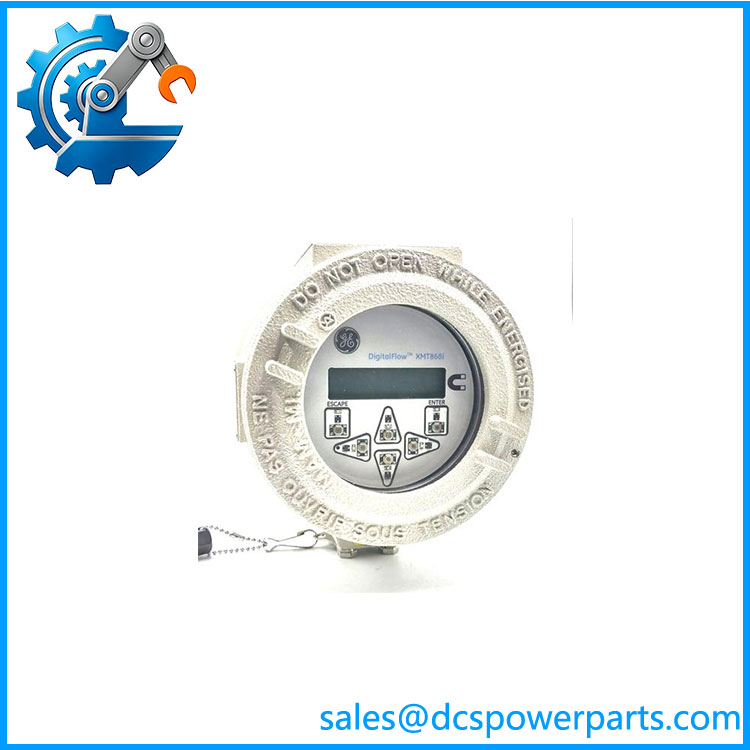
XMT8681-1-11-08-0315-0
Related Products
- XGF868I — Ultrasonic flow-meter family intended for gas measurement applications. It belongs to a different measurement application and should not be substituted simply because the enclosure and transmitter architecture appear similar.
- DF868 — Another member of the Panametrics ultrasonic flow-meter family. It can be relevant when evaluating a broader system replacement, but transducer and application compatibility must be established first.
- AT868 — Related ultrasonic flow-meter platform. Consider it an alternative platform for engineering evaluation, not an automatic replacement for an installed .
The Engineer’s Guide: Field Pitfalls to Avoid
Warning 1 — Do not match only the first six characters of the model number.
configurations vary by channel count, power supply, enclosure, and other ordering-code details. A unit that looks identical externally may have a different electrical or functional configuration.
How to avoid it: Photograph the nameplate and capture the complete ordering code before issuing the purchase order. Compare every character, including -1-11-08-0315-0.
Warning 2 — Do not assume the replacement retains the old measurement setup.
Ultrasonic flow measurement depends heavily on transducer selection and programmed pipe/fluid information. Swapping the electronics without checking the stored configuration can result in a powered transmitter with incorrect flow readings.
How to avoid it: Record the existing configuration, transducer information, pipe dimensions, fluid parameters, output scaling, and totalizer settings before taking the old transmitter out of service.
Warning 3 — Hazardous-area certification is part of the replacement decision.
NEMA 7/NEMA 4X is not merely a cosmetic enclosure description. The documented configurations include explosionproof/weatherproof construction, so the replacement must satisfy the actual area classification and installation requirements.
How to avoid it: Verify the nameplate markings, enclosure certification, cable entries, grounding, and site-area classification before installation. Never substitute a visually similar non-certified enclosure.
Frequently Asked Questions (FAQ)
Can -1-11-08-0315-0 replace another transmitter?
Potentially, but the family name alone is not enough. Compare channel configuration, supply voltage, enclosure, hazardous-area requirements, transducer compatibility, outputs, and the programmed measurement parameters. A different suffix can represent a meaningful configuration change.
Is -1-11-08-0315-0 a flow transmitter or a flow meter?
It is part of the ultrasonic flow-meter family and functions as the electronics/transmitter portion of an ultrasonic flow measurement system. The actual measurement arrangement also depends on the compatible ultrasonic transducers and their installation on the pipe. Published records specifically identify equipment as ultrasonic flow meters.
What power supply does this configuration use?
The documented configurations in this ordering family include 85–250 VAC versions. Because the complete suffix determines the configuration, the actual nameplate should be checked before energizing a replacement.
Is the suitable for hazardous locations?
Certain configurations are documented with NEMA 7 / NEMA 4X explosionproof and weatherproof enclosures. That does not mean every carries identical hazardous-area certification. Verify the exact nameplate and site classification before installation.
How should I verify the authenticity and condition of a replacement unit?
For a surplus or refurbished unit, ask for clear photographs of the nameplate, enclosure, terminal area, connectors, and internal condition where appropriate. For a used unit, functional testing should include power-up, display/interface operation, configuration access, and verification of applicable inputs and outputs. Pay close attention to enclosure damage, corrosion around covers and cable entries, and oxidation on electrical connection points.
Can this transmitter be used for a legacy PLC or DCS replacement project?
Yes, provided the transmitter’s configured outputs and communication interfaces match the existing control architecture. The important question is not whether the is generally compatible with a DCS; it is whether this specific ordering code and configured I/O match the existing analog, pulse, alarm, or communication requirements.
What should I confirm before ordering -1-11-08-0315-0?
Use this short procurement check:
- Complete model/order code
- Nameplate and serial number
- Channel count
- AC/DC supply requirement
- Enclosure and hazardous-area certification
- Existing transducer type and frequency
- Pipe and process-fluid configuration
- Required analog/relay/communication outputs
- Unit condition and test report
- Warranty terms and expected delivery date
For an obsolete or long-service instrumentation platform, configuration verification is more important than simply finding a transmitter with the same base model number.