Description
Product Overview
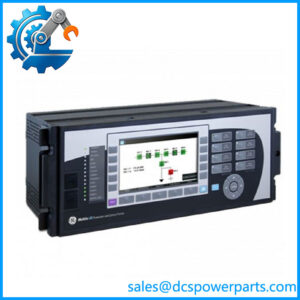
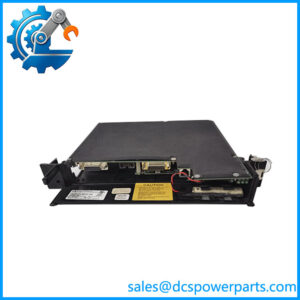
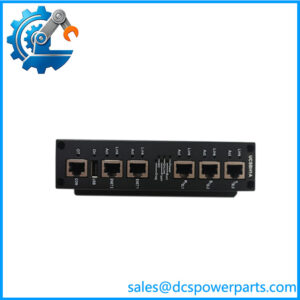
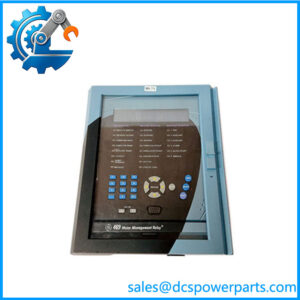
The GE WES5162-9101 is a WES-series field-controller main unit associated with GE utility automation and substation control equipment. It is intended to provide the central processing and control functions within a larger field automation architecture rather than serving as a conventional standalone PLC I/O module. Product catalogs identify the WES5162-9101 specifically as a GE field controller main unit, alongside WES5162 rack hardware and other WES controller families.
The GE WES5162-9101 appears in the same product ecosystem as WES5123-1200, WES5123-2600, WES5302-111, WES5302-150, WESDAC D20ME, and WESCOM D200. That makes it relevant to legacy substation and utility automation maintenance, but the similar product descriptions should not be interpreted as proof of interchangeability.
For GE WES5162-9101, procurement should focus on the complete assembly number, hardware revision, system generation, installed software, and the surrounding WES/WESDAC architecture. Public secondary sources contain contradictory descriptions—including claims that it is an incremental encoder processor, a generic communication module, and even a Mark VIe controller—so those generic specifications should not be accepted without supporting GE documentation.
Technical Specifications
| Parameter | Specification |
|---|---|
| Manufacturer | GE |
| Model | WES5162-9101 |
| Product Family | WES / WESDAC |
| Product Type | Field Controller Main Unit |
| System Application | Utility automation / substation control |
| System Role | Main controller / processing unit |
| Architecture | WES field-control architecture |
| Related Hardware | WES5162 rack |
| Related Controllers | WES5123, WES5302, WESDAC D20ME |
| Application Environment | RTU / SCADA / substation automation |
| Hardware Revision | Verify from nameplate |
| Firmware | Application-dependent |
| Software Image | Application-dependent |
| I/O | Dependent on associated WES system hardware |
| Communication | Dependent on system configuration |
| Mounting | System/rack dependent |
| Operating Temperature | Verify against exact hardware revision |
| Power Supply | Verify against exact hardware revision |
Specification caution
I would not publish a fixed voltage, Ethernet speed, serial-port count, processor type, or protocol list as confirmed specifications for this exact part based only on the public sources available.
One source describes the WES5162-9101 as an incremental encoder signal processor, while another describes it as a generic intelligent-control I/O module and supplies a set of specifications that appear to belong to unrelated GE hardware.
For an engineering procurement database, the safest classification is:
GE — WES Series Field Controller Main Unit / Substation Controller
That classification is supported consistently across multiple independent industrial catalogs.
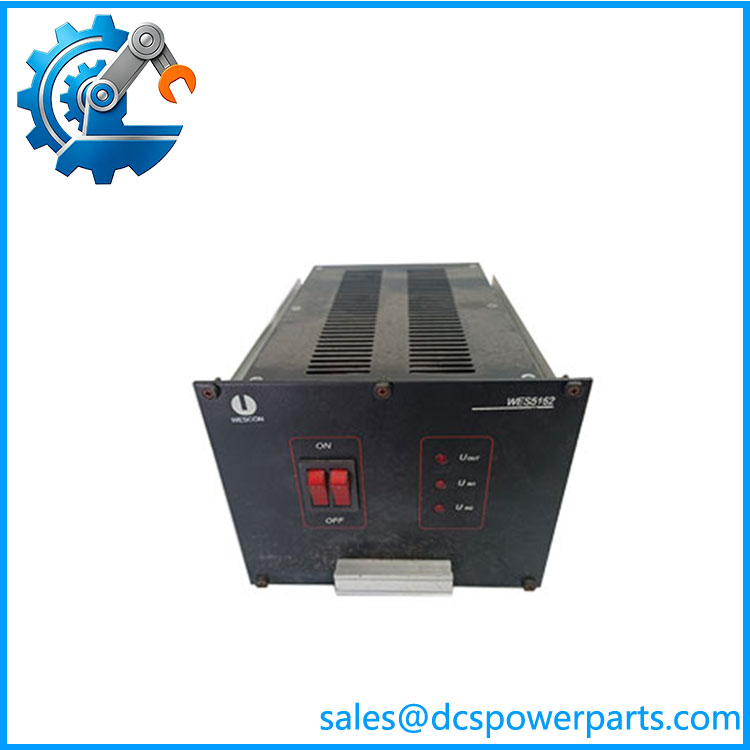
WES5162-9101
Main Features and Advantages
WES Field-Control Architecture
The belongs to GE’s broader WES/WESDAC utility automation ecosystem. It is therefore more appropriately viewed as a system controller than as an isolated signal-conditioning card.
Central Processing Function
The main unit provides the processing foundation for the associated field-control application. Actual I/O, communications, and supervisory functions depend on the hardware installed around the controller.
Legacy Utility Application
The WES family is frequently associated with substation controllers, utility automation, and SCADA equipment in industrial spare-parts catalogs. WES5123, , WES5302, WESDAC D20ME, and WESCOM D200 appear together in these product families.
Replacement Value
For a plant or utility still operating an established WES architecturxact spare can be much less disruptive than replacing the complete controller platform. The important requirement is to preserve the existing hardware/software environment.
Hardware Revision Matters
With older controller assemblies, the model number alone may not describe every field-relevant difference. Board revision, firmware, memory configuration, boot media, and associated rack hardware can affect whether a replacement actually starts the customer’s application.
Application Scenarios
Substation Automation
The is cataloged as a GE substation/field-controller product and is appropriate for legacy utility automation architectures.
RTU Systems
It can function as the controller platform within a larger remote-terminal architecture. It should not, however, be assumed to contain every I/O and communication function without checking the actual system configuration.
SCADA
The controller can form part of a utility SCADA architecture where field data is acquired, processed, and communicated to higher-level systems.
Legacy System Maintenance
This is probably the most practical application today: maintaining existing WES/WESDAC installations where the installed controller remains operationally important.
Engineer’s Guide: Field Pitfalls
WARNING 1 — Do not cowith
Catalogs list as a controller rack/chassis and as a field-controller main unit.
Procurement rule: Treat them as different hardware items.
WARNING 2 — Ignore unsupported “Mark VIe” specifications
One online description incorreaces in a Mark VIe-style architecture and gives it processor, Ethernet, fiber, IEC 61850, and other specifications. Those claims are not consistent with the WES product-family identification found elsewhere.
Procurement rule: Do not copy those specifications into a technical datasheet without primary documentation.
WARNING 3 — Do not treat WES5123-2600 as an automatic substitute
WE600, , and WES5302 controllers are all associated with GE utility automation, but that does not establish hardware or software interchangeability.
Procurement rule: Use the exact model and hardware revision unless the system documentation approves an alternative.
WARNING 4 — Preserve the software environment
If the controller is being replaced in an operational WES system, record:
- Firmware revision
- Boot configuration
- Application software
- Memory configuration
- Communication settings
- Network parameters
- Installed expansion hardware
- Rack/backplane configuration
A controller that powers up but cannot load the original application is not a successful replacement.
Frequently Asked Questions
s GE ?
It is a GE WES-series field controller main unit associated with utility automation, substation control, RTU, and SCADA applications.
Is a PLC I/O module?
Not in the conventional sense. Available catalogs identify it as a field controller main unit, while the associated WES architecture provides the broader I/O and communication functions.
Is part of the WESDAC family?
Yes. It is repeatedly listed alongside WESDAC D20ME and WESCOM D200, as well as other WES field controllers.
Is obsolete?
It should be treated as legacy maintenance hardware. Current listings primarily present it as an industrial spare rather than a current-generation controller. The practical issue is availability of tested replacement units and preservation of the existing application environment.
What should I request when buying a replacement?
For a critical spare, request:
- Exact nameplate photo.
- PCB/assembly number.
- Hardware revision.
- Firmware revision.
- Memory configuration.
- Boot-media information.
- Front and rear photographs.
- Rack/backplane compatibility.
- Power-up test.
- Controller boot test.
- Communication test with representative WES hardware.
- Application-level functional test where possible.
Bottom line: The model identification is reasonably clear, but the detailed electrical specifications circulating online are not reliable enough to reproduce as hard facts. For this particular GE part, exact-nameplate matching and application-level testing are more important than a generic specification sheet.