Description
Key Technical Specifications
| Parameter | Specification |
|---|---|
| Manufacturer | GE |
| Model | WES5123-2600 |
| Product Family | WES / WESDAC |
| Product Type | Embedded Controller / Field Controller Master Unit |
| System Architecture | VME |
| Chipset | Intel 945GM |
| Processor Bus | Up to 533 MHz for Celeron M / 667 MHz for Core 2 Duo |
| Memory | Up to 2 GB DDR2 SDRAM |
| Memory Interface | SODIMM |
| Graphics | SVGA |
| High-Speed I/O | USB 2.0, SATA, PCI, PCI Express |
| Ethernet | Verify against installed hardware revision |
| Serial Interfaces | Verify against installed hardware revision |
| Storage | SATA / application-dependent boot media |
| Operating Environment | Application-specific |
| Primary Applications | Utility automation, RTU, industrial control, data acquisition |
| Form Factor | VME embedded computing platform |
The most useful technical reference available for WES5123-2600 identifies the Intel 945GM chipset, support for up to 2 GB DDR2 memory through SODIMM, and I/O resources supplied by the associated Intel ICH7-M controller hub, including USB 2.0, SATA, IDE, PCI, and PCI Express.
One caution: some online listings describe the WES5123-2600 as a 24 VDC Modbus RTU controller with a 120 × 80 × 40 mm enclosure. Those specifications conflict with the 945GM/VME documentation and should not be accepted without a matching GE drawing or nameplate.
Application Scenarios & Pain Points
A controller in a utility cabinet may appear to be a simple “black box,” but the software image and VME environment can be just as important as the processor board. Replacing the hardware with a superficially similar controller can leave the cabinet powered while the actual application refuses to boot.
- Utility RTU systems: Used as a computing/control platform within GE field-controller architectures.
- Substation automation: Suitable for legacy control installations where VME-based processing remains part of the system architecture.
- SCADA communications: Provides computing resources for applications that collect, process, and communicate field data.
- Legacy WES/WESDAC maintenance: Particularly relevant where replacing the entire control architecture would require extensive engineering and commissioning.
Brief Field Case
A field controller can fail in two very different ways: hardware failure or loss/corruption of its application environment. If the replacement board powers up but does not execute the original application, the problem may be the boot media, firmware, BIOS settings, or software image rather than the replacement hardware itself.
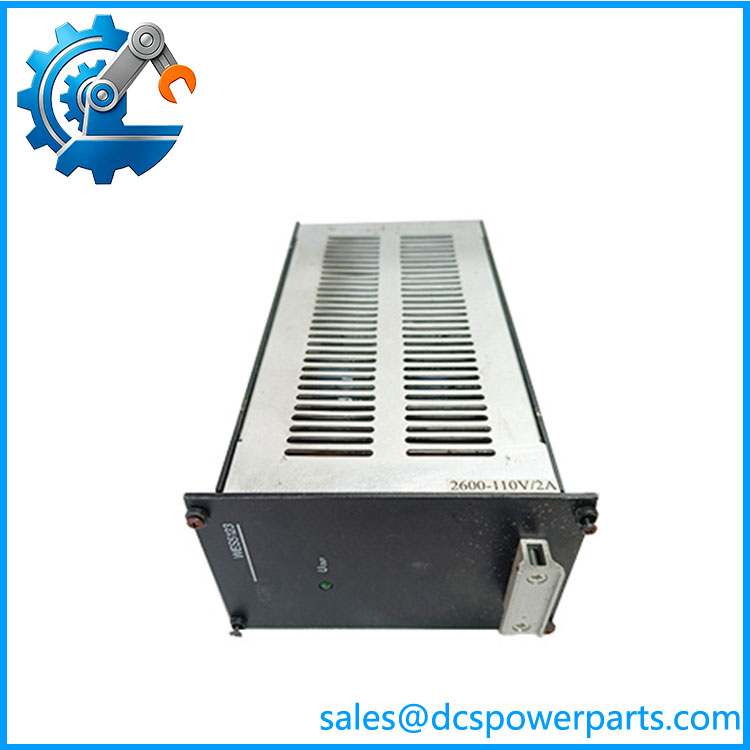
WES5123-2600
Related Products
- GE WES5123-1200 — Closely related WES5123 controller. It belongs to the same broader hardware family, but the exact configuration and application should be verified before treating it as a direct substitute.
- GE WES5162 — Related GE field-controller/main-unit platform. It serves a different system configuration and should be matched against the existing rack and system documentation.
- GE WES5162-9101 — Specific WES5162 controller variant. Useful as a related spare only where the installed architecture explicitly supports this configuration.
- GE WES5302-111 — Another GE WES field-controller platform. It provides a different controller configuration and is not an automatic replacement for WES5123-2600.
- GE WES5302-150 — Related processor/controller unit in the WES family. Functional overlap exists, but hardware and software compatibility must be confirmed.
- GE WESDAC D20ME — GE utility automation processing hardware associated with the broader WES/WESDAC ecosystem. It is relevant when maintaining legacy D20-based systems but is not a drop-in WES5123 replacement.
- GE WESCOM D200 — VME-based GE system hardware used in utility automation. It can be part of the surrounding architecture but should not be substituted for WES5123-2600 without a system-level review.
- GE WES5120 — Earlier WES controller family. It can be relevant for legacy-system support, but processor architecture and software compatibility must be checked.
- GE WES5302 — Broader WES controller family reference. Useful when identifying the installed system generation before selecting a replacement.
The -2600, -1200, WES5162, WES5302, WESDAC D20ME, and WESCOM D200 are repeatedly grouped together in industrial automation catalogs, but catalog proximity should not be interpreted as interchangeability.
The Engineer’s Guide: Field Pitfalls to Avoid
WARNING 1 — Do not treric specifications without checking the hardware.
There are listings describing this part as a small 24 VDC Modbus RTU controller, while technical material identifies an Intel 945GM/VME embedded-computer architecture. Those are materially different platforms.
How to avoid it: Require a photograph of the actual GE nameplate, PCB assembly number, connectors, and VME interface before approving a replacement.
WARNING 2 — Hardware compatibility is only half the replacement problem.
The ‘s embedded-computing architecture means boot media, application software, firmware, and configuration can determine whether a replacement actually performs its intended function.
How to avoid it: Preserve the original storage media and document BIOS, boot order, operating environment, network settings, and application image before removing the failed unit.
WARNING 3 — Do not assum and are interchangeable.
They are closely related model numbers, and both appear in GE WES controller catalogs. That does not establish electrical, firmware, or application equivalence.
How to avoid it: Match the complete model number and hardware revision against the system drawing.
WARNING 4 — VME connector condition matters.
For an older VME-based controller, inspect the card-edge connectors carefully. Dust, oxidation, mechanical damage, or a partially seated card can produce symptoms that look like CPU failure.
How to avoid it: Inspect the backplane and connector contacts before condemning the controller.
Frequently Asked Questions
s GE ?
GE is an embedded controller/field-controller platform associated with GE’s WES/WESDAC utility automation equipment. Available technical documentation identifies an Intel 945GM chipset and VME-based architecture.
It should not be treated simply as a conventional PLC digital I/O module.
Is a VME controller?
Yes. Available technical descriptions identify the system baseboard architecture as VME, with the platform using an Intel 945GM chipset and supporting up to 2 GB DDR2 memory.
That makes the rack/backplane environment an important part of compatibility.
How much does support?
The documented Intel 945GM platform supports up to 2 GB DDR2 SDRAM through a SODIMM.
For an existing installation, match the actual memory configuration rather than assvery has the maximum installed capacity.
What process the use?
The available documentation describes the Intel 945GM platform as supporting a Celeron M processor bus up to 533 MHz and Core 2 Duo processor bus up to 667 MHz.
The exact processor installed should be verified from the physical assembly or system documentation.
Does use Modbus RTU?
Some secondary listings claim Modbus RTU communication, but that information is not sufficiently supported by the more detailed hardware documentation.
For procurement, I would not specify Modbus RTU as a guaranteed native protocol without confirming the installed application and communication configuration.
Can -1lace ?
Do not assume so. The two models are closely related and appear together in WES product catalogs, but the exact hardware, firmware, storage, and application configuration must be compared.
For a production replacement, use the exact unless the system manufacturer documentation explicitly approves the alternative.
What should I request whng a replacement?
For a critical spare, request:
- Exact nameplate photograph
- Hardware/assembly revision
- Processor identification
- Installed RAM
- Boot-media type and capacity
- BIOS information
- Operating-system/application image
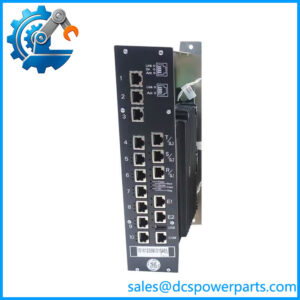
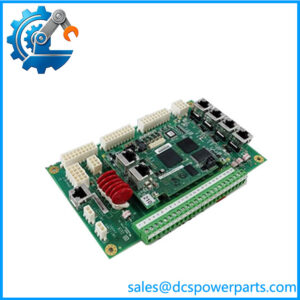
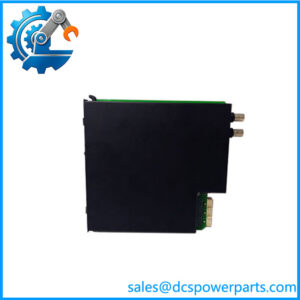
- VME connector photographs
- Ethernet and serial communication test
- Successful boot test
- Extended burn-in test
- Condition/authenticity statement
- Warranty terms
For this controller, “powers on” is a very low acceptance threshold. A proper replacement should demonstrate successful booting and operation of the required software environment, with the relevant VME and communication interfaces verified before it is considered ready for field deployment.