Description
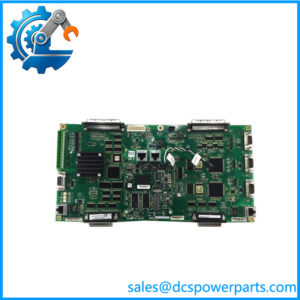
GE VPROH2B IS215VPROH2BC | Turbine Protection & Emergency Trip Board | Mark VI Spare
Key Technical Specifications
| Parameter | Specification |
|---|---|
| Product Model | IS215VPROH2BC |
| Functional Acronym | VPRO |
| Manufacturer | General Electric |
| Product Type | Turbine Protection / Emergency Trip Board |
| Control System | GE Mark VI Speedtronic |
| Primary Function | Emergency trip and overspeed protection |
| Power Supply Rating | 125 VDC |
| Redundancy | Simplex or TMR |
| MPU Input Sensitivity | Minimum 27 mV peak at 2 Hz |
| Frame Rate | Up to 100 Hz |
| Trip Solenoid Interface | Via associated TREG boards |
| Solenoid Quantity | Up to 6 per VPRO in the documented architecture |
| Mounting | Mark VI protection-module / VME rack architecture |
The published technical data identifies the as a VPRO turbine protection board with a 125 VDC power rating, 27 mV peak minimum MPU input sensitivity at 2 Hz, and support for simplex or TMR architectures. The VPRO works with associated terminal boards rather than functioning as a conventional PLC I/O card.
Product Introduction
GE Turbine Protection Board
The GE is a VPRO turbine protection board for the GE Mark VI Speedtronic turbine control system. Its role is different from normal turbine control I/O: the VPRO protection architecture provides an independent emergency protection path for functions such as turbine overspeed detection, emergency shutdown, and trip logic. The board operates with associated TPRO/TREG terminal hardware inside the Mark VI protection architecture.
The is therefore a system-critical spare rather than a general-purpose processor. In TMR installations, three independent VPRO protection sections can participate in the protection architecture, allowing voting-based operation rather than relying on one controller alone. The exact protection configuration, terminal-board arrangement, and signal assignments must be checked against the site’s Mark VI drawings before replacing a board.
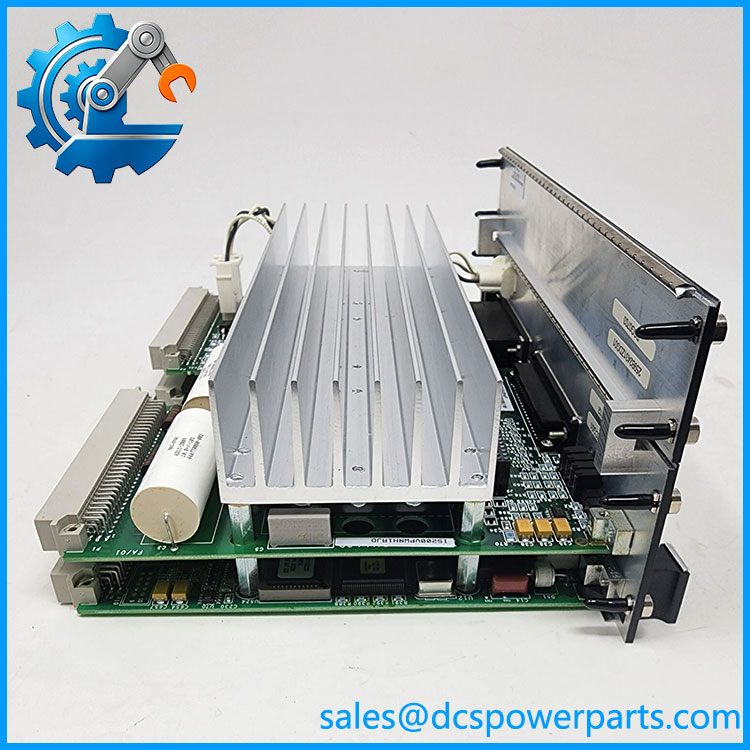
IS215VPROH2BC
Application Scenarios & Field Pitfalls — The Engineer’s Perspective
Engineering Pain Point
When a turbine protection board fails, the problem is rarely solved by matching the model number alone. VPRO hardware sits in a dedicated protection path, and its relationship with the TREG/TPRO terminal boards, MPU speed inputs, trip solenoids, power distribution, and redundancy architecture has to remain correct after replacement.
Typical Applications
- Gas Turbine Protection: Independent overspeed and emergency trip functions for industrial and utility gas turbines.
- Steam Turbine Protection: Emergency shutdown and turbine-speed protection within Mark VI installations.
- Power Generation Plants: Protection hardware for turbine-generator packages where a dedicated emergency trip path is required.
- TMR Protection Systems: Three-way redundant VPRO architectures for turbine protection applications requiring continued protection availability.
Technical Pitfalls to Avoid
- Do not classify it as a generic Mark VIe controller.
The stronger technical references identify the as a Mark VI VPRO turbine protection board. Several reseller pages incorrectly label it Mark VIe or assign unrelated controller functions. - Check the terminal-board configuration.
VPRO does not operate as an isolated plug-in I/O card. The protection architecture uses associated TPRO/TREG terminal boards for field interfaces and trip circuitry. - Verify TMR versus simplex architecture.
A replacement board should match the installed protection configuration. Do not assume that a board from a simplex installation can be inserted into a TMR protection system without checking the complete configuration. - Pay close attention to the MPU circuit.
Published data gives a minimum MPU input sensitivity of 27 mV peak at 2 Hz. Speed-sensor wiring, signal quality, grounding, and the exact turbine protection configuration should be checked before diagnosing the VPRO itself as defective. - Verify the complete trip path.
A VPRO replacement should be followed by appropriate checks of the terminal boards, trip relays, solenoid circuits, protection inputs, and voting logic. This is safety-critical turbine hardware, not a routine PLC module swap.
Related Products
- GE IS215VPROH2B — Base board designation associated with the assembly; useful when checking older documentation and equipment records.
- GE TREG — Turbine Emergency Trip terminal-board family associated with the VPRO protection architecture and trip-solenoid interface.
- GE TPRO — Turbine Protection terminal-board family used with VPRO protection systems.
- GE IS215VPROH2BD — Related VPRO revision designation; verify the exact hardware revision before treating it as a direct replacement.
- GE IS200TREGH1A — Mark VI turbine emergency-trip terminal-board family; field compatibility depends on the complete protection configuration.
- GE IS200TREGH1BEC — Specific TREG assembly used in Mark VI turbine emergency-trip applications.
- GE Mark VI VPRO Protection Module — Complete protection-module architecture containing the VPRO processing boards and associated interface hardware.
- GE Mark VI Control System — The turbine control platform in which the VPRO emergency protection architecture is deployed.
Procurement note: For an installed Mark VI turbine, request the exact board revision, coating/revision code, and associated terminal-board configuration when sourcing a spare. The final “BC” suffix is part of the hardware identification and should not be ignored during interchangeability checks.