Description
Product Overview
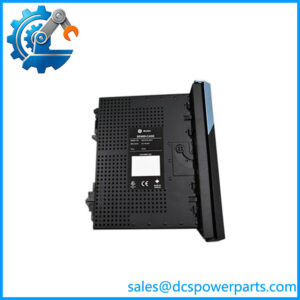
The GE VMIACC-5595-208 350-805595-208J is a managed reflective-memory hub assembly designed for GE Fanuc/VMIC 5565-family real-time reflective-memory networks. Unlike a conventional Ethernet switch, this equipment forms part of a deterministic memory-sharing architecture in which data written by one node can be distributed across other nodes on the reflective-memory network. The 5595 hub monitors the optical links, regenerates incoming serial optical signals, and can bypass a failed or disconnected node so that other network participants remain operational.
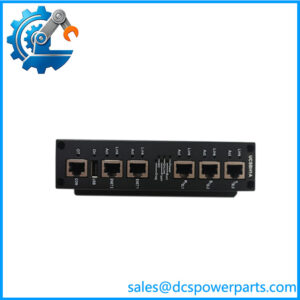
The GE VMIACC-5595-208 350-805595-208J configuration provides eight SFP-based optical ports. The -208 configuration is documented with eight multimode transceivers and no installed single-mode 10 km transceivers. The reflective-memory link operates at 2 Gb/s, while each optical port regenerates the signal to reduce the effects of insertion loss, cable attenuation, and accumulated jitter.
For larger systems, several VMIACC-5595 assemblies can be cascaded, with documentation describing managed hub arrangements supporting up to 256 nodes. The unit also provides an RS-232 management interface and Ethernet-based remote monitoring. Status information includes optical signal detection, synchronization status, transceiver information, and port operating speed.
The GE VMIACC-5595-208 350-805595-208J is therefore a specialized real-time networking component rather than a PLC I/O module. It is particularly relevant to legacy simulation, test, defense, industrial control, and embedded computing installations where reflective memory must remain synchronized across multiple processor nodes.
For procurement, the exact suffix matters. The -208 configuration is associated with eight multimode SFP positions, while other VMIACC-5595 configurations can use different combinations of multimode and single-mode optical transceivers.
Key Technical Specifications
| Parameter | Value |
|---|---|
| Product Model | VMIACC-5595-208 |
| Part Number | 350-805595-208J |
| Manufacturer | GE Fanuc / VMIC |
| Product Type | Managed Reflective Memory Hub Assembly |
| Network Family | VMIC 5565 Reflective Memory |
| Optical Data Rate | 2 Gb/s |
| Optical Ports | 8 |
| SFP Configuration | 8 × Multimode reported for -208 configuration |
| Single-Mode SFPs | 0 installed in documented -208 configuration |
| Multimode Wavelength | 830–860 nm |
| Multimode Cable Length | Up to 300 m reported |
| Single-Mode Capability | Supported by VMIACC-5595 family with appropriate SFP configuration |
| Signal Processing | Optical signal regeneration at each port |
| Fault Handling | Automatic port bypass for detected signal/synchronization loss |
| Management Interface | RS-232 |
| Remote Management | Ethernet / web-based interface |
| Ethernet Interface | 10Base-T |
| Network Expansion | Multiple hubs can be cascaded |
| Maximum Managed Hub Array | Up to 256 nodes reported |
| Mounting | 19-inch 1U rack-mount or desktop enclosure |
| Configuration Storage | NVRAM |
| Application | Reflective-memory real-time networking |
The optical and network figures above are based on available VMIACC-5595 documentation references and product records. The exact SFP population should be verified on the individual unit because the 5595 family supports different optical configurations.
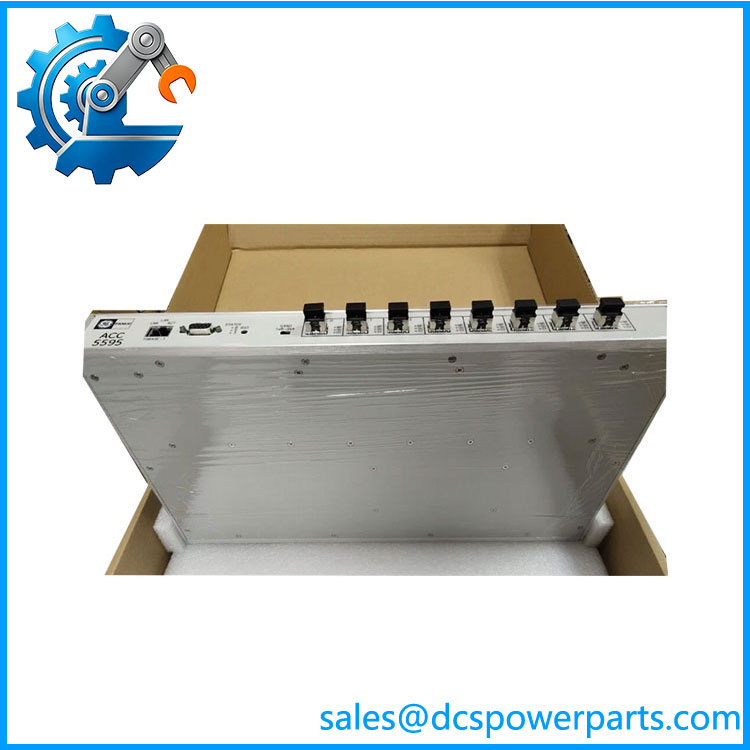
VMIACC-5595-208
Related Products
- GE Fanuc / VMIC VMIVME-5565 — VME reflective-memory interface family used to connect processor systems to the reflective-memory network. The VMIACC-5595 acts as the optical hub infrastructure between compatible nodes.
- GE Fanuc / VMIC PCI-5565 — PCI reflective-memory interface for compatible computer systems. It provides the host-side interface while the 5595 provides optical network aggregation.
- — The broader managed reflective-memory hub family. Different suffixes can specify different SFP populations and optical-distance configurations.
- — Same -208 family with a different assembly suffix. The exact installed SFP configuration should be checked before treating it as an equivalent replacement.
- — Another documented assembly number assocthe platform. Confirm hardware revision and optical configuration before substitution.
- GE Fanuc / VMIC 5565 Series — Reflective-memory interface family that forms the endpoint side of the network. The 5595 hub is designed to operate with this broader product family.
- Multimode SFP Transceiver for — Optical transceiver hardware used to populate the hub’s SFP sockets. Wavelength and fiber-distance specifications must match the installed network.
Frequently Asked Questions
1. GE 350-805595-208J used for?
It is a managed 2 Gb/s reflective-memory hub used with GE Fanuc/VMIC 5565-family real-time networking equipment. It provides up to eight optical connections and manages signal regeneration, synchronization monitoring, and port bypass functions.
It is not a conventional Ethernet switch and should not be substituted with one in a reflective-memory application.
2. Can I connect eight reflective-memory nodes directly to this unit?
Yes, the documented -208 configuration provides eight SFP optical ports populated with multimode transceivers.
Before installation, confirm:
- SFP type
- Fiber type
- TX/RX polarity
- Optical distance
- 5565 interface compatibility
- Required synchronization configuration
3. Can the ?
Do not assume live replacement.
This is a network infrastructure component, but removing it can interrupt multiple reflective-memory nodes simultaneously. If the hub is part of an active control or test system, follow the site’s approved shutdown and network-maintenance procedure.
A controlled replacement is preferable when the hub is carrying synchronized real-time data.
the support firmware v3.1?
The available documentation identifies a firmware 02.00 or later requirement for the “Dark to Dark” transmitter-control feature, but that does not establish compatibility with a generic “v3.1” firmware version.
For a replacement, compare the firmware revision shown by the existing unit and verify the required feature set rather than assuming all 5595 revisions are identical.
5. What happens if one optical node fails?
The hub can automatically bypass a port when it detects signal loss or loss of valid synchronization patterns. This allows the remaining network nodes to continue operating instead of allowing one disconnected node to interrupt the entire optical path.
That fault-bypass behavior is one of the major reasons this equipment should not be confused with a basic Ethernet hub.
6. What should I verify when purchasing a New Surplus 350-805595-208J?
For this particular part, I would verify the following before accepting the unit:
- Full marking:
- Assembly number: 350-805595-208J
- Eight SFP sockets
- Installed multimode SFP population
- Optical connector condition
- Power-up status
- Port LED operation
- Reflective-memory synchronization
- RS-232 management access
- Ethernet management access
The documented -208 configuration is associated with eight multimode SFPs, but individual surplus units may be incomplete or have had their transceivers removed.
the suitable for a PLC or DCS network upgrade?
Only where the existing architecture actually uses VMIC reflective memory.
It is not a general-purpose PLC Ethernet communication module. Its value is in maintaining a specialized deterministic data-sharing network built around compatible 5565-series reflective-memory interfaces. For a legacy replacement, identify the endpoint cards first and then confirm the hub, SFP, fiber, and synchronization configuration as one system.