Description
Product Overview
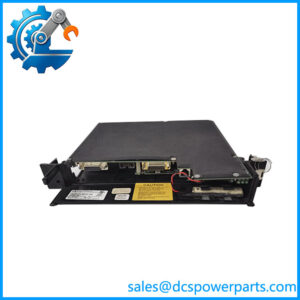
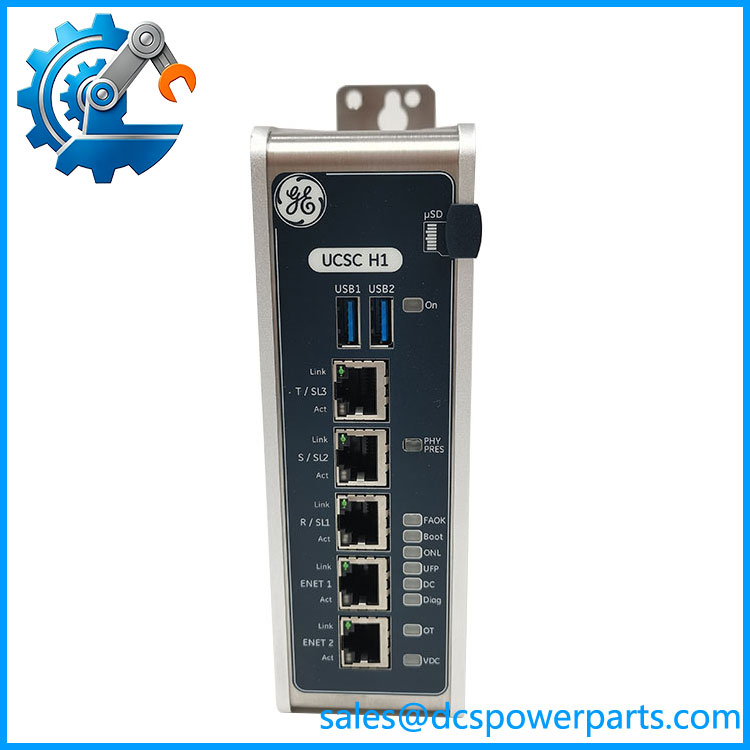
IS420UCSCH1A-B is not an arbitrary string, and the reason it matters is that GE Vernova’s own certification document defines every character. In the IECEx certificate covering this family — IECEx UL 22.0012X, Issue 1, current, issued 2024-06-28 — the type designation is written as IS42#UCSC followed by three letters, and each is given a meaning: the # in IS420 is 0 for an uncoated printed wiring board or 1 for a conformally coated one; the certification letter is H for standard safety certification or S for additional SIL certification; the processor digit is 1 for a quad-core CPU, available on the UCSC and UCSD models, or 2 for a dual-core CPU available on the UCSC only; and the final letter is any alpha character representing the customer software load. So this unit is a standard-certification, quad-core UCSC carrying software load A, on an uncoated board — a configuration description, not just a catalogue name.
What the certificate says the hardware is, in its own words, is a standalone platform using an mCOM AMD dual or quad-core microprocessor to provide a dedicated runtime and a Linux OS, with a hypervisor and an embedded Field Agent reaching cloud architecture through Predix. GE’s own security advisory on the UCSC series adds the operational fact behind that wording: the UCSC controller supports multiple independent operating systems running simultaneously on the Mark VIe control hardware — which is what the hypervisor is for, and what distinguishes the UCSC from the older single-runtime UCSA and UCSB controllers.
In a Mark VIe system the controller is one of three hardware elements, alongside the IONet switches and the distributed I/O packs. IONet is not plant Ethernet: GE describes it as a private, special-purpose Ethernet that supports only Mark controls I/O packs and controllers, with the IEEE 1588 protocol synchronising the clocks of I/O modules and controllers to within ±100 µs across those interfaces. That is the architectural reason a Mark VIe controller is specified as a controller rather than as a computer with network ports — the timing discipline on IONet is part of the control loop, and the I/O packs depend on it.
The area certification is the other half of the identity, and it carries conditions rather than just a marking. The equipment is certified as Increased Safety “ec” with the marking Ex ec IIC T4 Gc over −40 °C to +70 °C, to IEC 60079-0:2017 and IEC 60079-7:2017, with two specific conditions of use that decide how it may be installed: it is only to be used in an area of not more than pollution degree 2 as defined in IEC 60664-1, and it must be installed in an enclosure providing at least IP54 protection per IEC 60079-0, accessible only with a tool. Electrical ratings on the marking are 28 V DC at 1.1 A, with a permitted range of 18 to 30 V DC.
The trailing characters outside the certificate’s nomenclature are where trade and documentation part company. The certified designation ends at the software-load letter; -B appended after it is not defined by that document and belongs to a build or revision layer, and it should be read from the label rather than inferred. The near-miss here is real and costly: IS420UCSCH1A-B is one character arrangement away from IS420UCSCH1B, which is a later build of the same UCSC controller with a different processor generation, and resale pages quote it at 1.2 GHz with memory figures that contradict one another. Those are not the same part, and neither is the string IS421UCSC…, which would be the conformally coated variant of this same controller.
The descriptions in circulation are, as usual, partly right and partly invented: a quad-core Intel EP80579 in one place, a 1.2 GHz AMD G-series with 2 GB ECC in another and 4 GB DDR3-1333 in a third, a supply of “220 V, 50 kHz”, and a name — “Universal Controller Station Card” — that appears nowhere in GE’s documentation. The certificate settles what can be settled: AMD mCOM, quad-core in this configuration, 18 to 30 V DC, and an operating system arrangement that GE describes as a dedicated runtime with a Linux OS and hypervisor.
Technical Specifications
| Parameter | Value |
|---|---|
| Model | IS420UCSCH1A-B; certified designation IS420UCSC + H + 1 + A |
| Manufacturer | Nexus Controls LLC (GE Vernova), Longmont, Colorado, USA |
| Product type | Mark VIe UCSC controller — standalone hardware platform |
| Type designation decoding | IS42#: 0 uncoated PWB, 1 conformally coated. x: H standard safety certification, S additional SIL certification. y: 1 quad-core CPU (UCSC, UCSD), 2 dual-core CPU (UCSC only). z: alpha character = customer software load |
| Supply voltage | 18–30 V DC; nominal 28 V DC at 1.1 A |
| Processor | AMD mCOM, quad-core in this configuration (dual-core available as the y = 2 variant) |
| Operating environment | Dedicated runtime with Linux OS and hypervisor; multiple independent operating systems supported simultaneously per GE advisory |
| Embedded function | Field Agent accessing cloud architecture through Predix |
| Control network | IONet — private control Ethernet supporting only Mark controls I/O packs and controllers; RJ-45 twisted pair 10/100Base-TX; IEEE 1588 synchronisation to ±100 µs |
| Area certification | IECEx UL 22.0012X Issue 1 (current, 2024-06-28); ATEX DEMKO 20 ATEX 2359X; Increased Safety “ec” |
| Marking | Ex ec IIC T4 Gc; ATEX code ☐ II 3 G |
| Ambient temperature | −40 °C to +70 °C (Ta) |
| Conditions of use | Pollution degree 2 maximum per IEC 60664-1; enclosure of at least IP54 per IEC 60079-0, accessible only with a tool |
| Standards | IEC 60079-0:2017, IEC 60079-7:2017 |
| System context | Mark VIe / Mark VIeS — controller, IONet switches and distributed I/O packs |
| Coating option | Uncoated PWB as IS420…; conformally coated as IS421… |
| Documentation | IECEx certificate IECEx UL 22.0012X and Annex; GE security advisory on UCSCH1x / UCECH1x CPUs |
IS420UCSCH1A-B
Key Features and Advantages
A designation that can be verified rather than guessed: the 0/1, H/S, 1/2, and software-load letters are defined in GE’s own certificate, so a buyer can compare a unit against a specification field by field.
Quad-core with a hypervisor: the mCOM platform runs a dedicated runtime alongside independent operating systems on the same hardware — the reason this controller can host monitoring and control-side functions without one starving the other.
Field Agent built in: cloud connectivity through Predix is part of the certified equipment description, not an add-on card, which is how a turbine controller reaches remote monitoring and diagnostics without extra hardware in the cabinet.
IONet timing discipline: a private control Ethernet reserved for Mark controls I/O packs and controllers, with IEEE 1588 holding clocks to ±100 µs — deterministic I/O behaviour that plant Ethernet cannot provide.
Area certification with usable conditions: Ex ec IIC T4 Gc from −40 °C to +70 °C, valid where the enclosure is IP54 with tool-only access and pollution degree 2 is respected. Those conditions are the installation specification.
Coating as an orderable distinction: the 0/1 character separates an uncoated board from a conformally coated one, which in a sulphur-bearing or humid plant is the difference between a five-year board and a two-year one.
A documented security posture: GE published a vulnerability advisory for the UCSCH1x and UCECH1x CPUs with a CVSS score of 8, which is information a plant can act on — network segmentation and controlled access — rather than discover.
Applications
Gas and steam turbine control: the controller in a Mark VIe or Mark VIeS package, executing the turbine application and exchanging process data with the I/O packs over IONet.
Combined-cycle and HRSG plants: unit-level control where redundant controllers share IONet switch infrastructure, with the timing discipline that IEEE 1588 provides across the I/O layer.
Oil and gas compression and pumping: packaged control rooms running Mark VIe where a standalone controller with cloud-side diagnostics is preferable to a plant DCS extension.
Zone 2 and harsh-ambient installations: the Ex ec certification with a −40 °C to +70 °C range is what allows this controller into an enclosure in a classified area, provided IP54 and pollution degree 2 conditions are met.
Retrofit of legacy Speedtronic systems: Mark V and Mark VI installations migrating to Mark VIe keep their turbine application but change the controller layer, and the UCSC is one of the controller options in that migration.
Remote monitoring and fleet diagnostics: Field Agent connectivity feeds plant-level analytics, which is why the controller is specified with cloud reach rather than only with local I/O capacity.
Where it does not fit: applications needing the additional SIL certification — that is the S certification variant, not this unit — and installations that cannot provide an IP54 tool-access enclosure or that exceed pollution degree 2.
Related Products
IS420UCSCH1B — later build of the same UCSC controller with a different processor generation; one character apart from this unit and not interchangeable. IS421UCSC… — the conformally coated version of this controller, differing only in the PWB coating digit. IS42xUCSC…S… — the additional-SIL certification variant, for safety applications requiring more than standard certification. IS420UCECH1A — UCEC expansion controller carrying an additional PCIe board, sharing the same platform and certification. IS420UCSDH1A — UCSD controller, quad-core in the same certified family. IS420UCSBH1A / IS420UCSBH3A — UCSB standalone controller; the predecessor generation with a single runtime rather than the multi-OS arrangement. Mark VIe IONet switches (IS420ESW…) — the network element the controller depends on; IONet redundancy is equal to controller redundancy. IS220PDIAH1A and companion I/O packs — the distributed I/O this controller polls over IONet, with their own terminal boards setting the field signal types. GEH-6721 Mark VIe Controls Handbook — the system-level reference for controller, switch and I/O integration. Elmo-unrelated note: the controller’s application software load letter is part of its identity; a replacement must match it as well as the hardware string.
Installation and Maintenance
Before installation: verify the label against the certificate nomenclature rather than against the sales description — uncoated or coated board, H or S certification, quad or dual core, and the software-load letter — because each of those four fields changes what the unit may do. Confirm the enclosure provides at least IP54 with tool-only access and that the location is pollution degree 2 or better; those are conditions of the Ex certification, not recommendations. Check the supply is within 18 to 30 V DC and sized for 1.1 A, and confirm the IONet switch infrastructure and cabling are in place before the controller is powered.
Installation: bond the enclosure and the mounting to earth before energising, since the Ex protection depends on the installation as much as on the board. Connect the IONet interfaces to the switch infrastructure using the marked network cables, keep the control Ethernet physically separate from plant networks, and confirm IEEE 1588 synchronisation is established across the I/O layer before the application is downloaded. Download the correct software load for the unit’s letter, verify the controller joins its redundant partner where a pair is configured, and observe the front indicators through the first start rather than after the first trip.
Maintenance: treat the controller’s software load and configuration as the asset and the board as the carrier — a replacement with the right hardware string and the wrong load will boot and will not run the plant. Keep the unit’s certification markings legible and photograph the label, since the coating digit and certification letter are only proven by the label. Observe the ambient range rather than the cabinet average, replace any deteriorated conformal coating concern with the properly coated variant rather than by field repair, and apply GE’s published advisory on this CPU family through segmentation, access control and patch management as the plant’s security regime allows.
Warranty and Quality
Every IS420UCSCH1A-B unit is supplied with its designation decoded against GE Vernova’s own certification document — IS420 uncoated board, UCSC, H standard safety certification, 1 quad-core, A customer software load — and with the trailing build suffix identified as a layer outside that nomenclature to be verified on the label rather than inferred from the sales string. Units are inspected for board and connector condition, coating integrity, label legibility and completeness of the certification markings, enclosure and mounting condition, indicator and connector condition, and any evidence of rework or repair; the software load letter is recorded as found. Technical data is quoted from IECEx UL 22.0012X Issue 1 and its Annex (current, issued 2024-06-28; ATEX DEMKO 20 ATEX 2359X): an mCOM AMD dual or quad-core platform with dedicated runtime, Linux OS, hypervisor and embedded Field Agent to Predix; 18–30 V DC at nominal 28 V and 1.1 A; Increased Safety “ec” with marking Ex ec IIC T4 Gc over −40 °C to +70 °C; IEC 60079-0:2017 and IEC 60079-7:2017; pollution degree 2 and tool-access enclosure as conditions of use — together with GE’s published advisory for this CPU series and GE’s description of IONet as a private control Ethernet with IEEE 1588 synchronisation to ±100 µs. The claims that this controller uses an Intel EP80579, runs on 220 V, or that it is a “Universal Controller Station Card” are rejected against those documents, and IS420UCSCH1B is identified as a different, later build rather than an equivalent. A 12-month repair, replacement or refund commitment applies. Technical support covers what this part actually requires: reading the four designation fields, distinguishing this unit from the H1B build and from the coated and SIL variants, confirming the software-load letter, and verifying the installation conditions that the Ex certification depends on.