Description
Product Overview
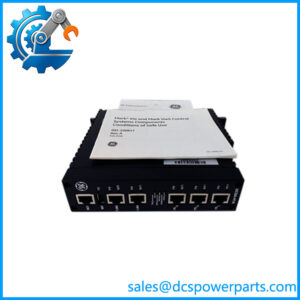
IS220PSCAH1A is the pack that gives a Mark VIe controller a way to talk to equipment that has no IONet port and never will. Six serial transceiver channels sit behind one pack, each configurable in software and by terminal-board jumper to RS-232C, RS-422 or RS-485 half duplex, and each able to run Modbus master service. Alongside them the pack can put one of its Ethernet ports to work as an Ethernet Modbus master channel, following the open Modbus/TCP specification as a Class 1 device. In a turbine control system that is the difference between a plant that can only see its own I/O and one that can read the exciter, the vibration monitor, the third-party skid PLC and the power meter.
The role is specific and worth stating plainly, because it is the most common reason the wrong part gets bought: this is a master, not a listening port. GE’s documentation describes the module as providing Modbus Master protocol from the Gateway controller to other devices, over serial or Ethernet media. A project that needs a slave port for a DCS to poll the turbine controller is not buying this pack; a project that needs the turbine controller to poll eighteen Modbus devices is.
Three engineering limits shape how it is applied. First, the module is Simplex only — there is no redundant or triplex build, so a serial link brought in through this pack is a single path and should be treated as one in the plant’s availability analysis. Second, the Ethernet Modbus master channel requires a Simplex IONet configuration; on a dual or TMR IONet the Ethernet Modbus function is not available, and the serial channels are what remain. Third, the electrical limits are modest by fieldbus standards and are set per mode: RS-232C reaches 15 m at up to 115.2 kbps, RS-422 reaches 305 m at 115.2 kbps with up to eight drops, and RS-485 half duplex reaches 305 m but at up to 375 kbps. Those are cable-length numbers that a plant electrician can check against the actual run before the pack is specified, and they are usually what decides between RS-422 and RS-485 on a long cable tray.
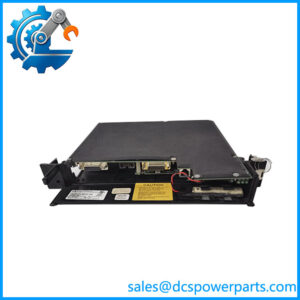
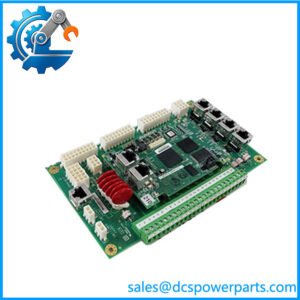
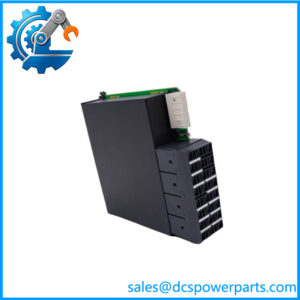
The pack is the electronic half of a two-part module. It mounts on an SSCA terminal board — IS200SSCAH2A in the build variants used with this generation of pack — where the field wiring lands on Euro-style box terminals accepting 24 AWG to 12 AWG, and where the jumpers that set the termination scheme and the RS-232C return-path ground are located. The termination is selectable between open and 121 Ω, and the RS-232C return path between a resistive ground of 100 Ω and 1 MΩ; both are decisions about the specific cable and the specific device at the far end, and both are made with a jumper rather than in software.
The generational detail matters for spares. IS220PSCAH1A is the earlier, non-RoHS pack; GE’s current documentation for this function covers the RoHS-compliant IS420PSCAH1B on the IS410SSCAH2A terminal board, with the same six-channel serial function, the same Ethernet Modbus master channel and the same Simplex restriction. In the type designation, the second character distinguishes the two: 2 for not RoHS-compliant, 4 for RoHS-compliant. A plant standardising on the current build should be buying the 420/410 pair; a plant replacing an existing 220-series pack in an installed cabinet should confirm which board it is already wired to.
Technical Specifications
| Parameter | Value |
|---|---|
| Model | IS220PSCAH1A — Mark VIe serial communication I/O pack (PSCA) |
| Manufacturer | GE — Mark VIe control platform |
| Product type | Serial communication I/O pack; part of a two-part module with an SSCA terminal board |
| Serial channels | 6, each individually configurable |
| Supported modes | RS-232C; RS-422; RS-485 half duplex; Ethernet Modbus master |
| Protocol role | Modbus master for serial channels; Ethernet Modbus master following open Modbus/TCP, Class 1 device |
| Ethernet Modbus capacity | Up to 18 Ethernet Modbus stations; transfer rate configurable at 0.5, 1, 2 or 4 Hz; function codes 1 to 7, 15 and 16 |
| Ethernet prerequisite | Ethernet Modbus master channel requires a Simplex IONet configuration |
| RS-232C limits | 15 m (50 ft) cable distance; up to 115.2 kbps |
| RS-422 limits | 305 m (1,000 ft); up to 115.2 kbps; maximum 8 drops |
| RS-485 limits | Half duplex only; 305 m (1,000 ft); up to 375 kbps |
| Termination and grounding | Jumper-selectable termination, open or 121 Ω; RS-232C return path jumper-selectable, 100 Ω resistive ground or 1 MΩ |
| I/O network | One or two Mark VIe I/O Ethernet (IONet) ports; Simplex configuration only |
| Field wiring | Euro-style box-type terminal blocks; 24 AWG minimum, 12 AWG maximum |
| Control power | 24 / 28 V dc at 10 W maximum; Micro Mate-N-Lok receptacle (AMP 1445022-3) — values as published for the current SSCA board pairing |
| Mechanical | Aluminium-case pack on a DIN-rail-mounted terminal board; module 17.0 × 15.7 × 15.3 cm including cover and pack |
| Environment | Operating −40 to +70 °C; storage −40 to +85 °C |
| Hazardous locations | Class 1 Div 2 / Class 2 Zone 2 / ATEX, per GEH-6861 HazLoc instruction guide |
| Diagnostics | Power-up self test, continuous monitoring of internal supplies, incorrect terminal-board check; circuit health variables available to control logic |
| Safety rating | Not safety rated; G3 compliant |
| Terminal board | IS200SSCAH2A for this pack generation; IS410SSCAH2A with the current IS420PSCAH1B pack |
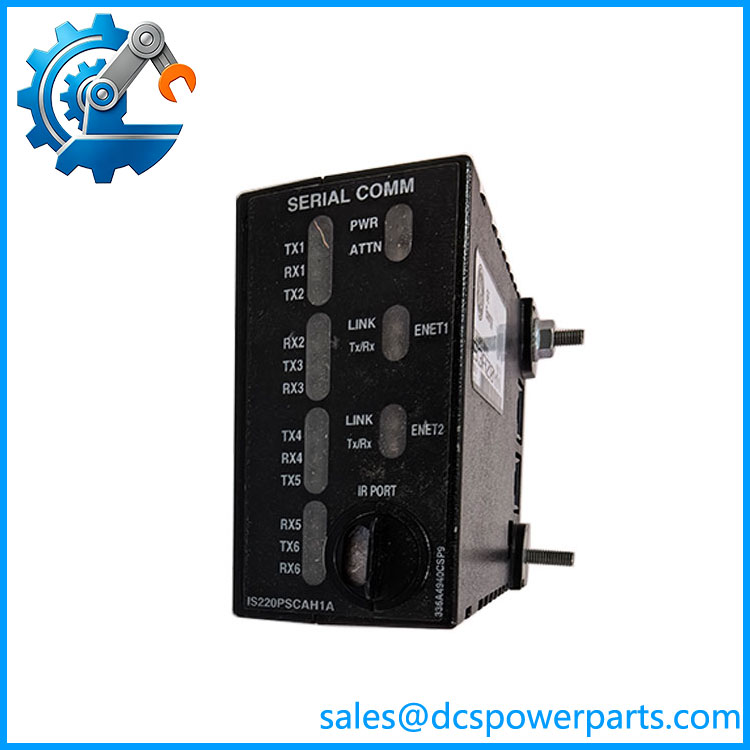
IS220PSCAH1A
Key Features and Advantages
Six channels in one pack: a single module replaces the several single-port serial cards that used to occupy a Mark VIe cabinet, and each channel is configured independently, so a mixed estate of RS-232 short links and RS-485 multidrop trunks lives on one pack.
Mode selected at the field, not at the order: the RS-232, RS-422 and RS-485 choice is made by configuration and by terminal-board jumpers, so a channel that turns out to be the wrong electrical standard after the cable survey does not become a new part number.
Termination that matches the cable: the 121 Ω termination and the 100 Ω or 1 MΩ RS-232C return-path ground are jumper-selectable on the board, which is how reflections and ground loops on a 300 m trunk get fixed without a repeater.
Two media in one module: serial Modbus for the installed base and Ethernet Modbus/TCP for the newer devices, with up to eighteen Ethernet stations and function codes 1 to 7, 15 and 16 — enough coverage for the read-and-write patterns most third-party equipment expects.
Reported health to the logic: circuit health variables and a terminal-board mismatch check are available in the control database, so a wrong board or a failing supply appears as a diagnostic rather than as unexplained communication dropouts.
Environmental range for the cabinet it lives in: −40 to +70 °C operation and a Hazardous Locations capability of Class 1 Div 2 / Zone 2 / ATEX mean the module is at home in a turbine enclosure, not only in a conditioned control room.
Designed around replacement, not rewiring: the pack is a replaceable element on a DIN-rail board, so a failed pack is swapped while the field terminations and the jumper settings on the board stay as they were.
Applications
Gas and steam turbine packages: bringing the exciter, the vibration monitoring system and the auxiliary skid controllers into the Mark VIe gateway over Modbus, where those suppliers ship serial ports and nothing else.
Balance-of-plant integration: water treatment, fuel gas metering, compressor packages and HVAC plant polled as Modbus slaves, with the turbine controller holding the data in its own database rather than in a separate historian.
Third-party PLC interfacing: reading and writing registers on non-GE PLCs — 西门子 S7, Modicon or Mitsubishi skids — where a serial link is the only commercially available route and the plant does not want a protocol gateway box.
Legacy HMI and operator panel connections: RS-232C links to older panels and terminals within the 15 m limit, kept alive on a channel of their own so a panel fault cannot take the trunk down.
Electrical and metering integration: power meters, protection relays and analyzer packages polled over RS-485 half duplex on multidrop trunks up to eight drops per RS-422 segment and 305 m of cable.
Plant-wide data concentration for a DCS or historian: one Ethernet Modbus master channel collecting up to eighteen stations at 0.5 to 4 Hz for slow-changing process data, which is the rate most supervisory systems actually need.
Related Products
IS200SSCAH2A — the Simplex serial communication terminal board this pack generation mounts on; variants such as the AGD and AEC builds carry the same six-channel function with different build details. IS420PSCAH1B — the RoHS-compliant current pack for the same function; the part to order for new cabinets, at the cost of a different terminal board pairing. IS410SSCAH2A — the current terminal board that goes with IS420PSCAH1B, replacing the IS200-series board in new builds. IS220PAICH1B — the analog I/O pack built on the same shared Mark VIe processor board, useful when the question is whether a channel problem is the pack or the board family. IS220PDIAH1A — the discrete input pack from the same generation, for contact inputs that a serial link cannot cover. IS220UCSAH1A — Mark VIe controller; the pack’s Ethernet Modbus master function is documented in the context of a Gateway controller driving the poll. IS420UCSCH1A — the later compact controller that hosts IONet and the same Modbus master function on current installations. IS200STAIH1A — analog input terminal board from the same S-type family, for comparison when a cabinet is being re-terminated around the serial module.
Installation and Maintenance
Before installation: confirm the role. IS220PSCAH1A is a Modbus master, so the far-end devices must be slaves; and confirm the IONet configuration, because the Ethernet Modbus master channel needs Simplex. Check the actual cable run against the mode’s limit — 15 m for RS-232C, 305 m for RS-422 and RS-485 — and confirm the drop count on an RS-422 segment does not exceed eight. Verify which SSCA board the cabinet is wired to, since this pack pairs with the IS200SSCAH2A generation while current builds use IS410SSCAH2A with IS420PSCAH1B. A second number, 336A4940CSP9, is quoted by resellers against this module but does not appear in GE’s summary sheet, so it should be verified rather than used as the ordering reference.
Installation: mount the terminal board on DIN rail, land the field wiring on the Euro-style box terminals at 24 to 12 AWG, and set the jumpers deliberately — termination open or 121 Ω according to whether the channel sits at an end of the trunk, and the RS-232C return path at 100 Ω or 1 MΩ according to how the far-end device is grounded. Feed the pack 24 or 28 V dc through the Micro Mate-N-Lok connector, keeping to the 10 W maximum, and connect the IONet ports to the network the controller is on. Leave the pack’s identification label readable: the type designation is the only reliable statement of which build the unit is.
Maintenance: use the circuit health variables and the incorrect-terminal-board diagnostic in the control logic rather than waiting for operators to report a frozen value — a Modbus channel that has stopped updating usually announces itself there first. When a channel behaves intermittently on a long trunk, check termination and the RS-232C ground jumper before replacing hardware, and confirm no duplicate Modbus addresses were introduced when a device was added. Keep a written record of the channel-to-device map and the jumper settings per channel: a replacement pack carries no configuration of its own, and a board swapped without that record costs more commissioning time than the pack itself.
Warranty and Quality
Every IS220PSCAH1A is supplied as the GE Mark VIe Serial Communication (PSCA) I/O pack defined by GE’s Modbus Master Communication Module summary sheet and the Mark VIe system documentation, not as the power supply, the advanced control module, or the 24-channel device that resale listings describe. Documented for this function: six independently configurable serial transceiver channels, each able to meet RS-232C, RS-422 or RS-485 half-duplex requirements, with up to six channels configured for serial Modbus Master service; one Ethernet Modbus master channel following the open Modbus/TCP specification for a Class 1 device, supporting up to 18 stations, configurable transfer rates of 0.5, 1, 2 or 4 Hz and function codes 1 to 7, 15 and 16, available with a Simplex IONet configuration; RS-232C at 15 m and up to 115.2 kbps; RS-422 at 305 m, up to 115.2 kbps and a maximum of eight drops; RS-485 half duplex at 305 m and up to 375 kbps; jumper-selectable termination of open or 121 Ω and an RS-232C return path of 100 Ω or 1 MΩ; Euro-style box terminal blocks accepting 24 to 12 AWG; 24/28 V dc control power at 10 W maximum through a Micro Mate-N-Lok connector; an aluminium-case pack on a DIN-rail terminal board measuring 17.0 × 15.7 × 15.3 cm including cover and pack; operation from −40 to +70 °C and storage from −40 to +85 °C; a Hazardous Locations capability of Class 1 Div 2 / Class 2 Zone 2 / ATEX per GEH-6861; power-up self test, continuous supply monitoring and an incorrect terminal-board check as diagnostics; and a module that is not safety rated and is Simplex only. Units are inspected for connector and terminal condition, signs of heat or corrosion, jumper presence, and for the type designation against the pack generation. Six corrections are stated plainly: this pack carries no discrete or analog I/O channels, so figures such as 24 inputs and 16 outputs do not apply; it has six serial channels rather than 24; its Modbus role is master, so a project needing a slave port is looking at the wrong module; it is not a power supply and has no AC input; its configuration tool is ToolboxST on the Mark VIe platform, not Proficy Machine Edition, and it has nothing to do with SERCOS III; and its build is Simplex only, with no redundant or triplex version. Physical and power figures are those GE publishes for the current SSCA board pairing, so on an installed cabinet the envelope of the IS200-series board should be confirmed from the module marking rather than assumed identical. A 12-month repair, replacement or refund commitment applies. Technical support covers confirming master versus slave role before an order is placed, choosing between this pack generation and the RoHS IS420PSCAH1B / IS410SSCAH2A pairing, setting termination and RS-232C ground jumpers per channel, checking cable length and drop count against the mode selected, and diagnosing a channel that reports healthy power but has stopped polling.