Description
GE IS220PAOCH1A | Mark VIe Analog Output Pack | 0–20 mA Turbine Control Interface
Key Technical Specifications
| Parameter | Specification |
|---|---|
| Manufacturer | General Electric (GE) |
| Model | IS220PAOCH1A |
| Series | Mark VIe |
| Functional Type | PAOC Analog Output Pack |
| Output Channels | Up to 8 simplex channels |
| Output Signal | 0–20 mA current loop |
| Ethernet | Dual RJ45 Ethernet connections |
| Terminal Connection | DC-37 |
| Associated Terminal Board | TBAO analog output terminal board |
| Feedback | ADC-based current feedback for each output |
| Internal Architecture | Processor board plus analog-output acquisition circuitry |
| Diagnostics | PWR, ATTN, Ethernet and channel-status indicators |
| Power Interface | Three-pin power input |
| Configuration Consideration | Must be matched to the installed TBAO/STAO hardware and Mark VIe configuration |
The Mark VIe hardware documentation describes the PAOC architecture as a processor board common to distributed I/O packs plus acquisition circuitry dedicated to analog output. It specifies up to eight simplex 0–20 mA current-loop outputs and current-feedback conversion for each output.
Product Introduction
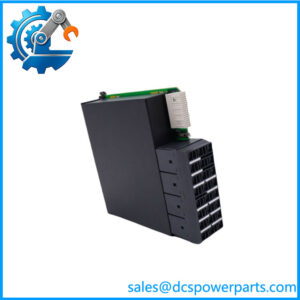
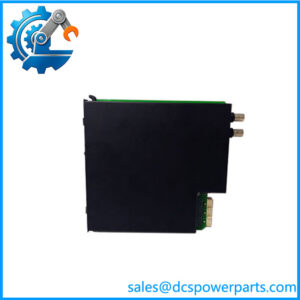
The is a Mark VIe PAOC analog output pack used to interface control-system commands with analog field devices. In the Mark VIe distributed I/O architecture, the pack sits between the I/O Ethernet network and the associated analog output terminal board, converting controller commands into current-loop signals used by valves, actuators, positioning equipment, and other analog-controlled devices.
The supports up to eight simplex 0–20 mA outputs and provides current feedback for output diagnostics. Its dual Ethernet connections, three-pin power input, and DC-37 terminal-board interface make it a system-specific component rather than a drop-in universal analog output card. For maintenance teams, the important procurement issue is therefore not just the model number but the complete Mark VIe I/O configuration, terminal-board revision, and application requirements.
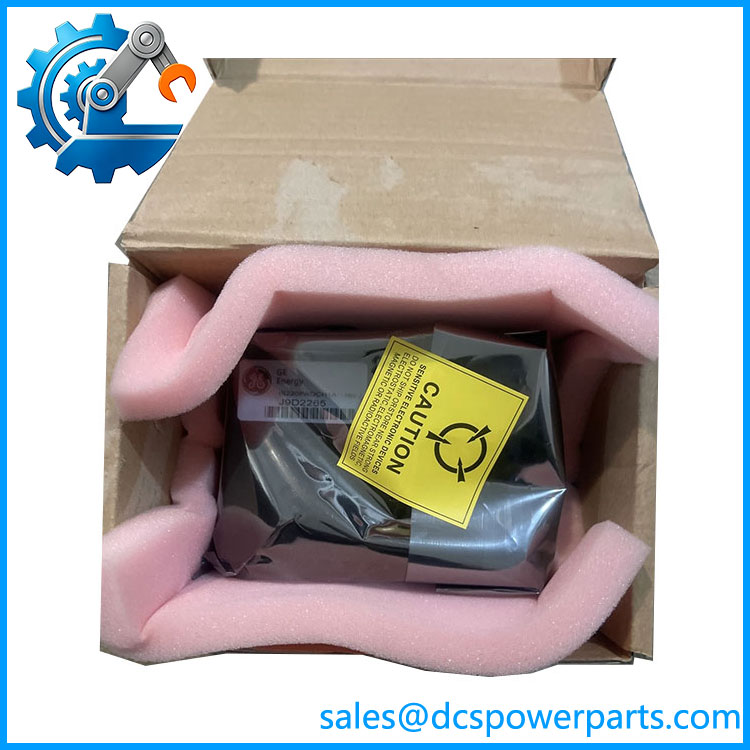
IS220PAOCH1A
Application Scenarios & Field Pitfalls — The Engineer’s Perspective
Engineering Pain Point
A common Mark VIe maintenance problem occurs when an analog command channel stops responding even though the controller logic appears normal. The fault may originate in the PAOC pack, the terminal board, the field wiring, the external power arrangement, or the I/O Ethernet path. Replacing the without checking those interfaces can result in unnecessary hardware changes without correcting the actual fault.
Typical Applications
1. Turbine control systems
The PAOC pack is suited to analog command signals within GE Mark VIe turbine-control architectures, particularly where continuous current signals are required by downstream control equipment.
2. Valve and actuator control
0–20 mA outputs can be used for proportional control devices where the final control element accepts a current-loop command.
3. Process-control interfaces
The pack can provide analog commands to external equipment through the associated TBAO terminal-board assembly.
4. Legacy Mark VIe maintenance
The is relevant when maintaining an existing Mark VIe installation where the original distributed-I/O architecture must remain intact.
Technical Pitfalls
Terminal-board compatibility matters.
The PAOC pack is designed to work with a corresponding analog output terminal-board arrangement. Do not assume that every TBAO revision is interchangeable. One technical reference specifically identifies TBAO/STAO compatibility requirements, so the terminal-board label should be checked before procurement.
Do not confuse PAOC with PAIC.
is an analog output pack. IS220PAICH1A belongs to the analog-input family. The two functions are not interchangeable.
Check the complete signal path.
When troubleshooting a dead 0–20 mA channel, verify the controller command, I/O Ethernet communication, pack status indicators, terminal-board connection, field power, loop wiring, and receiving device before condemning the pack.
Output loading must be evaluated at the system level.
The pack generates current-loop signals, but the actual loop behavior depends on the connected terminal board, wiring, receiving instrument, and external circuit conditions. Do not apply a generic load specification from another GE analog-output variant.
Revision control is important.
For an installed turbine control system, compare the replacement unit’s full label information, hardware revision, and configuration requirements with the removed unit. A visually identical Mark VIe I/O pack is not automatically equivalent in every application.
Do not treat it as a standalone PLC module.
The is part of the Mark VIe distributed I/O architecture. Its operation depends on the associated network, terminal-board assembly, controller configuration, and field wiring.
Related Products
- GE IS220PAICH1A — Mark VIe analog input pack; input rather than output function.
- GE IS220PDOAH1A — Mark VIe discrete output pack.
- GE IS220PDIOH1A — Mark VIe discrete I/O hardware.
- GE IS220PTURH1A — Mark VIe turbine-specific I/O pack.
- GE IS200TBAOH1C — TBAO analog output terminal-board family used with PAOC architecture.
- GE IS200STAOH1A — STAO analog output terminal-board hardware.
- GE IS200STAOH2A — alternate STAO terminal-board configuration.
- GE IS220PAOCH1B — later PAOC variant; do not assume A/B revision interchangeability without checking the system documentation.
- GE Mark VIe BPPB — processor-board family used across Mark VIe distributed I/O packs.
Procurement Note
For an replacement, request the complete part-number label and hardware revision rather than purchasing solely from the generic description “Mark VIe analog output module.” Confirm the installed terminal board, application wiring, and system revision before substitution. For used or surplus industrial automation spare parts, functional testing should include Ethernet communication, pack diagnostics, terminal-board interface condition, and representative analog-output verification where the test setup permits it.