Description
GE IS200WROBH1A WROB Relay Fuse and Power Sensing Board
Product Overview
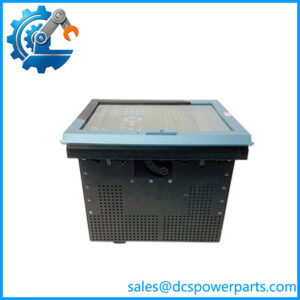
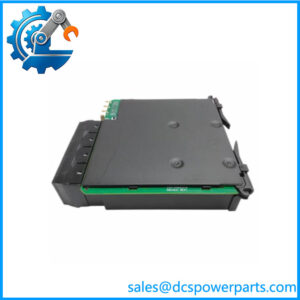
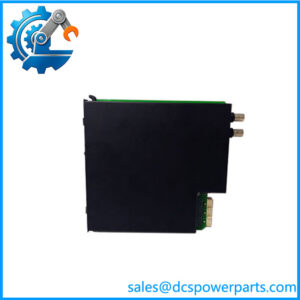
The GE IS200WROBH1A is a WROB relay, fuse, and power-sensing option board used within GE Mark VIe discrete I/O hardware. It is not a conventional standalone PLC I/O module. Its job is to add protected power distribution and fuse-status sensing to compatible relay and terminal-board assemblies. GE documentation describes the WROB option board in conjunction with the TDBS and SRLY assemblies, where it provides fused and sensed power to relay circuits.
A key feature of the GE IS200WROBH1A is its fuse-monitoring arrangement. The board uses a default 3.15 A fuse value, with the power-distribution circuitry associated with the first six relay outputs. GE’s hardware guide specifies that fuse-voltage feedback is compatible with 24 VDC, 48 VDC, and 125 VDC applications, as well as 120 VAC and 240 VAC applications. This is an important distinction: the board is sensing the presence or absence of voltage associated with the fuse circuits; it should not be described simply as a generic power supply.
When installed with an appropriate TDBS assembly, the GE IS200WROBH1A adds functionality equivalent to the relay-circuit arrangement of an IS200TRLYH1B terminal board in simplex service. When installed with an SRLY_2A board, the WROB option provides the corresponding fused/sensed relay-power arrangement. In TMR applications, WROB can be installed with TDBT-family hardware and used as part of the Mark VIe PDIO architecture.
Product Introduction
Relay outputs in a turbine-control cabinet often need more than a switching contact: the control system also needs to know whether the associated field-power circuit remains intact. The IS200WROBH1A addresses that requirement by combining relay power distribution, fuse protection, and voltage-based fuse-status sensing within the Mark VIe terminal-board architecture.
For legacy replacement work, the board must be matched to the actual terminal-board configuration. TDBS, SRLY, and TDBT installations use the WROB differently, so purchasing the correct IS200WROBH1A without checking the mating board can still result in an incompatible replacement.
Key Technical Specifications
| Parameter | Value |
|---|---|
| Product Model | |
| Manufacturer | General Electric |
| Product Family | Mark VI / Mark VIe |
| Functional Acronym | WROB |
| Product Type | Relay Fuse and Power Sensing Option Board |
| Default Fuse Value | 3.15 A |
| Fuse Configuration | 12 fuse positions |
| Primary Fused Relay Circuits | First six relay circuits |
| Power-Sensing Function | Fuse-voltage feedback |
| Supported Fuse-Sensing Voltage | 24 VDC, 48 VDC, 125 VDC, 120 VAC, 240 VAC |
| Associated Terminal Boards | TDBS, SRLY, TDBT |
| TMR Terminal Boards | TDBTH2, TDBTH4, TDBTH6 |
| Redundancy Applications | Simplex, redundant, or TMR depending on architecture |
| Manual | GEH-6721 |
| System Application | Mark VIe PDIO discrete I/O |
The voltage-sensing ranges and relay/fuse architecture are documented in GE’s Mark VIe System Hardware Guide. Secondary technical listings also identify the board’s 3.15 A default fuse value and TDBT/TDBS/SRLY compatibility.
Major Features / Practical Advantages
Fused relay-power distribution
The WROB board distributes protected field power to relay circuits rather than functioning as a conventional signal-conditioning card. GE’s documentation specifically identifies fused power distribution for the first six relays. Both sides of those power paths can be fused, which is relevant when the DC source is floating relative to earth.
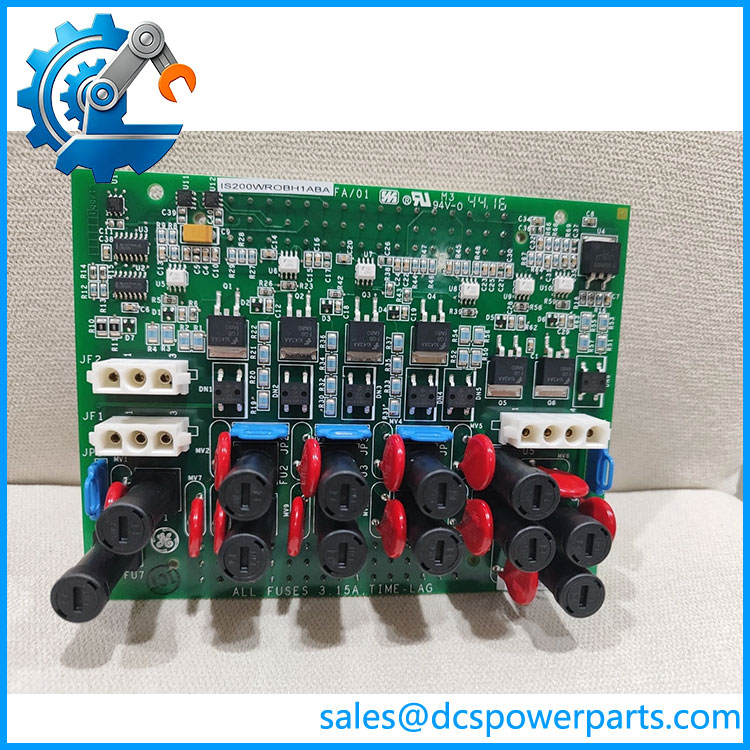
IS200WROBH1A
Fuse-status sensing
The board provides voltage feedback associated with its fuse circuits. When used with the appropriate isolated-voltage arrangement, the control system can detect fuse conditions rather than relying solely on a relay output’s commanded state. That provides useful diagnostic information during turbine-control maintenance.
3.15 A default fuse arrangement
The documented default fuse value is 3.15 A. This should be verified against the actual site configuration before replacing fuses or changing an assembly. A replacement board should not be assumed to permit arbitrary fuse sizing simply because the physical fuse holders accept another rating.
Multiple field-voltage applications
GE’s documentation specifies fuse-voltage feedback compatibility with 24, 48, and 125 VDC, along with 120 and 240 VAC applications. This makes the WROB architecture suitable for several relay-power arrangements, but the actual installed circuit and terminal-board configuration remain decisive.
TDBS integration
With a TDBS board, the WROB option creates a relay arrangement with functionality equivalent to the IS200TRLYH1B terminal-board relay circuit in simplex applications. The combination provides sensed and fused power to the first six relays and dedicated power to the final relay.
SRLY integration
GE also documents an SRLY_2A + WROB configuration. In this arrangement, the WROB adds the fused and sensed power-distribution functions needed to produce the corresponding TRLY-type relay circuitry. The SRLY relay itself has a 5 A current rating, but the applicable fuse and circuit limitations still need to be evaluated separately.
TMR installation capability
The WROB is also used with TDBT-family hardware in TMR applications. Secondary documentation identifies TDBTH2, TDBTH4, and TDBTH6 as compatible TMR terminal-board variants. This does not mean the WROB itself is a standalone TMR controller; redundancy comes from the complete Mark VIe I/O architecture.
Related Products
- IS200TDBS — Terminal board used with WROB for relay power distribution and sensing in the documented simplex configuration.
- IS200TDBT — Terminal-board platform used with WROB in applicable TMR PDIO configurations.
- SRLY_2A — Relay terminal-board assembly that can be combined with WROB to provide fused and sensed relay-power circuitry.
- IS200TRLYH1B — Mark VIe relay terminal board whose relay-circuit functionality can be replicated by specified TDBS + WROB or SRLY + WROB combinations in the documented configurations.
- TDBTH2 — TDBT-family terminal board identified for TMR applications with WROB.
- TDBTH4 — Another compatible TDBT-family terminal-board configuration for WROB/TMR applications.
- TDBTH6 — TDBT-family terminal board compatible with WROB in specified TMR configurations.
- IS200WROBH1AAA — Related/variant-marked WROB hardware found in legacy inventories; do not assume the extra suffix is interchangeable with H1A without checking the complete board marking.
FAQ
What exactly does the do?
It is a relay, fuse, and power-sensing option board. Its principal function is to add fused power distribution and voltage-based fuse-status sensing to compatible Mark VIe terminal-board assemblies. It is not a CPU or conventional discrete I/O module.
Can I install the on any Mark VIe terminal board?
No. The associated hardware matters. GE documents specific combinations with TDBS, SRLY, and TDBT-family boards. Check the existing terminal-board part number, connectors, jumpers, and physical mounting arrangement before ordering.
What is the default fuse rating?
The documented default is 3.15 A. The GE hardware guide also provides the circuit relationship between individual fuses, jumpers, relay circuits, and terminals.
Can the board sense 125 VDC?
Yes. GE’s hardware documentation specifies fuse-voltage feedback compatibility with 24 VDC, 48 VDC, and 125 VDC, as well as 120 VAC and 240 VAC. This is a sensing specification, not a statement that every WROB installation should be wired for all of those voltages simultaneously.
Can I hot-swap the ?
Do not treat the option board as universally hot-swappable. Whether maintenance can be performed with the associated Mark VIe equipment energized depends on the complete terminal-board/I/O architecture and the site’s approved maintenance procedure. Follow the applicable GE documentation and site isolation procedure.
Is the a TBCI replacement?
Not as a standalone board. In a documented TMR arrangement, WROB mounted on a TDBT can provide functionality equivalent to a terminal board combined with contact-input functionality. That is an assembly-level architectural function, not evidence that WROB alone can replace a TBCI terminal board.
Does the work with TDBS?
Yes. GE explicitly documents TDBS + WROB as an assembly that provides relay-circuit functionality equivalent to the IS200TRLYH1B in simplex applications, including fused/sensed power for the first six relays.
Does it support TMR?
The WROB is used in documented TMR configurations with TDBT-family terminal boards. The applicable TMR terminal-board variants include TDBTH2, TDBTH4, and TDBTH6. The redundancy belongs to the overall Mark VIe architecture rather than the WROB board operating independently.
Does this support firmware v3.1?
The is an option/relay-fuse-sensing board rather than a processor module, so a generic firmware-v3.1 claim should not be assigned to the board from its part number alone. System and I/O-pack firmware compatibility should instead be checked against the complete Mark VIe configuration.
Procurement Note
For a replacement, the first check should be the board it is being mounted to. The same WROB option has different system-level functions when paired with TDBS, SRLY, or TDBT hardware. GE’s own documentation makes those assembly relationships explicit.
Verify the complete board marking, terminal-board part number, fuse configuration, jumper arrangement, relay application, and required field voltage before installation. In particular, do not substitute a visually similar WROB variant solely because the first portion of the part number matches.
For legacy inventory, distinguish new surplus, refurbished, and previously installed hardware. Request photographs showing the actual label, connectors, fuse holders, and board condition. The 3.15 A fuse value should also be checked against the site’s approved circuit documentation before commissioning.
One final engineering point: is not a generic “power distribution board.” Its useful identity is much more specific — a WROB relay/fuse/power-sensing option that modifies compatible Mark VIe relay terminal-board assemblies. That distinction is important when building a replacement BOM or troubleshooting a PDIO cabinet.