Description
Product Introduction
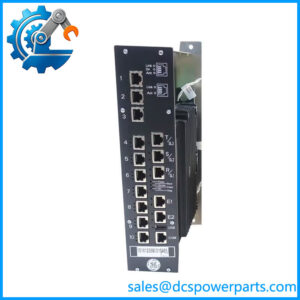
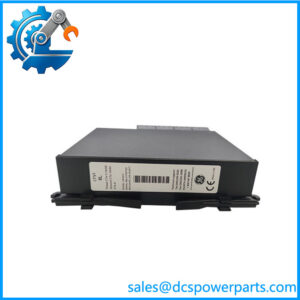
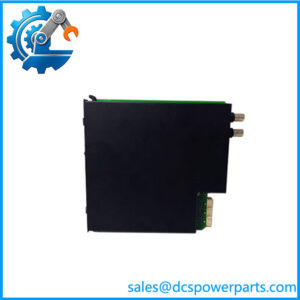
When a turbine control system reports a contact-input fault or fails to register a relay command, maintenance teams need to distinguish a field-wiring problem from a board, cable, or rack issue. The GE IS200VCRCH1B provides discrete signal processing within the Mark VI control architecture, supporting contact-status monitoring and relay-output interfacing.
This VCRC board uses a single-slot design and connects through the VME rack and front-panel cable interfaces. For replacement procurement, confirm the terminal-board arrangement, cable routing, board revision, and system configuration before installation; a similar-looking Mark VI card may use a different I/O architecture.
Key Technical Specifications
| Parameter | Specification |
|---|---|
| Manufacturer | General Electric |
| Model | IS200VCRCH1B |
| Functional designation | VCRC |
| Product family | Mark VI Speedtronic |
| Product type | Contact input/relay output board |
| Primary function | Discrete contact-input processing and relay-output interfacing |
| Board format | Single-slot VME rack board |
| Front-panel connectors | J33 and J44 |
| Status indicators | Run, Fail, Status LEDs |
| Input interface | Discrete contact inputs through compatible terminal-board and cable arrangements |
| Input capacity | Associated Mark VI contact-input architecture supports up to 48 discrete inputs; confirm the system wiring configuration |
| Relay output interface | Uses the applicable VME rack J3/J4 connections and associated relay terminal-board cabling |
| System integration | Mark VI turbine control system |
| Redundancy | Depends on the overall control-system architecture and rack configuration |
| Power requirements | Verify against the applicable Mark VI hardware documentation |
| Operating temperature | Confirm from the applicable hardware manual; do not rely on unverified seller specifications |
| Installation | VME I/O rack |
| Condition and warranty | Seller-specific; request written confirmation |
The board’s single-slot format is a key distinction from the wider VCCC assembly. The VCRC arrangement does not include the same daughterboard configuration, and relay-output cabling uses the rack’s J3/J4 connections.
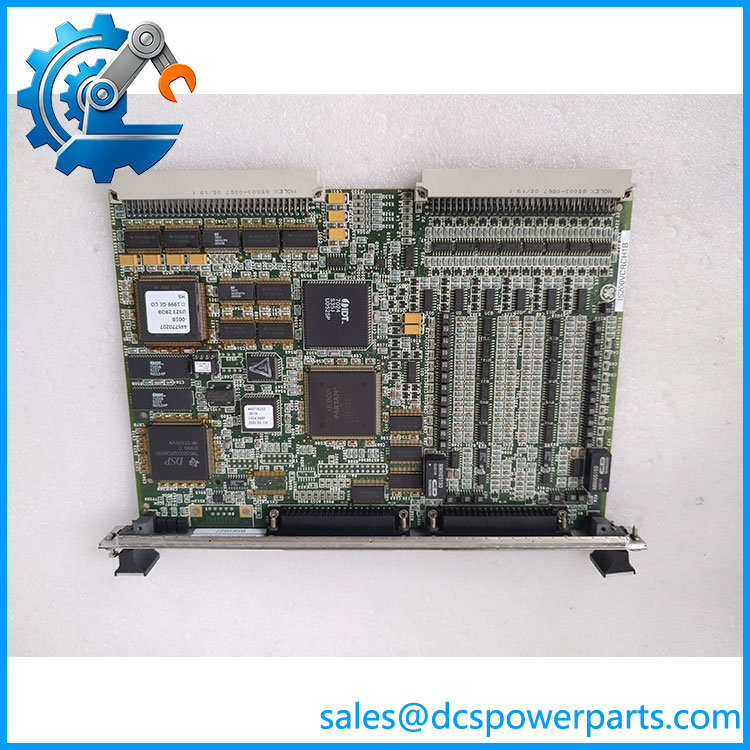
IS200VCRCH1B
Application Scenarios & Pain Points
A missing contact transition can affect permissive logic, alarms, event records, and turbine sequencing. The board must be assessed as part of the complete signal path, including field contacts, terminal boards, cables, rack connections, and controller configuration.
- Gas turbine control: Reads discrete field-contact states used by turbine sequencing, alarms, and control logic.
- Steam turbine systems: Supports discrete status monitoring and relay-command interfacing within the Mark VI control system.
- Power generation facilities: Helps maintain the I/O path between field devices and the turbine controller.
- Industrial turbine maintenance: Provides a replacement option when troubleshooting identifies a fault in the VCRC board or its associated circuitry.
Field note: Before replacing the board, record the existing LED state, controller diagnostics, affected channels, and cable positions. If only one input or output is affected, check the field contact and terminal-board wiring before assuming the VCRC board has failed.
Related Products
The following GE Mark VI components are relevant to system-level comparison. Their functions and physical configurations differ, so confirm compatibility before substitution.
- GE IS200VCCC H1B — VCCC-family board arrangement associated with discrete contact inputs and relay outputs; the wider assembly and daughterboard configuration differ from the VCRC.
- GE IS200VCMIH2B — Mark VI communication interface board used in the control rack architecture; not a direct replacement for a VCRC I/O board.
- GE IS200TBCI — TBCI terminal-board family for discrete contact inputs; exact part number and channel arrangement must be checked.
- GE IS200TRLY — TRLY relay-output terminal-board family; confirm the exact suffix and wiring arrangement.
- GE IS200VCRCH1B — The specified VCRC board, suitable as a reference when matching an existing assembly.
- GE Mark VI VME I/O rack — Rack infrastructure for the board and its backplane connections; verify rack type and slot requirements.
- GE Mark VI controller — Controller and system configuration determine how discrete inputs, relay commands, and event reporting are handled.
These references identify related components and system elements, not guaranteed drop-in replacements.
Engineer’s Guide: Three Replacement Pitfalls
1. Check VCRC versus VCCC before ordering. Warning: Similar functionality does not mean identical hardware or cabling. The VCRC is a single-slot board without the VCCC daughterboard arrangement. Confirm the installed board type and rack connection scheme.
2. Do not overlook front-panel cable routing. Verify the J33/J44 connections and the relevant rack J3/J4 relay-output connections against the system drawings. Incorrect cable placement can cause missing signals or incorrect output behavior.
3. Investigate the full signal path before replacing the board. Check field contacts, terminal boards, cables, rack seating, controller diagnostics, and Run/Fail/Status indicators. After replacement, perform the site’s approved functional checks before returning turbine control functions to service.
Frequently Asked Questions
Q1: What is the GE IS200VCRCH1B used for?
It is a VCRC discrete I/O board for the GE Mark VI Speedtronic turbine control system. Its role is to process contact-input signals and interface with relay outputs through the applicable rack and terminal-board arrangement.
Q2: Is the IS200VCRCH1B an analog input or voltage-control module?
It is identified as a discrete contact input/relay output board. Do not treat it as an analog measurement or voltage-regulation module based on generic product listings.
Q3: What is the difference between VCRC and VCCC?
They have related discrete I/O functionality, but their physical configurations differ. The VCRC uses a single-slot design without the VCCC daughterboard arrangement, and its relay-output cabling uses the VME rack’s J3/J4 connections. Check the existing system layout before choosing either board.
Q4: Can the IS200VCRCH1B be used in a redundant turbine control system?
The Mark VI architecture can support redundant control arrangements, but suitability depends on the installed rack configuration and application design. Confirm the required board count, rack positions, controller configuration, and wiring with the system documentation.
Q5: How should I verify the board’s condition before purchasing?
Request photographs of the actual board and its labels, confirmation of the full part number and revision, and a written condition statement. For refurbished units, ask for test details covering board diagnostics, connector condition, and any available functional testing. A seller’s stock claim alone does not confirm that the specific unit has been tested.
Q6: What information is needed to confirm a replacement?
Provide the full part number and revision from the installed board, the Mark VI rack and terminal-board details, the cable arrangement, and the affected I/O channels. This information helps establish whether the proposed board matches the installed hardware.
Q7: What should be checked during commissioning?
Follow the approved site procedure. Verify board seating, cable placement, controller recognition, status LEDs, affected contact inputs, relay-output behavior, and alarm/event reporting. Any trip-related or safety-critical outputs should be tested only under the site’s authorized commissioning and isolation procedures.