Description
GE IS200EAUXH1ABB
Product Introduction
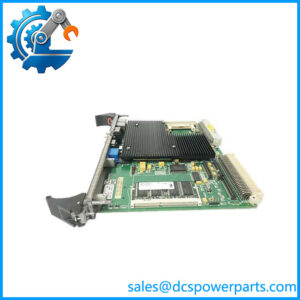
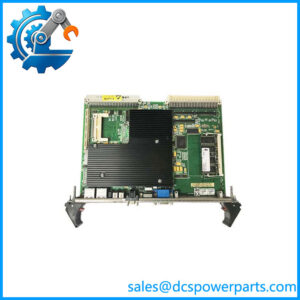
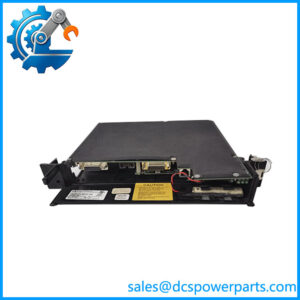
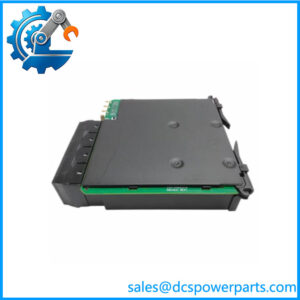
The GE IS200EAUXH1ABB is an Exciter Auxiliary I/O Interface Board used in GE’s EX2100e excitation control architecture. Its base board designation is IS200EAUXH1A, with the full IS200EAUXH1ABB identifier representing the specific hardware/revision configuration. The board provides an interface for auxiliary signals associated with generator excitation control and operates within a triple-modular-redundant architecture. Available technical records identify the H1A group as a TMR configuration with M1, M2, and C control sections.
The GE IS200EAUXH1ABB is not a general-purpose PLC analog I/O card. Its function is tied to the excitation-control application, where auxiliary field signals must be conditioned and exchanged with the excitation controller. The documented configuration includes three contact inputs and a 41DC contactor interface, with 125 VDC identified as the wetting voltage. The board communicates with the UCSx controller through an HSSL module, placing it within the high-speed signal path of the EX2100e architecture rather than making it a standalone remote I/O device.
The GE IS200EAUXH1ABB is particularly important in generator excitation systems where redundant signal paths and field-side diagnostics are required. The board can also support field-ground-detector functionality when used with the appropriate EXAM hardware. When replacing this board, engineers should verify the exact H1A/H2A architecture, controller configuration, board revision, wiring, and associated excitation hardware. The simplex H2A configuration should not be treated as a direct substitute for the H1A TMR board without checking the complete system design.
Technical Specifications
| Parameter | Specification |
|---|---|
| Product Model | IS200EAUXH1A |
| Full Part Number | IS200EAUXH1ABB |
| Manufacturer | General Electric |
| Product Family | EX2100e Excitation Control |
| Product Type | Exciter Auxiliary I/O Interface Board |
| Board Group | H1 |
| Redundancy | TMR |
| Control Sections | M1, M2, C |
| Contact Inputs | 3 |
| Contactor Interface | 41DC |
| Wetting Voltage | 125 VDC |
| Controller Interface | HSSL via associated HSSL module |
| Field-Ground Detection | Supported with EXAM hardware |
| Series Manual | GEH-6781 |
| Simplex Counterpart | H2A version |
| Hardware Revision | ABB suffix; verify board label |
| Operating Temperature | Not reliably verified for this exact assembly |
| Protection Rating | Not reliably verified |
| Power Consumption | Not reliably verified |
| Mounting | EX2100e excitation-control cabinet/system |
The specifications above are limited to values supported by the available technical records. Some reseller pages publish substantially different analog/digital channel counts for this part number; those figures conflict with the more specific EX2100e documentation-style record, so they should not be used as authoritative specifications for .
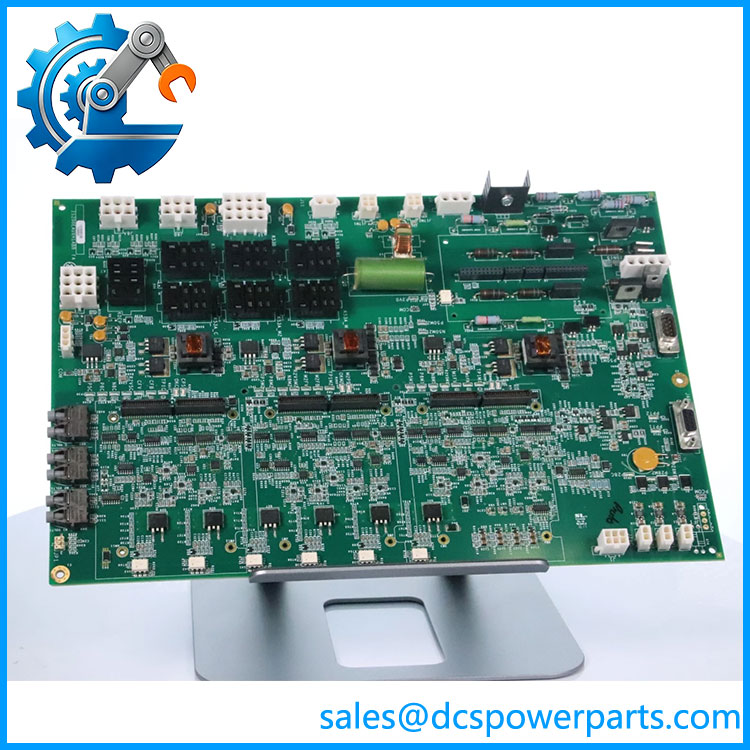
IS200EAUXH1ABB
Main Features and Engineering Considerations
EX2100e Excitation Application
The EAUX board belongs to the GE EX2100e excitation-control family. It should therefore be evaluated as part of the generator excitation system rather than as an independent Mark VI general-purpose I/O card. The excitation application determines how its auxiliary inputs and interfaces are used.
TMR Architecture
The H1A version is identified as a TMR board. The documented control sections are M1, M2, and C. This is a significant procurement detail because the board’s architecture is directly related to the redundancy arrangement of the excitation controller.
Auxiliary Contact Interface
The available specification identifies three contact inputs and a 41DC contactor interface, with a 125 VDC wetting voltage. Field wiring therefore needs to be checked against the actual excitation cabinet drawings rather than being treated as ordinary 24 VDC PLC digital I/O.
HSSL Controller Communication
The EAUX board interfaces with the UCSx controller through an HSSL module. This means that replacement testing should include the associated communication path and controller recognition, not simply electrical continuity checks.
Field Ground Detection
The board can be used with an EXAM module for field ground detector functionality. If that function is present in the existing system, the replacement assessment should include the EXAM arrangement and associated wiring.
H1A vs. H2A
The H1A and H2A designations should be treated carefully. The available documentation identifies the H2A version as the simplex configuration, while H1A is associated with TMR operation. Therefore, substituting an H2A board for an H1A board changes the system architecture and should not be approved based only on physical fit.
Procurement Perspective
For a replacement , record both the base assembly number IS200EAUXH1A and the complete board number . Also record the board revision, serial number, and any associated EX2100e controller/HSSL hardware. GE IS200 boards can have closely related suffixes that represent meaningful hardware or revision differences.
Application Scenarios
- GE EX2100e generator excitation systems
- Synchronous generator excitation control
- Turbine-generator excitation cabinets
- Power-generation control systems
- Exciter auxiliary signal interfacing
- TMR excitation-control architectures
- Field-ground detection applications
- Generator protection and excitation auxiliary circuits
Engineer’s Guide: Field Pitfalls
1. Do not treat as generic PLC I/O.
It is an excitation-system-specific interface board.
2. Verify TMR architecture.
H1A is associated with the TMR configuration. The H2A version is identified as the simplex counterpart.
3. Check the field voltage.
The documented wetting voltage is 125 VDC. Do not automatically wire it as a conventional 24 VDC digital input.
4. Check HSSL connectivity.
The connection to the UCSx controller is through an HSSL module. Verify the associated communication hardware during replacement testing.
5. Verify field-ground detection hardware.
If an EXAM module is installed, confirm that the replacement board supports the existing field-ground detection arrangement.
6. Match the complete board number.
Do not rely on the shorter IS200EAUXH1A designation alone. Record the complete marking and board revision.
7. Ignore unsupported channel claims.
Some online listings describe this part with large numbers of analog and digital channels. Those specifications conflict with the more specific EX2100e technical record and should not be copied into an engineering database without primary documentation.
Frequently Asked Questions
What is GE ?
It is an Exciter Auxiliary I/O Interface Board for the GE EX2100e excitation-control system.
Is a Mark VI turbine I/O board?
It belongs to the GE IS200 hardware family and is frequently listed under Mark VI-related inventory, but its documented functional application is EX2100e excitation control. It should not be treated as a generic Mark VI turbine I/O board.
Is the H1A version redundant?
Yes. The available technical specification identifies the H1A group as TMR, with M1, M2, and C control sections.
What is the wetting voltage?
The documented wetting voltage is 125 VDC.
Can the H2A version replace ?
Not automatically. H2A is identified as the simplex version, while H1A is associated with TMR operation. The complete excitation-system architecture must be checked before considering such a substitution.
What manual is associated with this board?
The available technical listing identifies GEH-6781 as the relevant series manual.
Procurement Note
For , the critical purchasing checks are the complete board number, H1A/TMR configuration, hardware revision, EX2100e controller architecture, HSSL interface, field wiring, and any EXAM field-ground detection hardware. A clean physical board is not enough for acceptance; the replacement should be tested in the intended excitation architecture and verified against the existing cabinet configuration.