Description
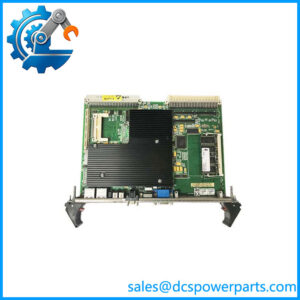
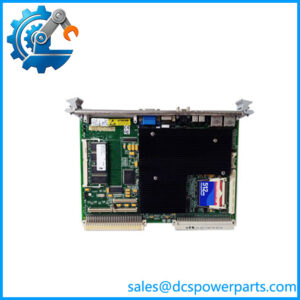
GE Fanuc IC698CPE010-JU
Key Technical Specifications
| Parameter | Specification |
|---|---|
| Product Model | IC698CPE010-JU |
| Product Family | GE Fanuc PACSystems RX7i |
| CPU Type | Celeron-based CPU |
| Processor Speed | 300 MHz |
| User Memory | Up to 10 MB battery-backed RAM |
| Flash Memory | 10 MB nonvolatile user flash |
| Ethernet | 10/100 Mbps |
| Ethernet Ports | 2 × RJ45 Ethernet ports |
| Serial Interfaces | RS-232 and RS-485 |
| Ethernet Functions | SRTP, EGD, web-based monitoring, SNTP and related PACSystems services |
| Program Blocks | Up to 512 |
| Maximum Block Size | 128 KB |
| Boolean Execution | Approximately 0.33 ms per 1,000 Boolean contacts/coils |
| VME Architecture | VME64 |
| Floating Point | Supported |
| Time-of-Day Accuracy | Maximum 9 seconds/day |
| JU CPU Firmware | Version 6.00 |
| JU Ethernet Firmware | Version 6.00 |
| Operating Temperature | 0–50°C; higher-temperature operation requires the applicable fan-tray arrangement |
| Mounting/System | RX7i rack-based PLC system |
The RX7i documentation specifies 10 MB of battery-backed program memory and 10 MB of nonvolatile flash for the CPE010, while the Ethernet interface supports 10/100 Mbps operation and a dedicated RS-232 Station Manager interface.
Product Introduction
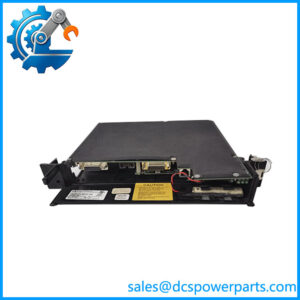
The GE Fanuc IC698CPE010-JU is a central processing unit for the PACSystems RX7i control platform. It uses a 300 MHz Celeron processor with 10 MB of battery-backed RAM and 10 MB of nonvolatile flash memory. The CPU provides integrated Ethernet connectivity together with RS-232 and RS-485 serial communications, allowing it to handle PLC logic execution, controller data exchange, diagnostics, and network services within an RX7i rack.
For maintenance teams, the important point is the -JU revision, not just the base CPE010 number. GE’s release history identifies -JU as CPU firmware 6.00 and Ethernet firmware 6.00. A later CPE010 revision may fit the same general hardware family but can carry different firmware behavior, so a firmware-specific replacement should be checked against the existing project, programming environment, communications configuration, and installed RX7i modules.
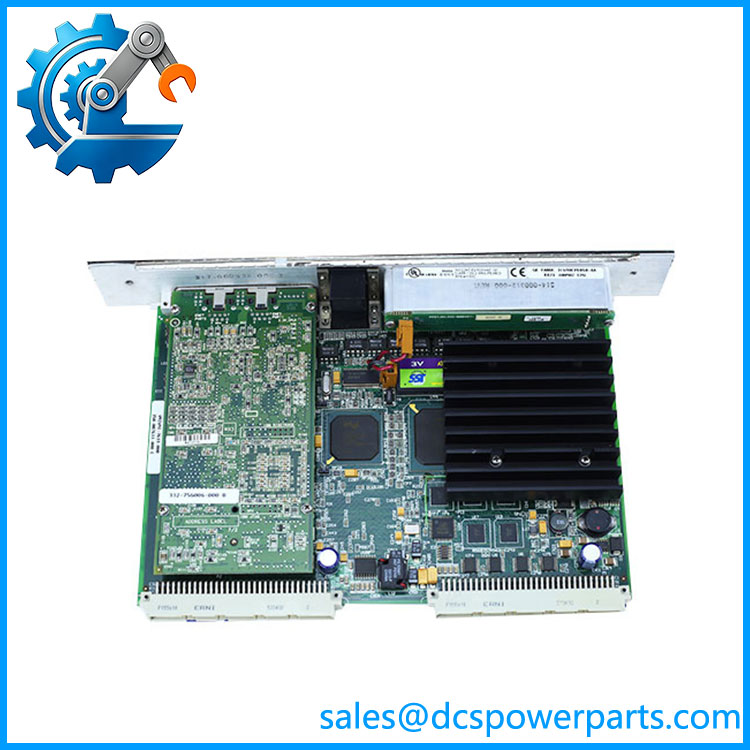
IC698CPE010-JU
Application Scenarios & Field Pitfalls
Engineering Pain Point
The CPE010 is often encountered in installed RX7i systems where the CPU itself is still serviceable from an architectural standpoint, but the exact revision has become difficult to source. Replacing an IC698CPE010-JU with a visually similar CPE010 does not automatically mean the application will behave identically. Firmware revisions, Ethernet firmware, stored project data, memory retention, and installed VME I/O modules all need to be considered.
Typical Applications
- Power generation control: RX7i-based supervisory and auxiliary control systems
- Process automation: PLC logic, sequencing, interlocking, and plant equipment coordination
- Manufacturing machinery: High-level machine sequencing and distributed I/O control
- Utilities and infrastructure: Legacy Ethernet-connected PLC installations requiring continued RX7i maintenance
Technical Pitfalls to Avoid
- Do not treat the -JU suffix as cosmetic. The documented -JU release corresponds to CPU firmware 6.00 and Ethernet firmware 6.00. Later CPE010 revisions can have substantially newer firmware.
- Do not confuse RX7i with Series 90-30. Several reseller listings incorrectly describe this part as a Series 90-30 CPU. The technical documentation places IC698CPE010 in the PACSystems RX7i family and specifies VME64 system architecture.
- Verify the complete communication configuration. The CPU supports embedded Ethernet and serial interfaces, but the installed project’s SRTP, EGD, SNP, Modbus RTU, Station Manager, and other communications settings must be reviewed before commissioning.
- Check memory-retention requirements. The uses battery-backed RAM. A replacement should be checked for battery condition and the required project restoration procedure rather than assuming the CPU will retain the existing application indefinitely.
Related Products
- IC698CPE010 — Base CPU family designation; useful when sourcing the same processor family, but the exact firmware suffix should be matched.
- — Later revision with CPU firmware 6.01 and Ethernet firmware 6.00; not identical to -JU.
- — Earlier revision with CPU firmware 5.50 and Ethernet firmware 5.50.
- — Earlier revision with CPU firmware 5.00 and Ethernet firmware 5.01.
- — Later revision with CPU firmware 6.71 and Ethernet firmware 6.10.
- — Later revision with CPU firmware 6.75 and Ethernet firmware 6.10.
- — Later documented revision with CPU firmware 6.75 and Ethernet firmware 6.12.
- IC698CPE020 — Higher-performance RX7i CPU family member using a 700 MHz processor; it should not be treated as a firmware-identical substitute for .
Procurement Check
Before purchasing an , confirm:
- Exact suffix on the nameplate
- CPU firmware and Ethernet firmware currently installed
- RX7i rack and backplane configuration
- Installed VME I/O modules
- Project/program backup
- Battery condition and memory-retention requirements
- Ethernet architecture, EGD configuration, and controller addresses
- Required serial communication services
- Programming/software version used by the existing installation
Bottom line: the -JU is a 300 MHz RX7i CPU with integrated Ethernet and 10 MB RAM/10 MB flash, but the -JU firmware revision is the procurement detail that should be matched before treating another revision as a replacement.