Description
GE DS200XDSAG1A
Product Introduction
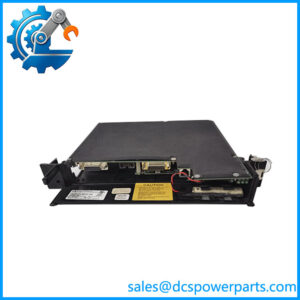
The GE DS200XDSAG1A is an XDSA transducer interface terminal board used in GE Speedtronic Mark V turbine control systems for LM-series fuel-pressure measurement applications. Although commercial listings frequently call it a “Fuel Pressure Management Board,” the more useful engineering description is a transducer interface board. Its documented function is to provide the electrical interface between Mark V control hardware and Honeywell LG-1237 smart pressure transducers. The board handles sensor power and serial data communication rather than acting as a conventional PLC analog input card.
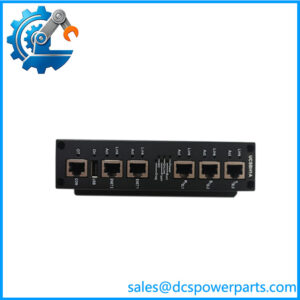
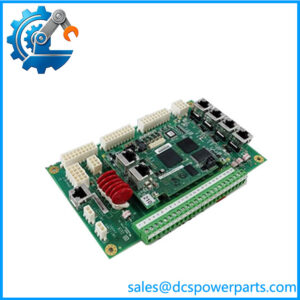
The GE DS200XDSAG1A uses an RS-422 multidrop arrangement for communicating with connected smart pressure sensors. Documentation describes four sensor connections using DB-25 cables, with the board providing 12 VDC sensor power and dedicated serial communication paths. Two separate circuits are incorporated for redundant sensor arrangements, and jumpers are provided for sensor addressing and RS-422 termination configuration. Multiple XDSA boards can be interconnected when the turbine configuration requires additional pressure-transducer interfaces.
For engineers replacing a GE DS200XDSAG1A, the exact board number and wiring arrangement matter more than generic electrical specifications found in reseller catalogs. The available documentation identifies terminals for 12 VDC input, RS-422 communication, pass-through connections, and grounding. This makes the board highly dependent on the existing Mark V cabinet architecture, transducer type, cable assembly, jumper configuration, and application-specific drawings. It should therefore be treated as a system-specific turbine control component rather than a drop-in generic pressure interface.
Technical Specifications
| Parameter | Specification |
|---|---|
| Product Model | DS200XDSAG1A |
| Manufacturer | General Electric (GE) |
| Series | Speedtronic Mark V / DS200 |
| Functional Acronym | XDSA |
| Product Type | LM fuel-pressure measurement / transducer interface terminal board |
| Primary Function | Smart fuel-pressure transducer interface |
| Compatible Transducer Reference | Honeywell LG-1237 smart pressure transducer |
| Sensor Supply | 12 VDC ±5% |
| Communication | RS-422 multidrop serial |
| Sensor Connections | Up to four pressure-sensor connections are documented |
| Connector Arrangement | DB-25 sensor cables |
| Termination | RS-422 termination selectable by jumper |
| Sensor Addressing | Jumper-selectable |
| Redundancy | Two separate circuits for redundant sensor arrangements |
| PCB Coating | Normal coating |
| Functional Revision | Group 1, Revision A |
| Mounting | Mark V cabinet / terminal-board installation |
| Firmware | No independently configurable firmware identified for the XDSA interface board |
| Protection Rating | Not reliably established from available documentation |
| Operating Temperature | Not reliably established from the strongest technical documentation |
| Communication Protocol | RS-422 serial; application-specific sensor protocol |
| Accuracy | System/transducer dependent; no standalone XDSA accuracy specification reliably established |
The 12 VDC and RS-422 information above comes from installation documentation describing the XDSA terminal assignments. Several reseller listings publish conflicting values such as 28 VDC, +5 VDC at 6 A, 12 input channels, or 125 VDC outputs. Those values should not be treated as confirmed XDSAG1A specifications without matching them to the turbine-specific documentation and board markings.
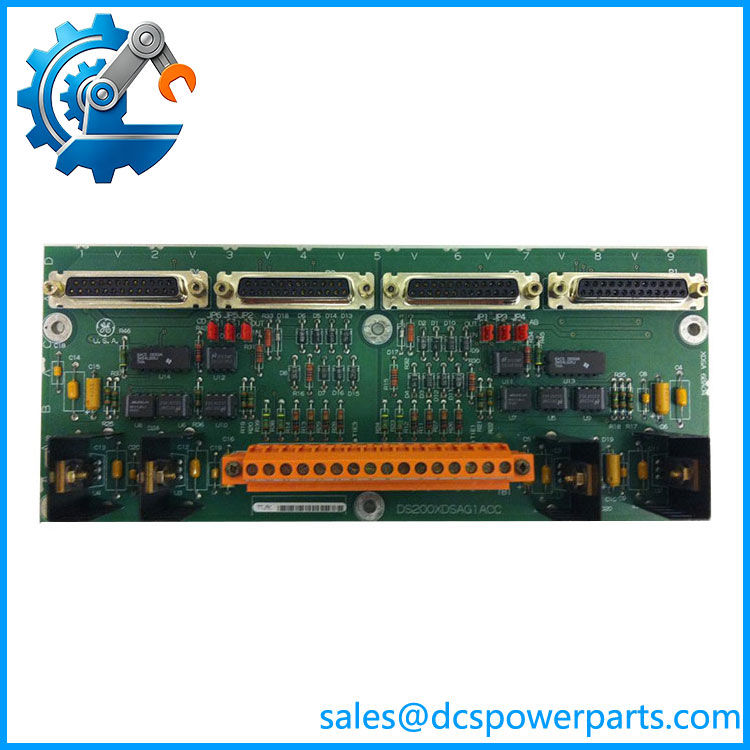
DS200XDSAG1A
Main Features and Engineering Considerations
1. Dedicated Smart-Transducer Interface
The GE DS200XDSAG1A is not simply a conventional analog pressure-input module. Its documented purpose is to interface smart pressure transducers through serial communications. That distinction is important during replacement because a standard 4–20 mA input card cannot automatically reproduce the XDSA’s sensor interface architecture.
2. RS-422 Multidrop Architecture
The XDSA uses RS-422 signaling for communication with connected pressure transducers. The terminal documentation identifies separate positive and negative communication terminals and provides a pass-through path for additional XDSA hardware. Termination is configurable through jumpers, so the jumper arrangement should be recorded before removing an existing board.
3. Sensor Address Configuration
The board includes jumper selections for sensor addressing. Incorrect address settings can create symptoms that look like a failed pressure sensor or communication problem. During field replacement, photograph or document the original jumper positions before installing the replacement.
4. Redundant Sensor Support
Two independent circuits are described on the XDSA board for redundant sensor arrangements. This is relevant when troubleshooting a turbine with duplicated pressure measurements. A board fault should not automatically be assumed when only one sensor path is reporting incorrectly; inspect the corresponding cable, sensor, power feed, serial pair, termination, and address configuration first.
5. Four Sensor Connections
The installation documentation describes four pressure sensors connected through DB-25 cables. The actual number used depends on the Mark V turbine configuration. Do not assume every physical connector must be populated.
6. Power Wiring Requires Verification
The documented sensor supply is 12 VDC ±5%. This is a critical distinction because some secondary product listings publish other voltage values for the same part number. Before energizing a replacement, verify the actual field wiring and the Mark V drawing rather than relying on a generic online specification sheet.
7. Revision Control Matters
The supplied part number ends in G1A, with the available identification describing it as Group 1, Functional Revision A. Do not assume a visually similar XDSA board with a different artwork, functional revision, or complete part number is electrically interchangeable.
8. Legacy Mark V Procurement Risk
The Mark V platform is a legacy GE turbine-control architecture, and DS200 boards are no longer normal current-generation automation products. One current component reference explicitly lists as discontinued by the manufacturer.
For procurement, the correct approach is to preserve the complete GE part number, revision markings, turbine/application reference, connector arrangement, jumper configuration, and existing cable identification.
Application Scenarios
LM-Series Gas Turbine Fuel-Pressure Measurement
Used within GE Speedtronic Mark V installations where smart pressure transducers provide fuel-system pressure information to the turbine control system.
Smart Pressure-Transducer Interface
Provides the electrical and serial interface required for compatible Honeywell LG-1237 pressure-transducer installations.
Redundant Fuel-Pressure Monitoring
Supports configurations using separate pressure-sensor circuits for monitoring redundancy.
Mark V Turbine Control Cabinet Replacement
Suitable as a replacement board when the existing system documentation specifically identifies /XDSA.
Engineer’s Guide: Field Pitfalls
Do not replace it based on the phrase “fuel pressure board” alone. The XDSA is a specific transducer interface architecture.
Check the sensor type first. The available installation documentation specifically references Honeywell LG-1237 smart pressure transducers.
Record all jumper positions. Sensor addressing and RS-422 termination are configurable through jumpers.
Verify 12 VDC at the correct terminals. The documented installation calls for 12 VDC ±5%. Do not use conflicting reseller specifications as a wiring reference.
Inspect DB-25 cables. A replacement board cannot correct an open, incorrectly wired, or damaged sensor cable.
Check RS-422 polarity and termination. A communication problem can be caused by wiring or termination rather than a defective XDSA.
Match the exact revision. should not automatically be substituted with another XDSA-related part number.
Keep the original Mark V drawings. Terminal numbering and jumper configuration should be verified against the turbine’s actual wiring documentation before commissioning.
Frequently Asked Questions
What is the GE ?
The is an XDSA transducer interface terminal board associated with GE Speedtronic Mark V LM fuel-pressure measurement applications.
Is an analog input module?
Not in the conventional PLC sense. Its documented interface is intended for smart pressure transducers using serial communications, rather than simply accepting standard 4–20 mA signals.
What communication does the XDSA use?
The installation documentation identifies RS-422 multidrop serial communication for the connected pressure transducers.
What sensor is associated with the XDSA?
The documentation specifically references Honeywell LG-1237 smart pressure transducers.
What voltage does the XDSA provide to the pressure sensors?
The documented installation specifies 12 VDC ±5% on the relevant supply terminals.
Does require software configuration?
The board’s documented sensor addressing and RS-422 termination functions are hardware-configured through jumpers. It should not be treated like a modern PLC module requiring independent firmware loading.
Can another GE DS200 board replace ?
Not without documented compatibility. The XDSA’s sensor wiring, RS-422 architecture, jumper configuration, and Mark V application make exact part-number matching important.
Procurement Note
For a replacement, request clear photographs of the complete board label and revision markings when possible. Confirm the exact part number, artwork/functional revision, connector arrangement, sensor type, DB-25 cable configuration, and jumper positions against the existing installation.
The biggest procurement mistake with this board is accepting a generic specification sheet that describes it as a drive snubber, excitation interface, or conventional analog I/O board. Current online listings contain conflicting descriptions, while the more specific installation documentation identifies the XDSA as a transducer interface terminal board for smart pressure sensors.
For a field replacement, the should be evaluated against the turbine’s Mark V application drawings rather than by physical appearance alone.