Description
GE DS200TCEAG1BNE | Emergency Overspeed Board | Mark V Turbine Protection
Key Technical Specifications
| Parameter | Specification |
|---|---|
| Manufacturer | GE General Electric |
| Complete model | DS200TCEAG1BNE |
| Base functional number | DS200TCEAG1B |
| Functional acronym | TCEA |
| Functional description | Emergency Overspeed Board |
| System | Mark V Speedtronic |
| Processor | Intel 80196 family |
| Memory | Multiple PROM modules |
| Onboard fuses | 3 |
| Configuration jumpers | Approximately 30 |
| Bayonet connectors | 2 |
| IONet connections | JX1 / JX2 |
| Related signal interfaces | Overspeed, flame detection, synchronization |
| Installation | Mark V protective/control core |
| Application | Gas and steam turbine control |
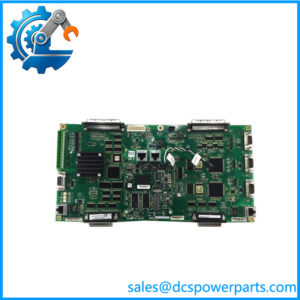
The documented DS200TCEAG1B hardware includes an 80196 microprocessor, multiple PROM devices, three fuses, roughly 30 jumpers, and two bayonet connectors. The board is identified as the TCEA Emergency Overspeed Board.
Important Identification Note
The DS200TCEAG1BNE suffix should not be stripped when approving a replacement. Current parts databases list DS200TCEAG1BNE, DS200TCEAG1BDB, DS200TCEAG1BKE, DS200TCEAG1BRE, DS200TCEAG1BSF, and DS200TCEAG1BTF as alternate configurations associated with the DS200TCEAG1B family. That does not by itself prove that every suffix is electrically interchangeable.
Product Introduction
The GE DS200TCEAG1BNE is part of the TCEA Emergency Overspeed Board family used in GE Mark V turbine control systems. Its protection role covers turbine overspeed processing and associated flame-detection trip functions, making it a protection-oriented board rather than a general-purpose processor or communications card.
In the Mark V architecture, the TCEA interfaces with other protection and control boards through dedicated signal and IONet connections. The available technical descriptions identify J7 for power distribution, JK for TCEB signals, JL for TCTG trip signals, JW for flame-detection signals, and JX1/JX2 for the IONet daisy chain.
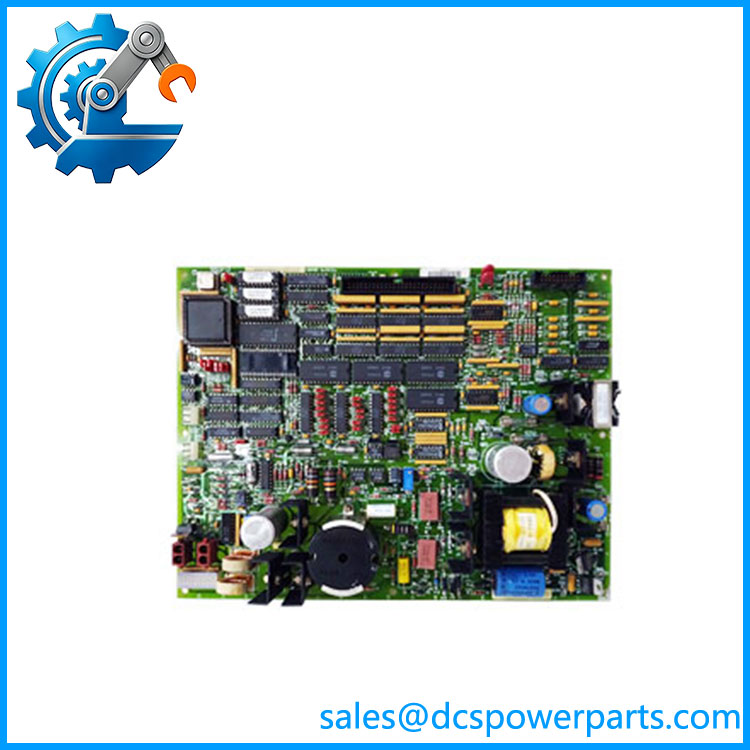
DS200TCEAG1BNE
Application Scenarios & Field Pitfalls — Engineer’s Perspective
Engineering Pain Point
The critical issue with a TCEA replacement is not simply whether the board powers up. This board participates in turbine protection, so jumper configuration, processor role, connector wiring, and revision compatibility have to match the Mark V protection architecture.
Typical Applications
- Gas turbine protection — Overspeed monitoring and emergency trip processing.
- Steam turbine control — High-speed protective functions within Mark V installations.
- Flame detection processing — Handles associated flame-trip signals in the TCEA architecture.
- Turbine synchronization functions — Related automatic synchronization circuitry is associated with the TCEA board.
Technical Pitfalls to Avoid
- Do not confuse TCEA with TCEB.
DS200TCEAG1BNEbelongs to the TCEA Emergency Overspeed Board family.DS200TCEBG1A/ACE, by contrast, is a TCEB Protective Termination Expander Board. They have different functions. - Do not assume the
BNEsuffix is cosmetic.
The baseDS200TCEAG1Bidentity establishes the TCEA function, but the complete suffix should be matched against the existing board and Mark V documentation. Current inventory databases explicitly associateBNEwith the DS200TCEAG1B family. - Record jumper positions before removal.
The DS200TCEAG1B has a substantial jumper configuration. Field documentation notes that the jumpers establish the board’s position within the Mark V protection architecture. Moving the board without recording these settings can create a commissioning problem. - Label every cable.
JX1/JX2 IONet connections, TCEB signals, TCTG trip signals, flame-detection wiring, and power connections should be documented before removing the existing board. - Do not accept generic electrical specifications from reseller pages.
Some current listings incorrectly attach values such as Modbus RTU, generic relay outputs, and unrelated supply specifications to this board. Those claims are not sufficiently supported and should not be used for engineering substitution. - Protection testing is mandatory after replacement.
A replacement TCEA should be checked through the applicable Mark V protection test procedure rather than being considered acceptable merely because the board boots and communicates.
Related Products
- — Base TCEA Emergency Overspeed Board designation associated with the
BNEconfiguration. - DS200TCEAG1BSF — Alternate configured TCEA family member; verify the complete suffix before substitution.
- DS200TCEAG1BTF — Another configured family member; not automatically interchangeable.
- DS200TCEBG1A — TCEB Protective Termination Expander Board; different function and should not be substituted for TCEA.
- DS200TCEBG1ACE — Configured TCEB board used for protective termination/signal conditioning; different from the TCEA overspeed board.
- TCTG — Mark V Turbine Trip Board family associated with the TCEA trip interface.
- TCEB — Protective termination board family supplying associated signal interfaces to TCEA.
- DS200SDCCG1A — Mark V SDCC control board; substantially different function from the TCEA protection board.
Procurement Note
⚠️ Obsolete/legacy Mark V model, limited stock available.
For , the procurement checklist should be:
complete part number → BNE suffix → jumper configuration → processor/protection-core position → IONet connections → TCTG interface → firmware/PROM configuration → post-installation protection test.
The most important correction for product databases is simple: is a TCEA Emergency Overspeed Board, not an exciter interface board or generic Mark V processor. The latter description appears in some current listings and conflicts with the stronger TCEA identification.