Description
Product Overview
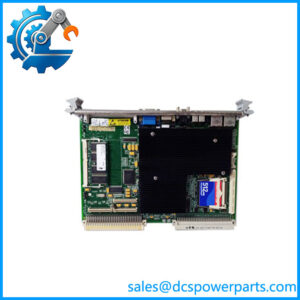
The GE is an AC/DC power converter board associated with GE turbine-control equipment, including the Mark V, TC2000, and DC2000 product families. Identified by the functional acronym DACA, it converts incoming AC power into a DC supply for designated control-system applications. Unlike an analog output board, which translates controller commands into electrical signals for field devices, this board performs a power-conversion function. That distinction matters when troubleshooting a control cabinet: an abnormal DC supply should prompt checks of the incoming source, conversion circuitry, downstream load, and associated wiring before unrelated I/O hardware is replaced.
Published specifications identify an input range of 105–132 VAC and an output range of 90–140 VDC, with approximately 125 VDC commonly associated with the intended application. These values should be verified against the specific installation and the applicable OEM documentation before energizing a replacement. The is also described in connection with GE excitation-control equipment, where DC power availability can affect the operation of supporting electronics. The exact role of the board depends on the system configuration; it should not be assumed that every Mark V, TC2000, DC2000, or excitation cabinet uses the same power arrangement.
For maintenance and procurement teams, the GE is primarily a legacy spare-part identification and compatibility issue. A matching base model is necessary, but the full board number, revision markings, connectors, mounting arrangement, and installed wiring must also agree with the approved configuration. Before condemning the converter, check whether the fault originates from the AC source, an overloaded or shorted DC load, deteriorated connections, or the board itself. This can prevent unnecessary board replacement and repeated failures after installation.
Because this is legacy turbine-control hardware, condition and traceability deserve particular attention. A new-surplus unit may be unused without having undergone recent functional testing; a refurbished unit may have repaired components or rework history. Request actual-unit photographs, clear revision identification, and documented test results where available. For a critical turbine application, confirm the acceptance criteria and warranty terms before committing the replacement to a planned outage.
Product Introduction (Non-Templated)
When a turbine-control cabinet loses its expected DC supply, replacing the first suspect board without checking the incoming AC source and downstream load can lead to repeat failures. The GE serves as an AC/DC power converter in designated GE turbine-control applications, with published voltage ranges of 105–132 VAC input and 90–140 VDC output.
For a Mark V or TC2000 legacy replacement, verify the exact board revision and system wiring before installation. Those checks matter more than assuming that a board listed under the same family name will fit every cabinet configuration.
Key Technical Specifications
| Parameter | Value |
|---|---|
| Manufacturer | General Electric (GE) |
| Model | DS200DACAG1A |
| Functional Acronym | DACA |
| Product Type | AC/DC power converter board |
| Product Families | Mark V, TC2000, DC2000 |
| Input Voltage | 105–132 VAC, as published; verify installation requirements |
| Output Voltage | 90–140 VDC, as published |
| Nominal DC Output | Approximately 125 VDC in the documented application |
| Primary Function | AC-to-DC power conversion |
| PCB Coating | Standard coating designation, G1 |
| Functional Revision | A |
| Installation | GE control-system cabinet; verify mounting and connections |
| Operating Temperature | Published listing: −30°C to +65°C; confirm against OEM documentation |
| Communication Protocol | Not established as a communications module |
| Firmware | No independently verified firmware version applicable to the board |
| Protection Rating | No standalone IP rating verified |
| Condition | Confirm the individual unit’s status and test history |
Voltage and temperature values are based on available technical listings; final acceptance should follow the applicable OEM documentation.
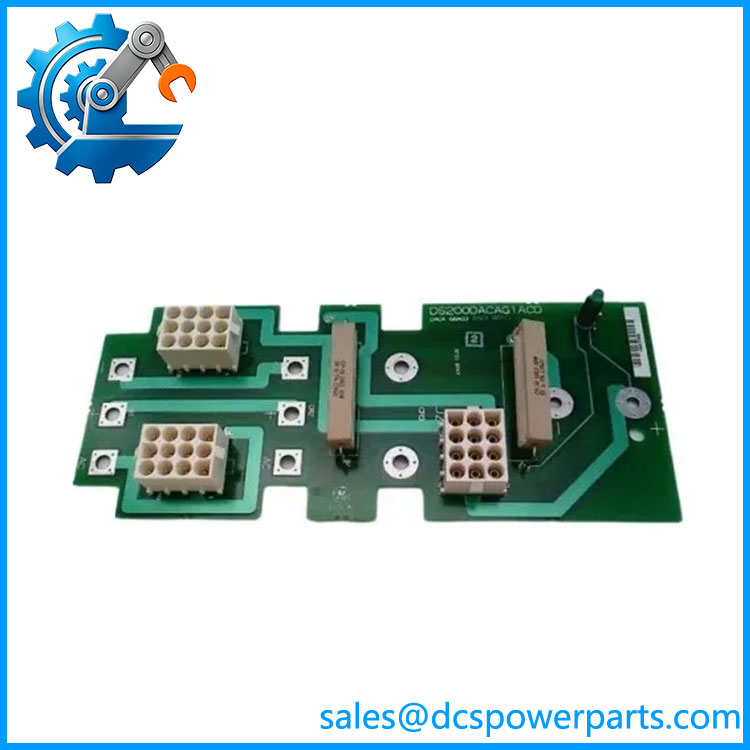
DS200DACAG1A
Related Products
These related GE boards cover power distribution, control, terminal connections, and revision alternatives. They are not automatically interchangeable with the .
DS200DACAG1ACC
A related DACA converter-board designation. Consider it when sourcing a replacement or comparing revisions. Confirm the complete part number and approved interchangeability before ordering.
DS200DACAG1ACD
A related DACA board variant documented in the same converter family. It is worth checking when the original revision is unavailable, but suffix differences must be resolved against OEM revision records.
DS200TCPDG1A
A Mark V power-distribution board used for a different power-system function. Relevant when investigating distribution-side faults, not a direct substitute for the DACA converter.
DS200DCFBG1A
A DC power feedback board in the GE Mark V family. Consider it when the fault investigation points toward DC power feedback or related monitoring functions rather than AC/DC conversion itself.
DS200PTBAG1A
A Mark V terminal board associated with connection and termination duties. It may be relevant when examining cabinet wiring, but it does not perform the same power-conversion function.
DS200DTBAG1A
A digital-contact terminal board. It belongs to the wider DS200 control-hardware family and is useful for digital signal termination applications, not as a DACA power-converter replacement.
DS200SDCCG1A
A drive-control board used for control functions rather than AC/DC power conversion. Consider it only when the fault is associated with the relevant drive-control assembly.
DS200ACNAG1A
An ARCNET connection board in the Mark V family. Its role is associated with system communications, making it relevant to network troubleshooting rather than DC power supply faults.
Frequently Asked Questions (FAQ)
1. Is the GE compatible with all Mark V turbine-control systems?
Not necessarily. The board is associated with GE Mark V, TC2000, and DC2000 hardware, but the installed power architecture and board revision determine suitability. Confirm the complete part number, wiring arrangement, required DC output, and applicable system documentation before ordering.
2. Can I hot-swap the while the turbine is running?
Do not assume that live replacement is permitted. The board handles power conversion, so removal may interrupt a supply needed by associated electronics.
Before replacement:
- Identify all incoming AC and outgoing DC connections.
- Determine whether redundant power sources are installed and how they are configured.
- Follow the site’s electrical isolation and turbine-maintenance procedures.
- Verify the required shutdown or isolation conditions before disconnecting the board.
Redundant supplies do not, by themselves, establish that the board is safe to remove under power.
3. Does the support firmware version 3.1?
No verified firmware v3.1 compatibility specification has been established for this particular board. Its primary function is AC/DC conversion rather than execution of application logic.
For replacement approval, prioritize electrical ratings, hardware revision, connection details, and the relevant control-system documentation. If a system-level software release imposes hardware restrictions, verify those restrictions separately with the OEM documentation.
4. Will replacing the erase my turbine-control logic?
The DACA board is a power-conversion component, not the main application-logic storage device. Replacing it is not equivalent to replacing a controller CPU or downloading a new control program.
However, a power interruption can affect associated electronics or system operation. Record the existing alarms, verify the condition of the affected power supply, and follow the approved restart and functional-check procedure after replacement.
5. How can I verify that a new-surplus is genuine and unused?
Request evidence tied to the actual unit, not just a generic product photograph.
- Check the PCB part number, revision markings, and available serial or traceability labels.
- Inspect the board for repair work, damaged components, corrosion, and connector wear.
- Request photographs of the actual board and its packaging.
- Ask for functional test documentation and the test conditions.
- Obtain written confirmation of whether the unit is unused surplus, refurbished, or previously installed and tested.
An unused-surplus designation does not necessarily mean the board was recently manufactured or tested at the factory.
6. What should I verify before installing a replacement converter board?
Start with the electrical supply and load requirements. The published input range is 105–132 VAC, while the output range is 90–140 VDC; confirm these limits against the specific installation before energizing the replacement.
Then check the board revision, connector positions, cabinet mounting, grounding, wiring polarity where applicable, and downstream load condition. If the original board failed, investigate the cause before fitting another unit. A shorted load or incorrect incoming supply can damage a replacement as well.
7. What warranty should I expect for the GE ?
Warranty terms depend on the supplied unit’s condition and the seller’s written policy. New-surplus and refurbished boards should not be assumed to carry identical coverage.
Before purchasing, obtain confirmation of:
- Warranty duration and covered failures.
- Whether testing is performed before shipment.
- Return and replacement procedures.
- Exclusions for incorrect installation, electrical damage, or unauthorized repair.
- The process for handling a unit that fails incoming inspection.
For critical turbine-control spares, settle these terms before the planned outage rather than after the replacement has been installed.