Description
Product Overview
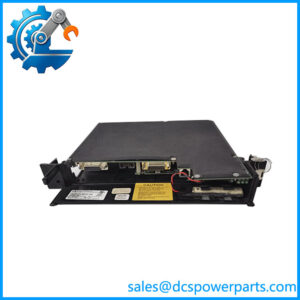
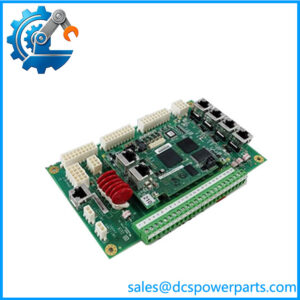
The GE D20 MIC 10BASE-T is a communication interface associated with the GE WESDAC D20 family of utility automation and remote terminal equipment. Its primary purpose is to provide 10BASE-T Ethernet connectivity within a D20-based control and SCADA architecture. Unlike a field I/O module, the GE D20 MIC 10BASE-T handles network communication, allowing the D20 system to exchange information with supervisory computers, engineering workstations, or other networked control equipment.
The GE D20 MIC 10BASE-T is particularly relevant when maintaining older D20 installations that still depend on 10 Mbps Ethernet infrastructure. The “10BASE-T” designation is significant: this is legacy Ethernet technology using twisted-pair cabling, and the module should not automatically be treated as equivalent to later D20 Ethernet interfaces simply because both use RJ-45-style network connections. Physical interface compatibility and protocol compatibility are separate questions.
For procurement, the complete D20 MIC 10BASE-T identification should be matched against the installed D20 hardware revision and communication architecture. The D20 platform has been deployed in utility RTU and substation automation systems for many years, so firmware, configuration, network addressing, and host-system compatibility can be more important than the Ethernet port itself.
Technical Specifications
| Parameter | Specification |
|---|---|
| Manufacturer | GE |
| Platform | WESDAC D20 |
| Model / Designation | D20 MIC 10BASE-T |
| Product Type | Ethernet Communication Interface Module |
| Ethernet Standard | IEEE 802.3 10BASE-T |
| Ethernet Speed | 10 Mbps |
| Transmission Medium | Twisted-pair copper |
| Network Interface | 10BASE-T |
| Primary Application | D20 RTU / SCADA communication |
| System Role | Network communication interface |
| Controller Platform | GE D20 / WESDAC |
| Protocol Support | Application/configuration dependent |
| Firmware | Revision dependent |
| Network Configuration | Application dependent |
| Mounting | D20 system dependent |
| Operating Temperature | Verify exact hardware revision |
| Power Requirements | Verify exact D20 configuration |
Technical Note
10BASE-T identifies the physical Ethernet layer, not the higher-level SCADA protocol. Therefore, it would be inappropriate to claim that every D20 MIC 10BASE-T installation natively supports a particular protocol such as DNP3, Modbus TCP, or IEC 60870-5-104 without confirming the D20 firmware and configuration.
Main Features and Advantages
10BASE-T Ethernet Connectivity
The primary feature is Ethernet communication over 10BASE-T copper cabling. At 10 Mbps, the interface is slow by current networking standards, but that bandwidth is generally adequate for many legacy SCADA data streams.
D20 System Integration
The module is intended for the GE D20/WESDAC environment rather than general-purpose Ethernet applications. Its value comes from integration with the existing D20 controller and communication architecture.
Legacy SCADA Support
D20 systems are commonly encountered in utility environments where equipment remains in service for long periods. A functioning communication interface can therefore be more valuable than its nominal network speed suggests.
Maintenance Replacement
For an existing D20 installation, replacing the failed MIC interface can be considerably less disruptive than redesigning the communication architecture. The replacement should be tested with the actual D20 system rather than merely checking whether the Ethernet link LED illuminates.
Network Troubleshooting
A communication failure should not immediately be attributed to the MIC module. Check the Ethernet cable, switch/hub, network configuration, D20 communication parameters, link status, and host-side equipment before replacing hardware.
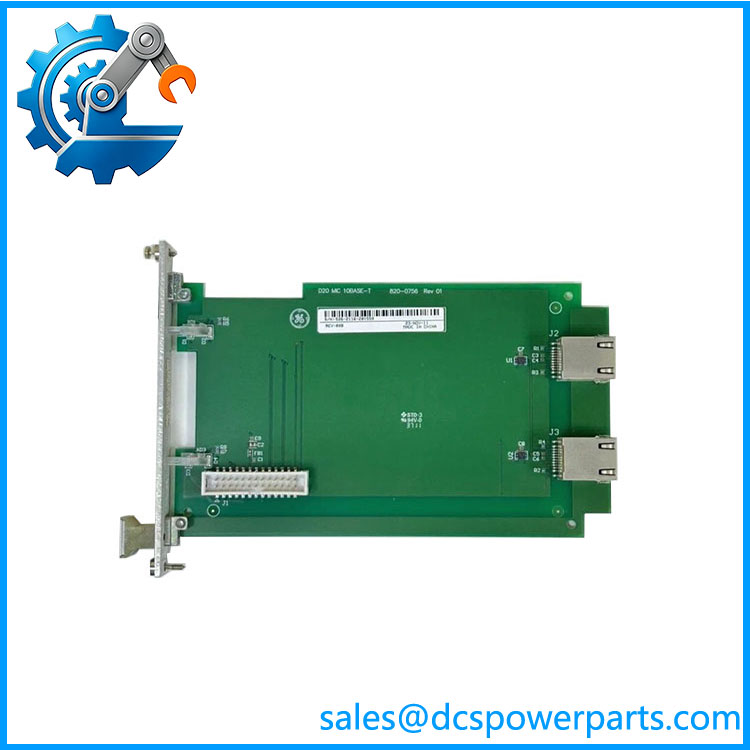
D20MIC
Application Scenarios
- Substation SCADA: Ethernet connectivity between D20 equipment and supervisory systems.
- Utility RTUs: Network communications for remote terminal installations.
- Power distribution automation: Communication between field controllers and control-center equipment.
- Legacy Ethernet networks: Maintaining installations built around 10BASE-T infrastructure.
- D20 engineering/maintenance: Network access for configuration, diagnostics, and system communication where supported by the installed software.
Engineer’s Guide: Field Pitfalls
WARNING 1 — Do not confuse 10BASE-T with modern Ethernet
10BASE-T is 10 Mbps Ethernet. A physical RJ-45 connector does not mean the module supports 100 Mbps or 1 Gbps operation.
Field check: Verify the installed D20 network equipment and switch configuration before replacing the module.
WARNING 2 — Ethernet compatibility does not guarantee protocol compatibility
A working Ethernet link only confirms the physical/network connection. The D20 application still needs the correct firmware, configuration, addressing, and protocol support.
Field check: Capture the existing D20 network configuration before replacing the MIC.
WARNING 3 — Do not replace it with a generic Ethernet card
The D20 MIC is part of a specific GE WESDAC architecture. A generic 10BASE-T adapter may provide Ethernet electrically but will not necessarily provide the D20-specific interface and firmware functionality.
WARNING 4 — Check legacy network hardware
Older D20 systems may use legacy hubs, repeaters, managed switches, or network segments configured specifically for 10 Mbps operation. Replacing only the communication module may not resolve a network fault.
Frequently Asked Questions
What is GE D20 MIC 10BASE-T?
It is a 10BASE-T Ethernet communication interface for the GE WESDAC D20 utility automation platform.
What Ethernet speed does it use?
The 10BASE-T designation indicates 10 Mbps Ethernet over twisted-pair copper cabling.
Is D20 MIC 10BASE-T an I/O module?
No. Its primary role is network communication, not direct field-signal acquisition.
Is it a complete D20 RTU?
No. The MIC is a communication component within the broader D20 system. The complete RTU includes the controller, I/O, communication interfaces, power components, and application software.
Does it support DNP3?
DNP3 may be used in D20-based utility communication architectures, but 10BASE-T alone does not establish DNP3 support. Protocol capability depends on the D20 hardware, firmware, and configuration.
Can a modern Ethernet interface replace it?
Not automatically. A replacement must match the D20 hardware architecture and required firmware/software functions. A generic 100BASE-TX or Gigabit Ethernet adapter is not a drop-in replacement simply because it uses copper Ethernet.
What should be tested before accepting a replacement?
For a used or refurbished unit, verify:
- Correct D20 MIC 10BASE-T identification.
- Hardware revision.
- Physical connector condition.
- Power-up/initialization.
- Ethernet link establishment.
- 10 Mbps network communication.
- D20 controller communication.
- Network addressing/configuration.
- Application-level SCADA communication.
- Extended communication stability.
Procurement note: For a legacy D20 system, an Ethernet link test alone is insufficient. The meaningful acceptance test is successful communication between the MIC, D20 controller, and the customer’s actual SCADA/engineering environment.