Description
Foxboro H9290KCF0C00 | I/A Series DCS Control Interface Module
Product Overview
The Foxboro H9290KCF0C00 belongs to the legacy Foxboro I/A Series distributed control system hardware family and is identified in available industrial automation references as an interface/control card. The exact functional role of this catalog number is not sufficiently documented in currently accessible public sources to justify assigning a specific channel count, field-signal range, excitation voltage, or communication protocol. That distinction matters when replacing an installed I/A Series card: similar-looking H92-family hardware can perform different signal-processing or interface functions, so the complete catalog number and existing cabinet configuration should be treated as the primary identification criteria.
In an operating plant, the Foxboro H9290KCF0C00 is relevant primarily as a legacy DCS maintenance component rather than as a new-generation PLC I/O module. Its value is tied to maintaining the installed Foxboro architecture without changing field wiring, control databases, termination arrangements, or application logic unnecessarily. Other H92-series Foxboro modules are documented for I/A Series analog signal acquisition and interface duties, illustrating why exact suffix matching is important when selecting a spare.
For a planned replacement, engineers should verify the card against the installed I/A Series chassis, associated termination hardware, controller configuration, and the original engineering documentation. Do not treat the H9290KCF0C00 designation as sufficient evidence of electrical interchangeability with another H92-series module.
Product Introduction — Non-Templated
A legacy DCS spare is rarely just a matter of matching the first few characters of a part number. H9290KCF0C00 needs to be matched against the actual I/A Series cabinet position and its associated termination/interface hardware before installation.
For maintenance teams dealing with an aging Foxboro installation, the practical role of this card is straightforward: preserve the existing control architecture where a complete migration is not yet justified. The exact I/O function should, however, be confirmed from the site drawing, module label, and system documentation before procurement.
Key Technical Specifications
| Parameter | Value |
|---|---|
| Product Model | H9290KCF0C00 |
| Manufacturer / Brand | Foxboro / Schneider Electric |
| System | Foxboro I/A Series DCS |
| Product Type | Control / interface module |
| Application | Distributed process control and legacy DCS maintenance |
| Module Function | Interface / signal-processing function; exact configuration requires verification |
| Field Signal Type | Not sufficiently verified for this exact suffix |
| Channel Count | Not sufficiently verified |
| Working Voltage | Not sufficiently verified |
| Communication Protocol | Not sufficiently verified |
| Installation Method | I/A Series system-mounted module; exact carrier/interface arrangement must be confirmed |
| Operating Temperature | Not sufficiently verified |
| Firmware | Not sufficiently verified |
| Protection Rating | Not sufficiently verified |
Engineering note: Public references identify as a Foxboro I/A Series interface/control card, while some supplier catalogs classify it differently, including as an analog-input or signal-processing card. Because those descriptions conflict, unsupported electrical specifications should not be copied into a procurement specification without checking the original documentation or the installed hardware.
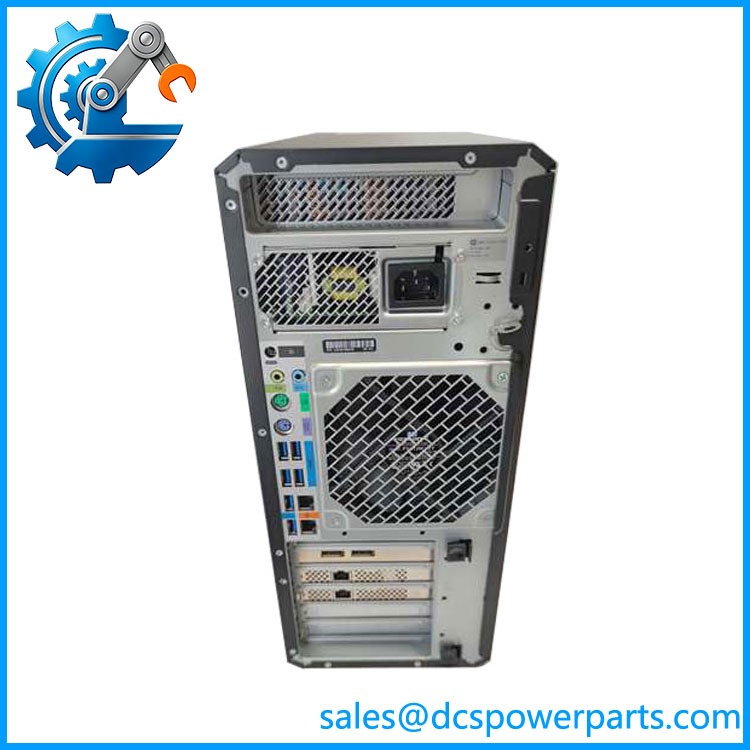
H9290KCF0C00
Major Features and Advantages
Direct relevance to legacy I/A Series maintenance
The main engineering value of the is its relationship to the Foxboro I/A Series platform. Plants with long service histories often retain large quantities of established DCS hardware because the cost and operational risk of changing every field interface can exceed the benefit of a complete system migration.
Keeping a correctly identified spare available can reduce the time required to restore a failed cabinet position. That does not mean every H92-series card can be substituted for another. The exact catalog suffix remains critical.
Useful for controlled legacy replacement
For a maintenance replacement, the should be evaluated against the installed card rather than against a generic description such as “Foxboro interface module.” Compare the front-panel identification, hardware revision, connector arrangement, cabinet slot, termination assembly, and engineering drawing.
That approach prevents a common procurement error: purchasing a card from the same product family that physically resembles the original but performs a different signal-processing function.
Preserves the existing control architecture
Where the installed I/A Series DCS remains operational, replacing a failed card with the correct matching hardware can avoid unnecessary changes to application logic and field wiring. This is particularly useful during shutdown maintenance when the objective is restoration rather than system redesign.
The should therefore be viewed as a legacy replacement component, not automatically as an upgrade to a modern Foxboro I/O platform.
Procurement transparency
Available public information on this exact model is limited. That is important procurement information in itself. A supplier should be able to provide clear photographs of the nameplate, connector side, circuit-board identification, and hardware revision before the unit is accepted as an exact replacement.
If a listing claims a precise channel count, voltage range, protocol, firmware version, or hot-swap capability without documentation tied specifically to , those claims should be independently checked.
Related Products
- Foxboro H92B0PCR0H00 — H92-series I/A Series analog input module; public documentation describes 4–20 mA signal acquisition and HART pass-through. It should not be assumed electrically interchangeable with .
- Foxboro FDC280 / RH101FQ — Field Device Controller used within Foxboro I/A Series architectures; a controller-level component rather than a direct equivalent to the .
- Foxboro FBM01 — Legacy I/A Series fieldbus module used for analog input applications; different hardware architecture and field interface.
- Foxboro FBM201D — Compact 200 analog input module for voltage signals; belongs to a different I/O generation.
- Foxboro FBM202 — Compact 200 thermocouple/mV input module; intended for temperature and low-level voltage measurement.
- Foxboro FBM203 — Compact 200 RTD input module; used for resistance-temperature measurement.
- Foxboro FBM204 — Mixed analog input/output module; different channel architecture and signal functions.
- Foxboro FBM205 — Mixed analog I/O module with HART capability; newer Compact 200 architecture rather than a direct substitute.
- Foxboro CP40B — I/A Series control processor hardware; processor-level equipment rather than an I/O/interface card.
FAQ
Can I install as a direct replacement for another H92-series card?
Not without verification. Matching the H92 family alone is insufficient. Confirm the complete catalog number, cabinet position, connector arrangement, termination hardware, and engineering documentation.
What DCS does belong to?
Available product references identify it with the Foxboro I/A Series DCS. The exact subsystem role should be confirmed against the installed system documentation.
Is an analog input module?
Some secondary product catalogs describe as an analog-input or signal-processing card, while other listings call it an interface module. Because the available descriptions are inconsistent, the exact field-input specification should be verified from the original module documentation or nameplate before using it as an analog-input replacement.
Does support firmware v3.1?
There is not enough reliable public documentation tying firmware v3.1 specifically to this exact catalog number. Do not assume a firmware version based on another Foxboro module. If firmware matters to the replacement, record the installed hardware and software revisions from the existing system first.
Can I hot-swap the module?
Do not assume it. Hot replacement depends on the specific I/A Series hardware architecture, carrier, maintenance procedure, and system configuration. Follow the plant’s approved maintenance procedure and isolate power where required.
Does a New Surplus mean it has never been installed?
No. “New Surplus” is a procurement condition, not proof of manufacturing history. For a critical DCS spare, verify the nameplate, hardware revision, physical condition, connector condition, storage history where available, and functional test evidence.
What should I verify before purchasing?
At minimum:
- Complete catalog number.
- Nameplate and hardware revision.
- Connector and board layout.
- Installed I/A Series chassis or carrier.
- Associated termination/interface assembly.
- Actual field signal type and wiring.
- Controller and I/O database compatibility.
- Firmware or revision requirements.
- Physical condition and test documentation.
- Whether the replacement is intended for temporary restoration, long-term maintenance stock, or a broader DCS upgrade.
For this particular part number, exact identification is more important than a generic specification sheet. The publicly indexed information is not strong enough to safely claim unsupported electrical parameters.