Description
Fireye 95DSS2-1 InSight Flame Scanner
Product Introduction
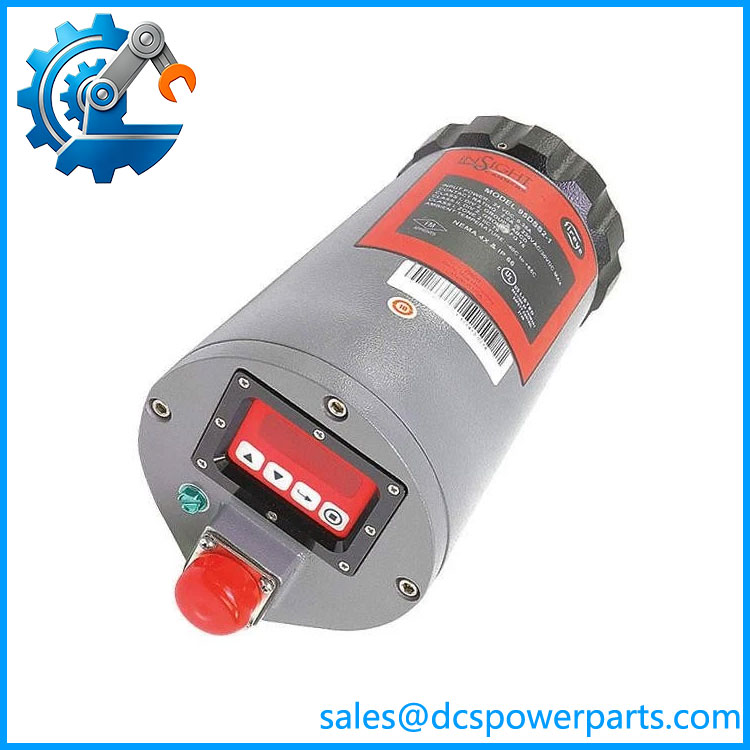
Flame detection becomes a control-system issue when a burner management system must distinguish actual combustion from furnace background radiation, reflected light, or other optical interference. The Fireye 95DSS2-1 is an InSight integrated flame scanner using solid-state IR and UV sensors in one scanner assembly. Fireye identifies this exact model as an InSight I integrated scanner with dual IR/UV sensing and a 12-pin electrical quick-disconnect connection.
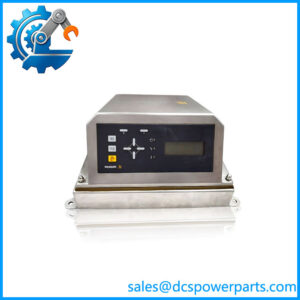
The scanner incorporates its own flame relay, fault relay, electronic self-checking, local LED display, and keypad, reducing dependence on a separate flame amplifier. For maintenance teams, the important point is that the scanner is part of a burner-management architecture, so optical alignment, cooling/purge air, mounting hardware, electrical configuration, and flame-detection settings all need to be checked together rather than treating the scanner as a simple 24 VDC sensor.
Key Technical Specifications
| Parameter | Specification |
|---|---|
| Product Model | 95DSS2-1 |
| Manufacturer | Fireye |
| Product Family | InSight |
| Product Type | Integrated flame scanner |
| Sensing | Solid-state IR + UV, dual spectrum |
| Supply Voltage | 24 VDC, +10% / -15% |
| Supply Current | Approx. 0.35 A |
| Electrical Connection | 12-pin quarter-turn quick disconnect |
| Flame Relay | SPST, normally open |
| Fault Relay | SPST, normally closed |
| Analog Output | 4–20 mA DC |
| Maximum Analog Load | 750 Ω |
| Display | 8-character alphanumeric LED |
| Operator Controls | Four pushbuttons |
| Environmental Housing | NEMA 4X / IP66 |
| Hazardous Area | Class I, Division 2, Groups A/B/C/D, subject to applicable approval configuration |
| Operating Temperature | -40°C to +65°C |
| Humidity | 0–95% RH, non-condensing |
| Cooling/Purge Air | Clean, dry, cool air |
| Standard Air Requirement | 4 SCFM / 113 L/min under stated mounting conditions |
| Maximum Cable Length | 1,000 ft / 305 m for the specified 59-497 cable |
| Compatible Cable | Fireye 59-497 |
| Compatible Flanges | Fireye 60-2692 or 60-2919 |
Fireye’s documentation specifies the 24 VDC supply, 12-pin connection, relay outputs, 4–20 mA output, NEMA 4X/IP66 housing, temperature range, and cooling-air requirements. Fireye also identifies 60-2692 or 60-2919 as compatible mounting-flange options and 59-497 as the associated cable.
Major Features / Advantages
Dual IR and UV Flame Sensing
The 95DSS2-1 uses two solid-state sensing technologies: infrared and ultraviolet. This gives the burner-management system two optical characteristics from which to evaluate flame behavior rather than relying on a single sensing band. Fireye specifically describes the InSight scanner family as using dual IR/UV sensors.
95DSS2-1
Integrated Flame Relay
A separate remote flame amplifier is not required for the basic scanner function because the unit contains an internal flame relay with adjustable ON/OFF thresholds. This is useful in retrofit work where the existing burner-control architecture needs a direct flame-presence interface. The actual relay wiring and permissive/trip logic must still be checked against the plant’s burner-management design.
Electronic Self-Checking
The scanner uses electronic self-checking rather than relying on a mechanical shutter. This is a meaningful maintenance detail. There are no shutter mechanisms to align or mechanically cycle as part of the scanner’s self-check arrangement.
Local Diagnostics
An eight-character alphanumeric LED display and four pushbuttons provide local access to operating parameters and setpoints. That can reduce the need to connect external equipment simply to determine basic scanner status during commissioning or troubleshooting.
4–20 mA Flame Signal
The integrated 4–20 mA output provides an analog signal path for flame-related information into a control or monitoring system. The specified maximum connected load is 750 Ω. This should not be confused with a generic process transmitter output; the receiving-system scaling and burner-management logic should be verified against the actual installation.
Designed for Industrial Burner Environments
The scanner is specified with a NEMA 4X/IP66 housing and Class I Division 2 hazardous-area classification for the applicable configuration. Its environmental specification also calls for clean, dry cooling/purge air, with higher airflow potentially required under high-temperature or dirty-fuel conditions.
Application Scenarios & Pain Points
Utility and Industrial Boilers
The 95DSS2-1 can be used for flame monitoring in burner systems where reliable flame-presence information is required for combustion control and burner-management logic. The actual safety function belongs to the complete burner-management system, not the scanner by itself.
Multi-Fuel Combustion Systems
The dual IR/UV sensing arrangement is applicable where flame characteristics vary with fuel type and firing conditions. During commissioning, however, the scanner’s configuration should be matched to the actual burner and sighting geometry.
Burner Retrofit Projects
The integrated relay, analog output, local display, and 12-pin connection make the 95DSS2-1 relevant to replacement projects involving existing Fireye flame-monitoring equipment. Mechanical compatibility still needs to be checked: the scanner requires an appropriate mounting flange rather than being a standalone pipe-mounted component.
Furnace Flame Monitoring
The scanner requires a properly aligned optical path and cooling/purge arrangement. In a dusty or high-temperature furnace, the mechanical installation can be just as important as the electronics. Fireye specifies clean, dry, cool air and gives airflow requirements for the mounting arrangement.
Engineer’s Guide — Field Pitfalls to Avoid
1. Do not confuse 95DSS2-1 with 95DSS3-1.
Fireye identifies 95DSS2-1 as an InSight I scanner, while 95DSS3-1 is an InSight II model. They should not be treated as interchangeable simply because both use IR/UV sensing.
2. The mounting flange is a separate procurement item.
Fireye specifies compatible flange options including 60-2692 and 60-2919. Confirm the installed pipe connection before ordering a replacement scanner.
3. Check the cable before shutdown.
The standard 95DSS2-1 configuration uses a 12-pin quick-disconnect and Fireye identifies 59-497 as the associated cable. Some scanner variants use captive cable configurations, so the exact suffix matters.
4. Do not ignore purge-air conditions.
The scanner is not simply bolted onto the furnace and left to operate. Fireye specifies clean, dry, cool purge air and gives a nominal 4 SCFM requirement under specified mounting conditions. Higher airflow may be needed in more demanding conditions.
5. Verify hazardous-area certification on the actual unit.
The published specifications identify Class I Division 2 Groups A/B/C/D capability, but approval markings should be checked on the physical scanner and against the installation requirements before replacement.
6. Do not equate scanner operation with burner-management-system safety.
The 95DSS2-1 supplies flame-detection information and relay outputs. The final trip, permissive, purge, ignition, and fuel-shutoff functions depend on the complete burner-management architecture.
Related Products
- Fireye 95DSS1-1 — Earlier InSight integrated flame scanner; industry product indexes identify 95DSS2-1 as the enhanced replacement model.
- Fireye 95DSS3-1 — InSight II integrated IR/UV scanner; different product generation and configuration.
- Fireye 95DSS3-1CEX — InSight II integrated flame-scanner variant; verify exact electrical and certification configuration.
- Fireye 95DSS2-1CG — Captive-cable variant listed separately from the standard 12-pin quick-disconnect configuration.
- Fireye 59-497 — 12-conductor cable specified for the InSight integrated scanner.
- Fireye 60-2692 — Compatible 1-inch NPT female mounting flange option with cooling-air connection.
- Fireye 60-2693 — 1-inch BSP female mounting-flange option identified in Fireye-related technical data.
- Fireye 60-2919 — Additional mounting-flange option identified in Fireye’s product documentation for the 95DSS2-1.
FAQ
What is Fireye 95DSS2-1?
The 95DSS2-1 is a Fireye InSight I integrated flame scanner using solid-state infrared and ultraviolet sensing. It includes flame and fault relay outputs, a 4–20 mA analog output, local display, keypad, and electronic self-checking.
What voltage does the 95DSS2-1 require?
The scanner uses 24 VDC, with Fireye documentation specifying a +10% / -15% supply tolerance and approximately 0.35 A supply current.
Does the 95DSS2-1 need a separate flame amplifier?
The standard 95DSS2-1 incorporates an internal flame relay, so a separate remote flame amplifier is not required for that basic flame-relay function. The final control-system architecture should still be reviewed before removing any existing interface equipment.
What cable is used with 95DSS2-1?
Fireye identifies 59-497 as the cable for the 95DSS2-1 standard quick-disconnect configuration. The scanner uses a 12-pin quarter-turn electrical connector, and Fireye lists a maximum cable length of 1,000 ft / 305 m for the specified cable.
Does the scanner require cooling air?
Yes. Fireye specifies clean, dry, cool cooling/purge air. The stated requirement is 4 SCFM (113 L/min) under the specified mounting arrangement, with higher airflow potentially required at high scanner temperatures or with dirty/dusty fuels.
Can 95DSS2-1 directly replace another Fireye flame scanner?
Not automatically. Check the exact scanner model, connector style, mounting flange, cable, certification, sensing arrangement, and burner-management configuration. Fireye distinguishes 95DSS2-1 from other InSight models such as 95DSS3-1 and captive-cable variants.
What should procurement verify before buying a replacement?
Match the complete 95DSS2-1 model number, inspect the physical nameplate, verify the 12-pin versus captive-cable arrangement, confirm the mounting flange, check hazardous-area markings, and compare the existing scanner’s wiring and configuration. For used or surplus inventory, verify actual condition rather than assuming that a listed “in stock” status means tested operating condition.