Description
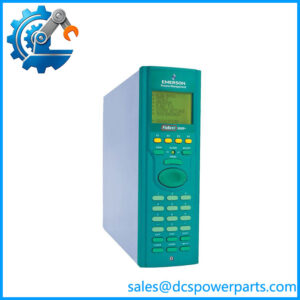
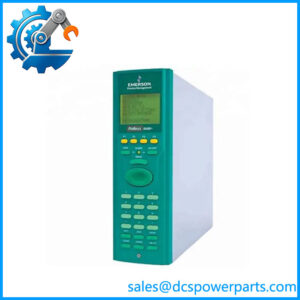
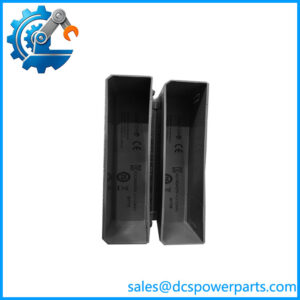
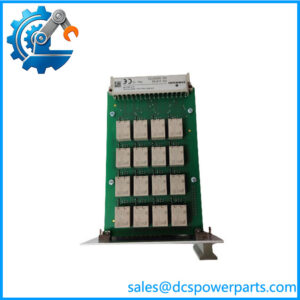
Emerson 4256A84G13 — Westinghouse Ovation Q-Line QID Card
Key Technical Specifications
| Parameter | Specification |
|---|---|
| Model | 4256A84G13 |
| Board designation | QID G13 |
| Manufacturer lineage | Westinghouse / Emerson Ovation |
| Product family | Q-Line |
| Product type | Digital input card |
| Listed voltage variant | 220 VAC |
| Number of input channels | Verify against the applicable hardware manual |
| Input threshold and current | Not independently confirmed |
| Input isolation | Verify from the original technical documentation |
| Output function | Not applicable to a digital input card |
| Rack / chassis compatibility | Confirm against the installed Q-Line hardware |
| Operating temperature | Verify from the applicable equipment manual |
| Dimensions | Verify from the original board drawing |
| Current lifecycle status | Not confirmed |
Specification caution: The 220 VAC designation is supported by parts-catalog records. Do not infer the permissible input-voltage range, channel count, isolation rating, or response time from the suffix alone.
Product Introduction
The Emerson / Westinghouse 4256A84G13 is listed as a QID G13 card in the legacy Q-Line hardware family, with a catalog designation indicating 220 VAC service. It is intended for use in compatible control-system installations where the card’s input interface matches the field signal type and the existing rack architecture.
For maintenance engineers, the most important verification is the exact voltage variant. QID cards are listed with several different voltage designations, including DC and AC versions. Replacing a 220 VAC input card with a visually similar lower-voltage variant can create an electrical mismatch and may damage equipment or produce incorrect signal behavior. Confirm the full board number, revision, field wiring, and applicable system documentation before installation.
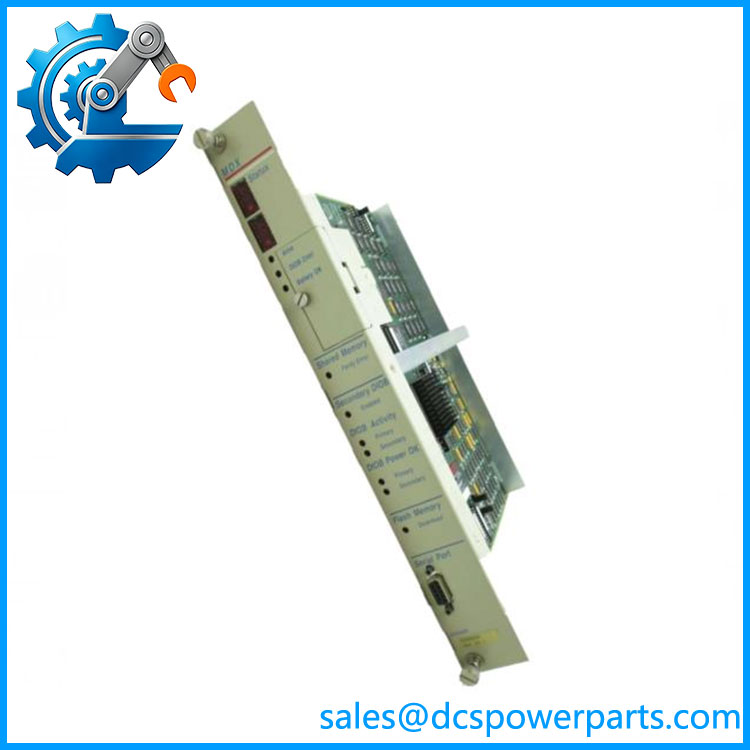
4256A84G13
Application Scenarios & Field Pitfalls — The Engineer’s Perspective
Engineering Pain Point
Legacy Q-Line input hardware can be difficult to identify from a short parts list alone. The voltage designation is a key selection parameter, but it does not establish every electrical characteristic required for a safe replacement. Input thresholds, channel configuration, isolation, and rack compatibility must be verified from the correct technical documentation.
Typical Applications
- Legacy DCS maintenance: Replacement of an identified QID card in an existing Q-Line control installation.
- AC field-signal interfacing: Input monitoring where the original design specifies the 220 VAC QID variant.
- Planned outage repairs: Restoration of a failed input interface while preserving the existing rack and wiring configuration.
- Obsolescence management: Identification and verification of spare cards for installed legacy control hardware.
These are typical use cases inferred from the catalog designation; the exact original application should be confirmed from the plant’s drawings.
Technical Pitfalls to Avoid
- Verify the voltage variant. Confirm that the installed card is 4256A84G13 and that the field circuit is designed for the corresponding 220 VAC input version.
- Do not assume all QID cards are interchangeable. Other QID variants have different voltage designations. A common family name does not establish electrical equivalence.
- Check the field wiring and protection. Review the wiring diagram, terminal assignments, fusing, and external signal-conditioning components before reconnecting field circuits.
- Confirm the rack and slot. Check the applicable Q-Line chassis, backplane interface, and system documentation. Do not force a card into an unverified rack position.
- Inspect for age-related damage. Examine edge connectors, PCB condition, corrosion, contamination, and evidence of heat damage before installation.
- Validate the signal path after replacement. Follow the approved maintenance procedure to confirm input state recognition, controller diagnostics, and the expected response in the control application.
- Avoid unsupported channel assumptions. Do not infer the channel count, isolation arrangement, or input response time from the part number. Obtain the relevant manual or board drawing before engineering a replacement.
- Control risk during live-system work. Follow site isolation and change-management procedures. Do not disconnect or energize field circuits without verifying the consequences for the process and associated protection functions.
Related Products
The following are related Q-Line card models or voltage variants identified in available catalogs. They are reference points, not confirmed direct replacements.
- 4256A84G01 — QID G01: Listed QID variant; verify its input specification.
- 4256A84G02 — QID G02: Listed as a 24 VDC/A variant in a parts catalog; verify the exact meaning of the designation.
- 4256A84G03 — QID G03: Listed as a 24 VDC/A variant.
- 4256A84G04 — QID G04: Listed as a 48 VDC/A variant.
- 4256A84G05 — QID G05: Listed as a 48 VDC/A variant.
- 4256A84G06 — QID G06: Listed for 120 VDC service.
- 4256A84G11 — QID G11: Listed for 120 VAC service.
- 4256A84G14 — QID G14: Listed for 220 VAC service; confirm any configuration differences from G13.
- 4256A84G15 — QID G15: Listed for 220 VDC service.
Catalog descriptions establish that these are related QID models, but do not establish electrical, mechanical, or firmware interchangeability.
Procurement Note
When sourcing Emerson / Westinghouse 4256A84G13, request a photograph of the full board label and revision markings. Confirm that the offered unit is the G13 version and that the supplier can document its condition and test status.
Before approving a replacement, compare the original card against the equipment manual and plant drawings, including the field voltage, input circuit arrangement, rack compatibility, and required functional tests. If a supplier proposes G14 or another QID variant, request written technical evidence that it is approved for the specific application. Do not assume equivalence based on the shared QID designation.