Description
Product Overview
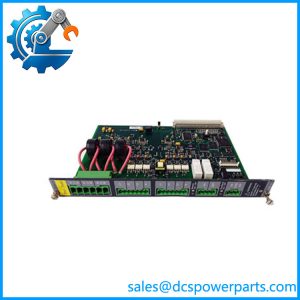
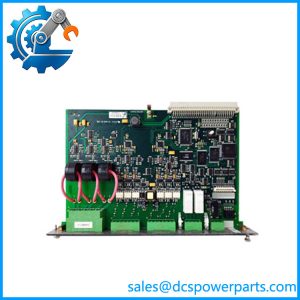
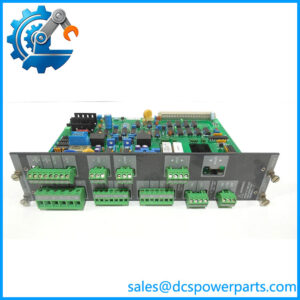
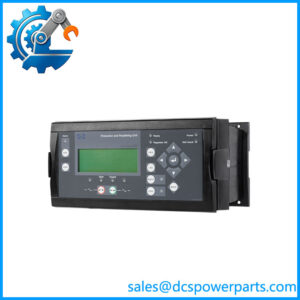
The DEIF RMP-112D Overload and Reverse Power Protection Relay is a three-phase protective relay designed to monitor generator power and help protect the prime mover from operating conditions that can lead to equipment damage. It belongs to DEIF’s UNI-LINE relay family and combines overload protection with reverse power protection. In generator installations, reverse power can occur when the prime mover fails to supply sufficient mechanical power and the generator begins drawing electrical power from the connected bus. The RMP-112D detects configured power conditions and operates its trip or alarm contacts according to the selected settings.
The relay provides adjustable overload and reverse power thresholds. The overload setting (P>) covers 25–125% of nominal power, while the reverse power setting (-P>) covers 0–25%. The documented design supports three-phase measurement and timer-controlled tripping, allowing the response to be configured for the generator application. Measurement and supply circuits must be matched to the actual installation: published technical information lists AC measurement voltages from 57.7 to 690 VAC, current inputs from 0.4 to 5.0 A, and selectable DC auxiliary supply ratings. These ranges must be checked against the exact relay documentation and wiring arrangement before commissioning.
For plant engineers and procurement teams, the DEIF RMP-112D is relevant to generator protection panels, power-generation systems, and installations where both overload and reverse power monitoring are required. Before replacing an existing relay, verify the measurement wiring, nominal generator power settings, current-transformer ratio, voltage-transformer arrangement if used, trip delay, auxiliary supply, and output contact requirements. A matching model number is an important starting point, but the protective settings and circuit wiring must also match the approved generator protection design.
Product Introduction (Non-Templated)
Reverse power protection addresses a specific generator hazard: electrical power flowing back into a generator when its prime mover can no longer provide the required mechanical input. The RMP-112D combines this function with adjustable overload protection, giving the protection panel separate thresholds for the two conditions.
When replacing a unit, record the original threshold settings and trip delays before removal. Confirm the voltage and current measurement circuits and the auxiliary supply rating from the nameplate and wiring diagram; an incorrect setting can cause nuisance trips or inadequate protection.
Key Technical Specifications
| Parameter | Value |
|---|---|
| Product Model | RMP-112D |
| Manufacturer / Brand | DEIF |
| Product Series | UNI-LINE |
| Product Type | Protective overload and reverse power relay |
| Primary Application | Generator and prime mover protection |
| Protection Function | Overload and reverse power |
| ANSI Function | 32, reverse power |
| Overload Setting (P>) | 25–125% of nominal power |
| Reverse Power Setting (-P>) | 0–25% of nominal power |
| Measurement System | Three-phase |
| Measurement Voltage Range | 57.7–690 VAC, subject to wiring configuration |
| Measurement Current Range | 0.4–5.0 A |
| Auxiliary Supply Options | 24, 48, 110, or 220 VDC, subject to model configuration |
| Frequency Range | 40–70 Hz, with specified operating bands to be checked in the datasheet |
| Trip Timing | Adjustable time delay |
| Output Contacts | One minimum and one maximum relay contact, as documented |
| Alarm Indication | LED indication |
| Relay-Operation Indication | LED indication |
| Mounting | 35 mm DIN rail or base mounting |
| Communication Protocol | No standard digital communication interface verified |
| Operating Temperature | Verify from the applicable installation manual |
| Protection Rating | Verify from the applicable datasheet |
| Condition | Confirm actual supplied unit and test records |
Specifications are based on available DEIF product and technical references. Confirm the exact wiring mode, auxiliary supply, and measurement configuration against the official data sheet before applying these values to a specific installation.
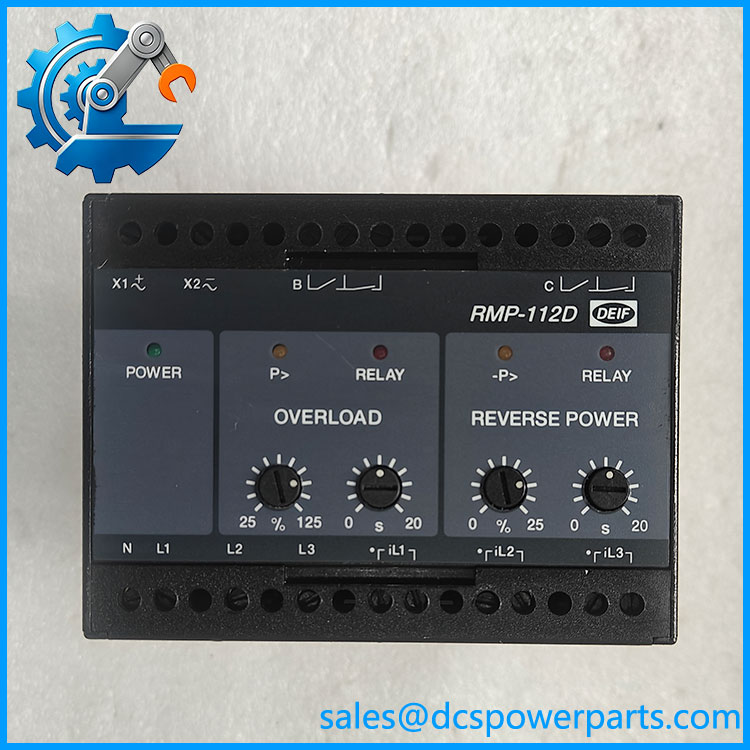
RMP-112D
Related Products
These DEIF UNI-LINE relays provide related power-protection functions. Their protection coverage differs, so they should not be treated as direct substitutes without checking the application.
- RMP-111D — Overload protection relay without the combined reverse power function listed for the RMP-112D.
- RMP-121D — Reverse power relay for applications requiring reverse power protection without the combined overload function.
- RMV series — Voltage protection relays used for voltage-related monitoring and protection.
- RMC series — Current monitoring and protection relays within the broader DEIF UNI-LINE range.
- RMQ series — Reactive power protection relays for applications requiring reactive-power monitoring.
- RMF series — Frequency protection relays for generator and power-system frequency monitoring.
- LMR series — Related DEIF monitoring relay family; verify the specific model’s measurement and output functions.
Confirm the precise model designation and application requirements before choosing an alternative. The RMP-111D and RMP-121D are functionally distinct variants, not equivalent replacements for the combined overload/reverse-power model.
Frequently Asked Questions
1. What does the DEIF protect against?
It provides generator overload and reverse power protection. The overload function monitors power against a configured threshold, while reverse power protection detects power flowing in the opposite direction from normal generator operation.
2. Can I replace an RMP-111D with an ?
Not without reviewing the protection design. The RMP-111D is listed for overload protection, while the combines overload and reverse power protection. Check the existing wiring, required functions, and trip logic before substitution.
3. Can I hot-swap this relay?
Do not assume hot-swap capability. Isolate the relevant control and measurement circuits according to the site’s electrical safety procedure. Confirm the generator protection system remains in a safe state before removing or reconnecting the relay.
4. Does the support firmware v3.1?
A firmware version v3.1 has not been verified for this relay. Confirm whether the version reference applies to the relay, another DEIF controller, or the overall generator management system.
5. How should I set the overload and reverse power thresholds?
Use the approved generator protection study, equipment ratings, and commissioning documentation. The relay’s adjustment ranges do not determine the correct site settings by themselves. Thresholds and time delays must account for the prime mover, generator rating, and operating arrangement.
6. What electrical details must I confirm before ordering?
Check the auxiliary supply voltage, measured AC voltage, current-transformer secondary rating, three-phase wiring configuration, frequency range, and output contact requirements. Also verify the full model designation and any revision or configuration markings on the installed relay.
7. What testing should be completed after replacement?
Follow the approved commissioning and protection-test procedure. Testing should verify measured power polarity, overload and reverse power thresholds, time delays, output contact operation, alarm indication, and the trip circuit’s response. A relay power-up test alone does not establish that the complete protection function works correctly.
Procurement recommendation: Specify DEIF and provide the auxiliary supply rating, voltage and current measurement details, and required output contact arrangement. For a protection relay, matching these electrical details and verifying the trip function are as important as matching the model number.