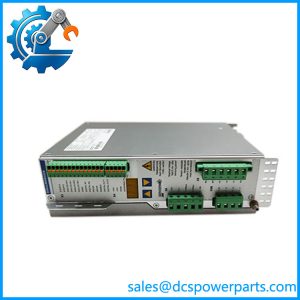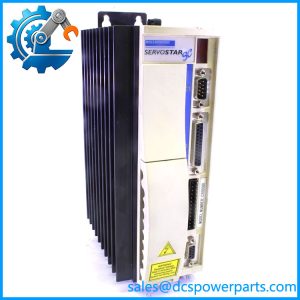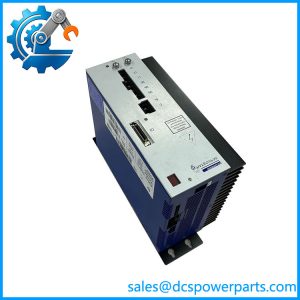
Description
Key Technical Specifications
| Parameter | Value |
|---|---|
| Manufacturer | Kollmorgen / Danaher Motion |
| Model | S20660-SRS |
| Series | S200 SynqNet Servo Drive |
| Product Type | Digital AC Servo Drive |
| Input Voltage | 120/240 VAC |
| Nominal DC Bus Voltage | 320 VDC |
| Continuous Output Current | 6 A RMS |
| Peak Output Current | 18 A RMS |
| Peak Current Duration | Approx. 3 seconds |
| Continuous Output Power | Approx. 2 kW |
| Peak Output Power | Approx. 6 kVA |
| Communication Interface | SynqNet |
| Network Connector | RJ-45 |
| Control Modes | Position, Speed, Torque |
| Feedback Support | Encoder / SFD / Comcoder feedback options |
| Current Loop Bandwidth | Up to several kHz range depending on configuration |
| Mounting | Panel mount |
| Dimensions | Approx. 175.01 mm × 64 mm × 131.57 mm |
| Operating Environment | Industrial automation cabinet |
| Application | Robotics, machine tools, semiconductor equipment, motion platforms |
Product Introduction
Kollmorgen S20660-SRS Overview
The Kollmorgen S20660-SRS is a digital servo drive from the S200 SynqNet series, designed for precision motion control applications requiring coordinated multi-axis operation and fast servo response. The drive converts incoming AC power into regulated three-phase PWM output for servo motors while continuously processing feedback signals for accurate position, velocity, and torque control.
The Kollmorgen S20660-SRS integrates SynqNet communication capability, allowing it to operate as part of a distributed motion control system. The network interface provides synchronized communication between motion controllers and multiple servo axes, making it suitable for automated equipment where timing accuracy and repeatable motion performance are important.
The Danaher Motion S20660-SRS was commonly used in demanding automation environments before the Kollmorgen product transition. Its compact S200 design combines amplifier electronics, feedback processing, and motion control functions in a single servo drive package. Replacement requires checking motor compatibility, feedback type, SynqNet configuration, firmware revision, and stored drive parameters.
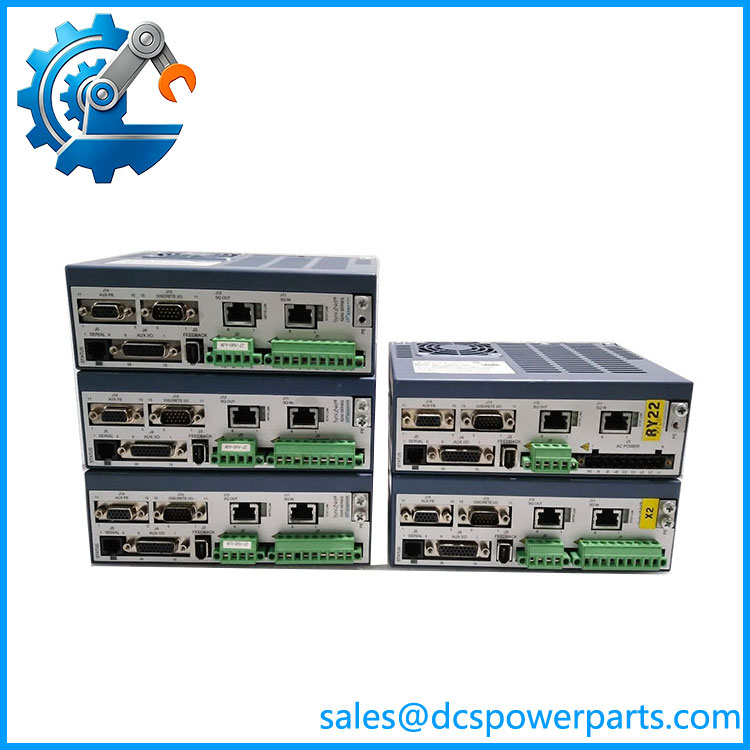
S20660-SRS
Application Scenarios & Field Pitfalls (The Engineer’s Perspective)
Engineering Pain Point
A machine axis begins showing position deviation, following error alarms, or unexpected servo trips. The controller appears normal, but the motion system cannot maintain accurate movement.
The troubleshooting path should include:
- Servo drive status and fault history
- Motor winding condition
- Feedback cable integrity
- Encoder feedback quality
- Mechanical load condition
- Motion network communication
The S20660-SRS is responsible for power conversion and closed-loop motor control, so faults may originate from either the drive electronics or external motion components.
Typical Applications
Robotics and Automated Machinery
Used for:
- Robotic positioning axes
- Pick-and-place systems
- Assembly automation
Semiconductor and Electronics Equipment
Applied in:
- Wafer handling systems
- Precision stages
- Inspection equipment
Packaging and Printing Machinery
Used for:
- High-speed indexing
- Registration control
- Coordinated servo movement
CNC and Machine Tools
Applied in:
- Feed axes
- Rotary positioning systems
- Automated tooling systems
Technical Pitfalls to Avoid
1. Verify Motor and Feedback Compatibility
The requires matching between:
- Motor voltage rating
- Encoder type
- Feedback wiring
- Motor parameters
A drive replacement without correct motor data can create tuning problems.
2. Confirm SynqNet Network Configuration
The SRS version includes SynqNet communication. Check:
- Network topology
- Node addressing
- Controller compatibility
- Communication firmware
A power-up test alone does not confirm proper network operation.
3. Save Existing Drive Parameters
Before replacement, record:
- Servo gains
- Current limits
- Motor configuration
- Motion tuning values
A replacement drive may require parameter restoration before machine operation.
4. Investigate Root Cause of Drive Failure
Common causes include:
- Motor cable insulation faults
- Regenerative energy problems
- Overcurrent events
- Excessive mechanical load
- Cooling issues
Installing another servo amplifier without identifying the original cause may result in repeated failures.
Related Products
- Kollmorgen S20360-SRS
Related S200 SynqNet servo drive variant for different current and power requirements. - Kollmorgen S20260-SRS
Lower-power S200 SynqNet AC servo drive model. - Kollmorgen S20630-SRS
Related S200 servo drive family member using DC input architecture. - Kollmorgen Series Servo Motors
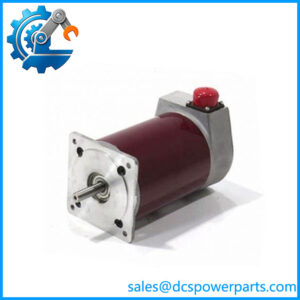
Compatible motor family used with servo amplifiers. - Kollmorgen SynqNet Motion Controllers
Motion control platforms used for synchronized multi-axis applications. - Danaher Motion Servo Drive Family
Original product family from which Kollmorgen products evolved.