Description
Product Overview
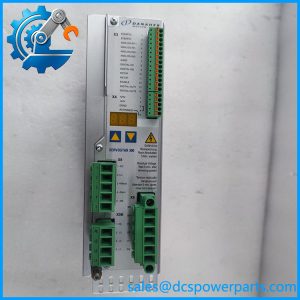
The Danaher Motion S21260-SRS is a digital brushless AC servo drive in the S200 series, designed to regulate motor motion in automated machinery. Rather than serving as a general-purpose PLC or DCS controller, it operates at the drive level, converting command signals into controlled motor current. This allows a motion controller or machine PLC to coordinate axis movement while the drive handles the fast electrical control loops required for acceleration, deceleration, and load response. Typical applications include packaging equipment, automated assembly stations, indexing mechanisms, and precision material-handling systems.
Electrical sizing is a critical part of selecting the Danaher Motion S21260-SRS. Kollmorgen’s S200 documentation specifies a 120–264 VAC motor bus input range for the S21260 family, with 12 A RMS continuous output current at a 40°C ambient temperature and a peak rating of 30 A RMS for a limited interval. The actual peak-current duration, motor compatibility, and permissible duty cycle must be checked against the applicable manual and motor data. The S200 platform also supports SynqNet-oriented configurations and related drive variants, so the suffix matters: an SRS model should not be treated as interchangeable with a VTS or SDS version merely because the base number is similar.
For maintenance teams, the Danaher Motion S21260-SRS can be a practical candidate for restoring an existing motion axis without redesigning the entire machine. Before installing a replacement, compare the original drive’s input supply, motor phase and current requirements, feedback device, command interface, network configuration, and mounting arrangement. Confirm whether the installed system uses SynqNet, analog command signals, or another supported configuration; do not assume that every interface is present on every hardware revision. A controlled commissioning procedure should include parameter backup, motor identification, protective-ground checks, feedback verification, and low-speed testing before production release. The Danaher Motion S21260-SRS is most useful when its electrical and control characteristics match the existing machine—not simply when the model number looks similar.
Product Introduction (Non-Templated)
A failed servo axis can stop an otherwise healthy production line. The Danaher Motion S21260-SRS provides motor-level current control for compatible brushless AC servo systems in the S200 family, with 12 A RMS continuous current and 30 A RMS peak current under specified conditions.
For a legacy replacement or DCS system upgrade involving motion equipment, verify the motor feedback, command interface, supply voltage, and network architecture first. A matching part number alone does not establish drop-in compatibility.
Key Technical Specifications
| Parameter | Value |
|---|---|
| Product Model | -SRS |
| Manufacturer / Brand | Danaher Motion; Kollmorgen S200 product lineage |
| Product Type | Brushless AC servo drive |
| Product Series | S200 |
| Motor Bus Input Voltage | 120–264 VAC |
| Input Frequency | 47–420 Hz, as specified for the family |
| Continuous Output Current | 12 A RMS at 40°C ambient |
| Peak Output Current | 30 A RMS, limited duration |
| Control Function | Servo motor current control for motion applications |
| Communication / Network | SynqNet support in applicable configurations; verify installed interface |
| Feedback Interface | Verify encoder or feedback compatibility against the exact hardware revision |
| Operating Temperature Reference | 40°C ambient for the published continuous-current rating; this is not a complete operating-temperature range |
| Installation Method | Panel mounting; verify dimensions and mounting clearances |
| Protection Rating | Enclosure IP rating not verified; inspect the applicable hardware documentation |
| Condition | New surplus or used, depending on the supplied unit |
Engineering note: The family includes different input, current, and interface configurations. The figures above are family-specific published ratings for the variant, not a substitute for the complete nameplate and manual verification. Do not assume that an advertised unit has passed a functional load test unless supporting records are available.
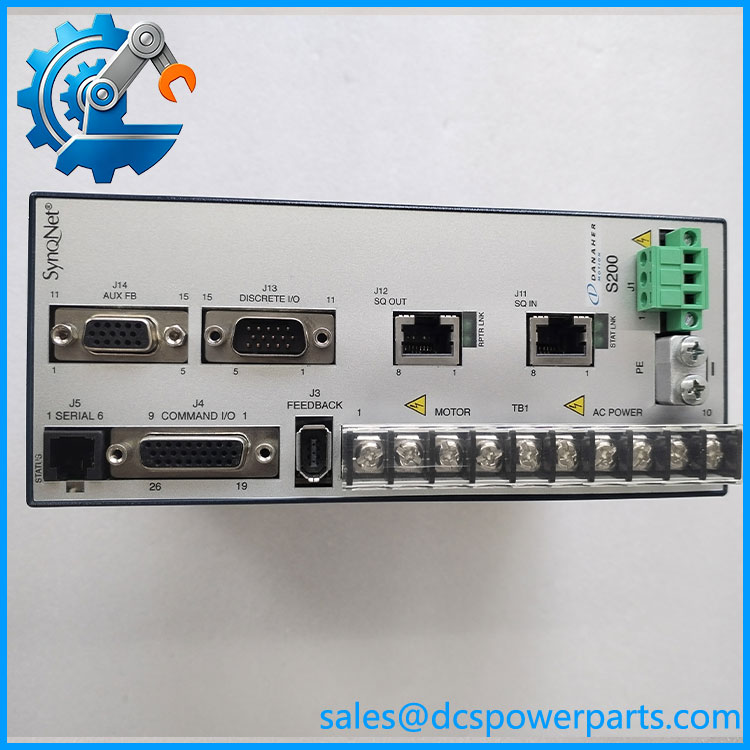
S21260-SRS
Related Products
The following models are useful comparison points for maintenance planning and drive selection. Related models are not automatically interchangeable. Confirm motor sizing, electrical supply, feedback, control interface, and firmware or network requirements before substituting any unit.
1. -VTS — A related -series drive variant. Consider it when evaluating an alternative control or interface configuration; verify the exact hardware and command architecture before replacement.
2. -SDS — Another variant in the family. Compare its interface and control configuration with the installed SRS unit before considering it for a legacy replacement.
3. S22460-SRS — A higher-current -series comparison model with a published continuous-current rating of 24 A RMS and peak current of 48 A RMS. Its greater current capacity does not establish direct compatibilit an installation.
4. S20660-SRS — A lower-current -family model, listed at 6 A RMS continuous and 18 A RMS peak. It may be relevant when reviewing a lower-load axis, but it should not replace a higher-rated drive without a full load and application review.
5. S20360-SRS — A lower-current variant listed at 3 A RMS continuous and 9 A RMS peak. It is a comparison candidate for smaller servo axes, not a like-for-like replacementhe .
6. S20260-SRS — A lower-current drive with a published continuous rating of 1.5 A RMS and peak rating of 4.5 A RMS. Evaluate it only for applications whose motor and duty-cycle requirements fit those limits.
7. -VTSS / documentation set — The relevant manuals are essential supporting references when checking wiring, feedback, installation, and configuration differences between drive variants. Use the document matching the actual unit rather than relying on a shared base model number.
Frequently Asked Questions (FAQ)
1. Can I replace mying with another servo drive?
Potentially, but the replacement must match the original axis requirements. Start with these checks:
- Confirm the motor bus voltage and continuous and peak current requirements.
- Match the motor feedback device and wiring.
- Verify the command interface and any SynqNet network configuration.
- Compare the drive’s hardware revision and configuration requirements.
A different model may have different current ratings or interfaces. Obtain engineering approval before commissioning a substitute.
2. Can I hotthe while the machine is running?
Do not assume that hot-swapping is supported. This is a power-drive component, and removing or connecting it under power can expose personnel to hazardous voltage, damage equipment, or cause uncontrolled axis movement.
Before replacement, isolate and lock out the power source, follow the manufacturer’s discharge-time requirements, verify the DC bus is safe, and secure the mechanical load. If the machine uses vertical axes or stored mechanical energy, apply the appropriate load-restraint procedure.
3.the support firmware v3.1?
The exact firmware compatibility of this model and revision cannot be confirmed from the available documentation alone. A firmware version number without its associated software, hardware revision, and configuration context is insufficient.
Before updating firmware:
- Record the complete drive identification and revision details.
- Identify the configuration or commissioning software used by the existing system.
- Verify the approved firmware and compatibility requirements in the applicable documentation.
- Back up available parameters before attempting an update.
Do not install firmware based solely on a version number reported for another drive.
4. Will replthe erase my PLC program or motion logic?
Replacing the drive does not ordinarily erase a PLC program stored in the PLC’s own memory. However, drive-specific parameters may be lost if they were stored only in the original unit and are not transferred to the replacement.
Before removing the old drive:
- Back up the PLC and motion-controller project.
- Save the drive’s accessible parameters and tuning values.
- Record motor, feedback, scaling, and network settings.
- Verify the replacement configuration before enabling the axis.
If the original drive cannot communicate, reconstructing its settings may require the machine documentation and the commissioning records.
5. How can I verify that a nelus is authentic?
A new-surplus designation describes the claimed condition, not proof of factory origin or functional performance. Request evidence that supports both identity and condition.
- Compare the model and serial-number labels with the order documentation.
- Inspect the enclosure, connectors, terminals, and mounting points for signs of use or damage.
- Request available provenance, storage history, and inspection records.
- Ask whether testing was visual only, bench-based, or performed under a representative motor load.
A unit described as factory sealed should have supporting packaging and identification evidence. Do not treat a visual inspection as proof of electrical performance.
6. What warranty should I expect when purc an ?
Warranty coverage depends on the seller’s written terms and the unit’s actual condition. New-surplus and used drives may carry different coverage, and manufacturer warranty eligibility should not be assumed for stored or discontinued inventory.
Before ordering, obtain written confirmation of the warranty period, coverage for functional failure, return authorization requirements, and the remedy available if the unit fails commissioning. Ask whether labor, shipping, and consequential production losses are excluded.
7. What should I verify before or an for a legacy machine?
For a reliable replacement assessment, provide the supplier with the existing drive’s nameplate details, motor model, feedback type, input supply, and control-system architecture.
The most important checks are:
- Electrical: Input supply, motor bus voltage, current ratings, grounding, and protective devices.
- Control: Command signals, network interface, and synchronization requirements.
- Configuration: Parameter backup, firmware compatibility, and motor tuning.
- Mechanical: Dimensions, mounting, connector arrangement, and cabinet clearance.
- Acceptance testing: Inspection records, functional test scope, and documented results.
For production-critical equipment, arrange a controlled commissioning window and retain the original configuration files whenever possible. This reduces the risk of discovering a wiring or parameter mismatch after the machine has been taken out of service.