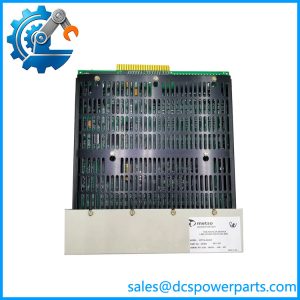
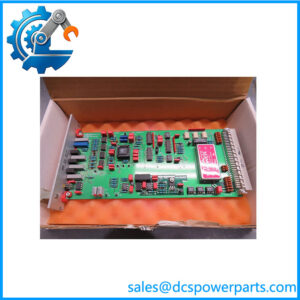
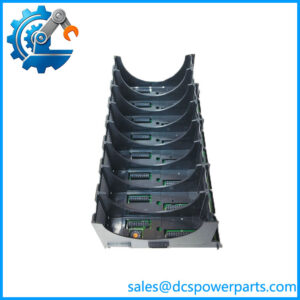
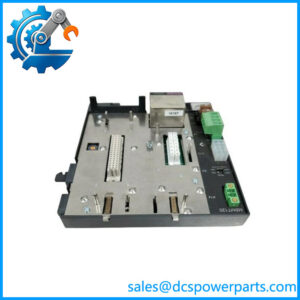
Description
Key Technical Specifications
| Parameter | Specification |
|---|---|
| Manufacturer | Dametric |
| Product Model | MPM-RM2 |
| VAL Number | VAL0122979 |
| SKC Number | SKC9374469 |
| Product Type | Motor Power Monitor |
| System | RMS / RMS-EX Refiner Monitoring System |
| Application | Refiner motor-power monitoring |
| Supply Voltage | +24 VDC nominal |
| Measurement | Motor electrical power |
| Motor Supply | Three-phase AC system |
| Monitoring Function | Motor-power measurement and limit detection |
| Output Function | Monitoring/control signals for RMS architecture |
| Installation | RMS rack module |
| Condition | New Surplus / Tested Refurbished |
The MPM-RM2 should not be confused with earlier MPM variants simply because the naming is similar. VAL0122979 and SKC9374469 are important procurement identifiers, particularly on older installations where a cabinet drawing may still show an obsolete or superseded internal part number.
For an exact replacement, the installed module label, RMS rack configuration, revision marking, and associated current/voltage transformer arrangement should be checked. I would not assign a specific current-transformer ratio or motor-power range without the actual installation documentation.
Application Scenarios & Pain Points
A refiner motor can draw significantly different power depending on stock conditions, plate position, consistency, and mechanical load. When the RMS system reports an abnormal power value, the first question should be whether the electrical measurement is wrong or whether the machine is genuinely seeing a changed load.
Typical Applications
- Refiner Motor Monitoring: MPM-RM2 provides the RMS system with motor-power information used to observe operating load and process behavior.
- Load Condition Detection: Changes in motor power can help identify process disturbances, abnormal loading, or mechanical conditions requiring operator attention.
- RMS-EX Monitoring Cabinets: The module works alongside position, hydraulic-pressure, vibration, and temperature monitoring cards rather than replacing those functions.
- Legacy Refiner Maintenance: Useful as a replacement spare when an existing RMS installation remains in service and a motor-power monitoring channel becomes unreliable.
Field Case:
If the displayed motor power suddenly drops to an implausible value while the motor current remains normal, do not immediately replace the MPM-RM2. Check the measurement transformers, wiring, terminal connections, and phase signals first. A single missing phase-sensing signal can produce a convincing but false process indication.
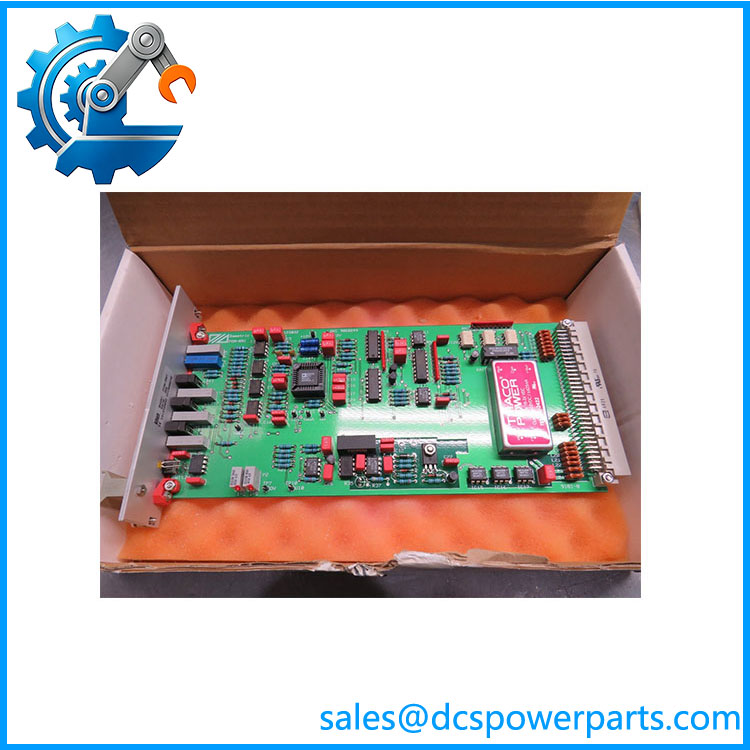
MPM-RM2
Related Products
- Dametric MPM-RM1 — Earlier motor-power monitoring variant within the RMS family. It performs a related function, but the RM1/RM2 designation should be treated as a hardware revision difference rather than an automatic substitution.
- Dametric POM-RM1 — Position Monitor, VAL0123032 / SKC9068249. Measures refiner position and complements motor-power monitoring during process diagnostics.
- Dametric HPM-RM1 — Hydraulic Pressure Monitor, VAL0122850 / SKC9068256. Monitors hydraulic pressure rather than electrical motor load.
- Dametric TVD-RM3 — Touch Point Vibration Detector, VAL0123117 / SKC9251496. Detects vibration associated with refiner plate contact and provides a different process indication.
- Dametric VIM-RM1 — Vibration Monitor, VAL0123136 / SKC9068201. Used for vibration measurement; it should not be substituted for the motor-power channel.
- Dametric OTM-RM1 — Optional Temperature Monitor, VAL0122982 / SKC9068263. Adds temperature monitoring to the RMS architecture.
- Dametric LDU-RM1 — Limit Display Unit, VAL0122977 / SKC9068232. Provides status/limit display functionality rather than motor-power measurement.
- Dametric CMI-RM1 — Control Motor Interface, VAL0122828 / SKC9068191. Handles motor-control interface functions and is complementary rather than interchangeable with MPM-RM2.
The Engineer’s Guide: Field Pitfalls to Avoid
⚠️ Do Not Treat MPM-RM2 as a Generic Power Meter
The module is part of a specific RMS monitoring architecture. External transformer ratios, wiring, and scaling affect the resulting measurement.
How to avoid it: Record the existing transformer configuration and compare it with the replacement module’s documentation before commissioning.
⚠️ Check All Measurement Phases
An abnormal motor-power reading does not necessarily mean the has failed. Loose terminals, failed sensing transformers, or one missing phase signal can create misleading measurements.
How to avoid it: Verify each measurement channel independently and compare the RMS indication with an independent electrical measurement.
⚠️ Do Not Change Calibration Settings Without Documentation
Motor-power monitoring depends on correct scaling. Randomly adjusting calibration controls can turn a minor measurement fault into an incorrectly scaled monitoring system.
How to avoid it: Photograph the original board settings and record the existing RMS indication before removing the module. Restore settings only according to the applicable calibration procedure.
Frequently Asked Questions (FAQ)
What is Dametric VAL0122979?
is a Motor Power Monitor used within the RMS/RMS-EX refiner monitoring architecture. The associated procurement identifiers are VAL0122979 and SKC9374469.
What does measure?
It monitors the electrical power associated with the refiner motor. The resulting measurement can be used to observe process load and generate monitoring conditions within the RMS system.
Can replace MPM-RM1?
Not automatically. Both designations refer to motor-power monitoring hardware, but the RM1 and RM2 versions can differ in circuitry, scaling, connectors, or system compatibility.
Before substitution:
- Compare the complete part number.
- Check the installed RMS system version.
- Compare board revision markings.
- Verify sensing-transformer configuration.
- Confirm the plant wiring diagram.
Can a faulty current transformer look like a bad ?
Yes. This is one of the first things worth checking.
A defective CT, loose terminal, open sensing circuit, or incorrect phase connection can cause an abnormal power value even when the itself is operating correctly.
What should I request for a refurbished ?
Request actual photographs showing:
- marking
- VAL0122979
- SKC9374469
- PCB revision
- Connector condition
- Power-up test
- Motor-power input simulation
- Measurement/scaling verification
- Output/limit testing
- Calibration report
- ESD-safe packaging
- Warranty terms
For this type of monitoring card, “powers on” is not a meaningful functional test by itself.
Can be used in a modern PLC system?
Potentially, but it depends on how the existing RMS installation interfaces with the plant PLC/DCS. The is a monitoring module within the RMS architecture; it is not simply a standalone modern PLC analog-input card.
For a control-system migration, document the existing RMS outputs and PLC input mapping before deciding whether the original monitoring architecture should be retained.
What is the biggest procurement risk?
Incorrect measurement configuration. Even when the replacement module has the correct / VAL0122979 / SKC9374469 identification, incorrect transformer ratios, wiring, or calibration can produce an inaccurate motor-power value.
For a critical refiner application, specify the complete part identification and request a functional test that verifies the measurement channel—not merely a power-on test.