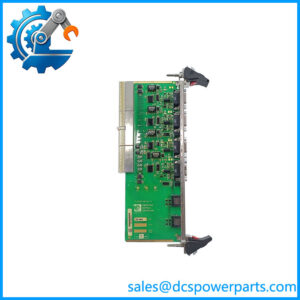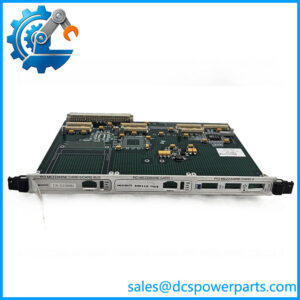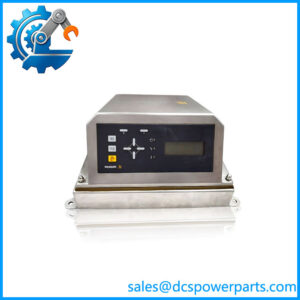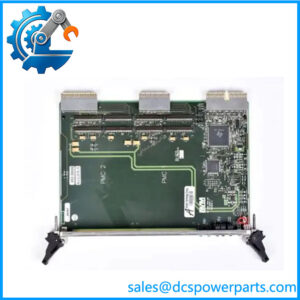
Description
Key Technical Specifications
| Parameter | Specification |
|---|---|
| Manufacturer | CONVERTEAM / ALSTOM |
| Current Ownership Line | GE Power Conversion lineage |
| Product Model | P111-6053-CF |
| Base Part Number | P111-6053 |
| Product Type | Advanced Microcontroller |
| Input Voltage | 18–36 VDC |
| Communication Interface | Ethernet |
| Display Interface | VGA |
| Application Class | Industrial control / power-conversion control |
| System Status | Legacy / discontinued |
| Installation | Control-system hardware assembly |
| Condition | New Surplus or Fully Tested Refurbished |
The strongest available identification data describes P111-6053 as an “Advanced Microcontroller,” with 18–36 VDC, Ethernet, and VGA connections.
A separate procurement reference associates P111-6053 with NSN 6110-01-620-3597 and describes the controlling-agency part name as “Advanced Micro Controller 3.” That record also lists 24 VDC actuator voltage and five network ports, although I would treat those details as configuration-level information rather than universal specifications for every P111-6053-CF unit.
Application Scenarios & Pain Points
The difficult part with obsolete control processors is rarely finding a board that looks similar. It is proving that the processor revision, communications arrangement, software environment, and installed application belong together.
- Power-conversion control: P111-series advanced microcontrollers were used within CONVERTEAM/ALSTOM industrial control architectures associated with power-conversion equipment.
- Legacy automation maintenance: A practical spare where an installed P111-6053 has failed and the surrounding system cannot be economically migrated.
- Control-system refurbishment: Useful during planned maintenance when the plant wants a tested processor available before the existing controller reaches end of service.
- Emergency replacement: Particularly relevant when the original controller is discontinued and OEM replacement paths are limited. Public records explicitly tify as discontinued.
Field note: With these older processors, I would inspect the Ethernet connector and board edge before energizing the replacement. A little oxidation on a connector can create symptoms that look exactly like a failed processor.
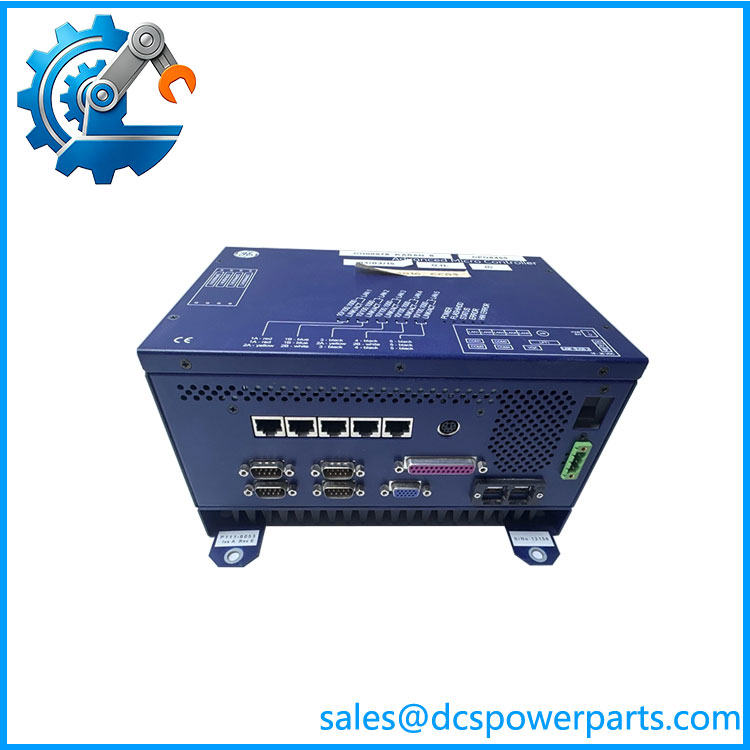
P111-6053
Related Products
- — Closely related advanced microcontroller. It is identified with the same 18–36 VDC, Ethernet, and VGA characteristics, but its complete configuration should be checked before substitution.
- — Another advanced microcontroller variant with similar basic power and interface characteristics. The final digit is important; do not approve substitution from the label alone.
- P110-6053 — Related microcontroller family. Public records describe it as an advanced controller with 18–36 VDC input, but it belongs to the P110 family rather than .
- P112-6053 — Higher-generation/related advanced microcontroller designation with a different network and USB configuration. It should be treated as an engineering replacement candidate, not a drop-in spare.
- P112-6052 — Related P112 advanced microcontroller with multiple Ethernet interfaces. Useful when the installed architecture requires a different network arrangement.
- P122-6052 — Related advanced microcontroller with five Ethernet ports and a 10–30 VDC specification in published listings. Its electrical and software architecture must be checked before considering it as an alternative.
- P110-6152 — Microcontroller from the same broader CONVERTEAM control-product family, identified with five network ports and AMC2 architecture. It is functionally related but not rect replacement.
- — Base hardware identification corresponding to the lied -CF designation. For procurement, record the complete label including the CF suffix, revision, and serial/date information.
The Engineer’s Guide: Field Pitfalls to Avoid
WARNING 1 — Do not ignore the “CF” suffix.
The readily available technical references identify the base part , but they do not provide enough authoritative information to establish exactly what the “-CF” suffix represents.
How to avoid it: Photograph the complete nameplate and PCB markings. Record hardware revision, firmware revision, and any configuration labels before ordering a replacement.
WARNING 2 — Do not assume another variant is a drop-in substitute.
-6051, -6 and share a family designation, but that does not make their application software, communications configuration, or hardware revision identical. Public records list these as separate part numbers.
How to avoid it: Match the complete part number first; evaluate functional alternatives only after checking the system drawings and controller configuration.
WARNING 3 — Verify the 18–36 VDC supply before energizing.
The donted specification calls for 18–36 VDC.
How to avoid it: Measure the actual supply at the controller terminals, check polarity, and inspect the DC distribution and protective devices. Do not rely solely on the cabinet power-supply nameplate.
Frequently Asked Questions (FAQ)
What is COTEAM -CF?
-CF is an advanced microcontroller/control processor associated with the legacy CONVERTEAM/ALSTOM automation family. base is documented with 18–36 VDC power, Ethernet, and VGA interfaces.
The CF suffix should be preserved when ordering, since publicly available references do not adequately document its exact configuration meaning.
Is still manufactured?
Available industrial-part references identify as discontinued by the manufacturer.
For an operating legacy system, this makes spare-unit condition and testing more important. A used controller should ideally be supplied with documented power-up, communication, and functional testing rather than a simple visual inspection.
What voltage the require?
The documented input range is 18–36 VDC.
Before installation, check the actual cabinet DC voltage under load. If the old controller failed after a power-supply event, I would also inspect the DC supply for excessive ripple or transient damage before installing the replacement.
Does have Ethernet and VGA?
Yes. Available specifications explicitly identify both an Ethernet connection and a VGA connection.
The Ethernet interface is relevant to controller communications and diagnostics, while VGA provides a local display interface where supported by the particular system configuration.
Can -6052lace ?
Do not approve it as a direct replacement without an engineering check. Both are advanced microcontrollers, and both have published 18–36 VDC/Ethernet/VGA characteristics, but the separate part numbers indicate different configurations.
Check:
- Hardware revision
- Firmware/application version
- Network configuration
- Memory configuration
- Display requirements
- Control-system software compatibility
- Complete project documentation
How should a refshed -CF be tested?
For a serious control-system spare, I would request a test covering:
- Exact identification.
- 18–36 VDC power-up test.
- DC current consumption.
- Processor startup and diagnostics.
- Ethernet link and communications.
- VGA/display output where applicable.
- Memory/processor diagnostics.
- Extended thermal run.
- Connector and PCB inspection.
- Firmware/configuration identification.
The test report should state the actual measured results. “Powers on” is not enough for a discontinued controller sitting in a critical plant application.
What warranty and lead-time information should I request?
For , ask for condition, test status, warranty duration, and actual stock status separately. A unit described as “available” may still require inspection or configuration verification before shipment.
For a critical replacement, I would also ask for photographs of the actual unit, including its nameplate and revision markings. That simple step catches many part-number and revision mismatches before the purchase order is released.