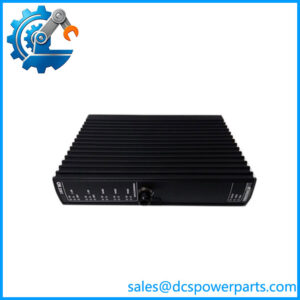
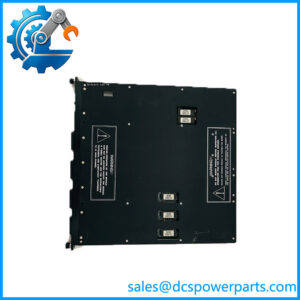
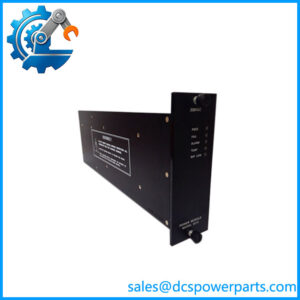
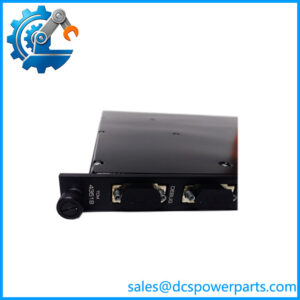
Description
Key Technical Specifications
| Parameter | Value |
|---|---|
| Product Model | CM3201S2 |
| Manufacturer | TRICONEX |
| Product Type | Communication Module |
| System Platform | Tricon / Trident Safety System |
| Communication Ports | 2 Ethernet ports + 3 serial ports |
| Ethernet Interface | 10BaseT / 100BaseTX |
| Serial Interface | RS-232 / RS-485 optically isolated ports |
| Supported Protocols | Modbus RTU, Modbus TCP, TSAA, TriStation, Peer-to-Peer |
| Serial Transmission Rate | Up to 115.2 kbps |
| Network Function | DCS, host computer, engineering workstation communication |
| Installation | Triconex controller chassis / communication baseplate |
| Power Supply | 24 VDC system power |
| Redundancy Support | Dual communication module configurations possible |
| Typical Applications | SIS, process shutdown systems, industrial safety networks |
Application Scenarios & Pain Points
When a safety system communication module fails, the shutdown logic may continue running, but operators lose important diagnostics, alarms, and process information. The difficult part is separating a network problem from a controller or field-device issue.
Typical applications:
- Oil & Gas Processing: Used for communication between Triconex SIS controllers and plant DCS systems where shutdown status and diagnostics must be available.
- Petrochemical Plants: Supports data exchange from safety controllers to supervisory systems during normal operation and emergency conditions.
- Power Generation: Provides communication paths for turbine protection, burner management, and auxiliary safety systems.
- Chemical Facilities: Used where independent safety logic requires controlled communication with process automation networks.
Field note: A process unit reported missing SIS diagnostic data at the operator station while the Tricon controller showed normal execution. Network testing pointed toward the communication module rather than the controller processors. After replacing the CM3201S2 and restoring protocol parameters, the DCS interface returned without modifying the safety application.
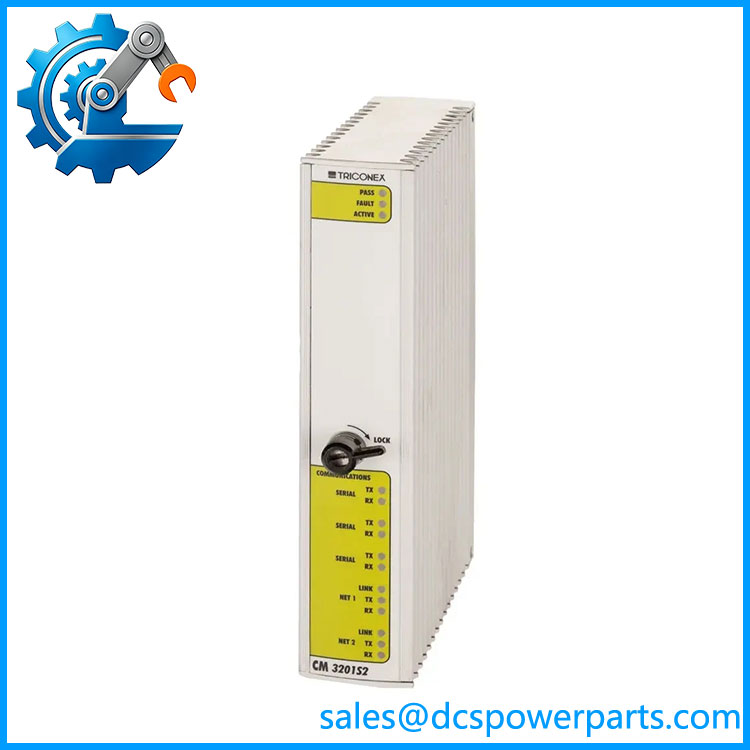
CM3201S2
Related Products
- TRICONEX CM3201 — Base CM3201 communication module family. Used for the same communication role, with the exact suffix requiring verification against installed hardware revision.
- TRICONEX 4354 — Communication module for Tricon systems. Used where additional or different network interfaces are required.
- TRICONEX 3008N — Main Processor Module. Executes safety application logic and works together with communication modules.
- TRICONEX MP3101S2 — Trident processor module. Used in Trident safety controller architectures requiring communication support.
- TRICONEX CIM3211 — Communication interface module. Used for alternative communication requirements within Triconex systems.
- TRICONEX 8110 — Main chassis component. Provides the rack infrastructure for Tricon controller modules.
- TRICONEX 8312 — Power supply module. Provides system power support for Tricon chassis installations.
- TRICONEX AIO3381 / Digital I/O Modules — Field interface modules connected to the safety controller for process input and output handling.
The Engineer’s Guide: Field Pitfalls to Avoid
⚠️ Firmware Revision Compatibility Issues
A replacement CM3201S2 may power up but fail communication if firmware versions do not match the installed Tricon environment.
How to avoid: Record controller firmware, TriStation version, and communication module revision before replacement.
⚠️ Incorrect Protocol and Port Configuration
A working Ethernet link does not guarantee data exchange. Modbus addressing, serial parameters, and network settings must match the existing system.
How to avoid: Save communication parameters, port assignments, and DCS interface documentation before removing the module.
⚠️ Wrong Baseplate or Slot Installation
Communication modules depend on the correct chassis and baseplate arrangement.
How to avoid: Confirm rack layout, connector condition, and module position. Inspect pins for contamination or oxidation before installation.
Frequently Asked Questions (FAQ)
What is the TRICONEX CM3201S2 used for?
The CM3201S2 is a communication module used in Triconex safety systems to exchange information between the safety controller and external systems such as DCS platforms, computers, and industrial networks.
Does the CM3201S2 execute safety logic?
No. The processor modules execute the application program. The handles communication functions only.
What communication interfaces are available on the ?
The module provides Ethernet and serial communication interfaces:
- Two Ethernet ports
- Three isolated RS-232/RS-485 serial ports
Supported protocols include Modbus, TSAA, TriStation, and peer communication.
Can the communicate with a DCS system?
Yes. It is commonly used as the communication path between Triconex safety controllers and supervisory control systems. The exact protocol depends on the installed configuration.
Why does a replacement fail to connect?
Common causes include:
- Incorrect IP address settings
- Wrong Modbus configuration
- Firmware mismatch
- Incorrect serial parameters
- Network switch configuration problems
What should be checked before purchasing a ?
Verify:
- Complete model number and suffix
- Existing Tricon/Trident platform
- Firmware revision
- Communication protocol
- Ethernet and serial wiring
- Current configuration backup
Is a refurbished TRICONEX suitable for SIS service?
A tested refurbished unit can be suitable when it passes communication testing, port verification, hardware inspection, firmware checks, and integration testing with the existing Triconex safety system.