Description
Product Overview
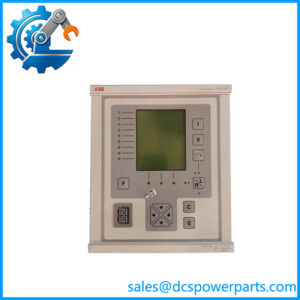
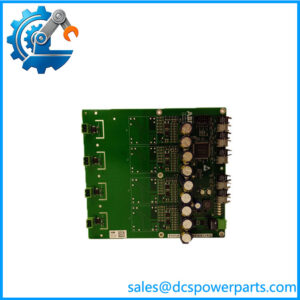
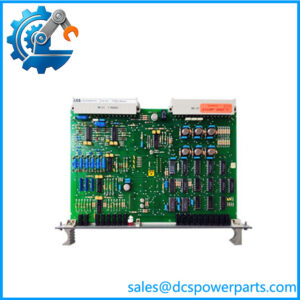
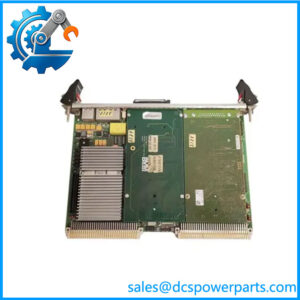
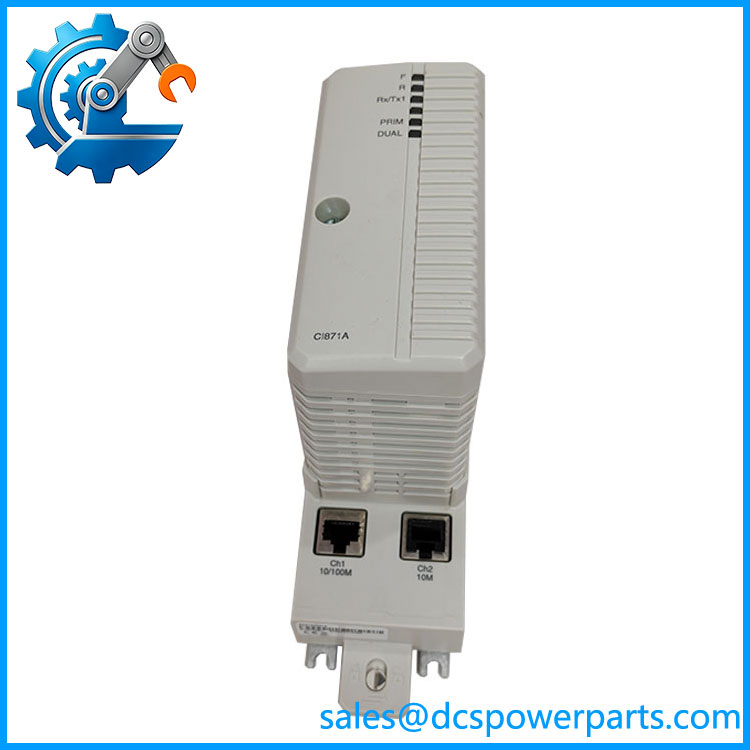
CI871AK01 3BSE092693R1 is the PROFINET IO controller module of the AC 800M family — the card that lets an AC 800M controller talk to PROFINET field devices as an IO controller rather than as a bystander on an Ethernet network. In ABB’s own catalogue the article number is listed twice in succession: 3BSE056767R1 for CI871, and 3BSE092693R1 for CI871A. The user’s designation names the second one, with the K01 suffix that ABB uses on communication modules to denote the complete ordering unit — module plus its baseplate — so this number buys a ready-to-mount unit, not a bare card.
The placement in the system is precise. AC 800M communication modules sit on the CEX bus, a parallel bus that carries up to twelve modules alongside the controller, and CI871A is one of the Ethernet-protocol members of that family: PROFINET IO here, EtherNet/IP on CI873A, Modbus TCP on CI867A, IEC 61850 on CI868A. What distinguishes the PROFINET card from the others is direction of control. It is a master: it establishes an Application Relation with each IO device, publishes outputs and collects inputs cyclically, and holds the device configuration that the engineering tool downloaded. A Modbus TCP card can be master or slave, an IEC 61850 card is a client, but the PROFINET module is unambiguously the controller side of the link.
The performance envelope is ordinary Ethernet and extraordinary discipline. Physically it is a single RJ-45 port at 10/100 Mbit/s — no gigabit, no second channel, no IRT. That last point is worth stating plainly because it is the most common wrong expectation: ABB’s own PROFINET guidance records that IRT (isochronous real time, requiring scheduled communication and special switches) is not supported in 800xA. What is supported is the RT channel over Ethernet layer 2 for cyclic process data, with UDP carrying the non-time-critical parameters. Cycle times are configured per device, defaulting to 32 ms and settable from 1 ms to 512 ms, which is enough for motor control, remote I/O and drive integration and not enough for motion.
Redundancy is where this module earns its place in a DCS. ABB defines three independent redundancy layers — redundancy of the CI871, redundancy of the PROFINET device, and redundancy of the Ethernet network — and they do not depend on each other: an MRP ring does not require a redundant controller card, and a redundant card does not require a ring. Module redundancy works bumplessly only where the field device supports PROFINET system redundancy of type S2 or R2; R1 devices are explicitly not supported with this module. Where the device only offers ABB’s S1-style redundancy, ABB quotes a switchover of up to 5 seconds at a maximum configuration of 20 devices, after which input and output data has to be re-established, and the device’s own response time has to be added on top. That is a number to design around, not a footnote.
Commissioning is done through the engineering tool and the controller’s web server. Devices are addressed by station name rather than by IP alone: the name is stored non-volatile in the field device, must match what was configured, and is assigned using the PROFINET LiveList in the AC 800M web server, where each device appears with its MAC, IP and vendor. In a redundant pair the backup module takes its own IP address and derives its station name from the primary plus the letter b — ci871 becomes ci871b — and the backup position is fixed at an offset of 63 from the primary and cannot be moved.
Physically the module is a 58 mm wide DIN-rail unit, 186 mm high and 135 mm deep, 700 g including its baseplate, drawing 160 mA at 24 V DC typically and rated IP20 with UL 508 and UL 60079-15 Class I Zone 2 listings. It is a cabinet component, and it behaves like one: it expects a CEX bus with a defined slot, a project that knows its position, and an engineer who has read the redundancy chapter before enabling redundant mode.
Technical Specifications
| Parameter | Value |
|---|---|
| Article number | 3BSE092693R1 |
| Type designation | CI871AK01 (CI871A module, K01 ordering unit with baseplate) |
| Predecessor article number | 3BSE056767R1 (CI871) |
| Manufacturer | ABB |
| Product type | Communication module, PROFINET IO controller |
| Protocol | PROFINET IO |
| Master or slave | Master |
| Number of channels | 1 |
| Transmission speed | 10/100 Mbit/s |
| Connector | RJ-45 female, 8-pin |
| Maximum units on CEX bus | 12 |
| Cable (line) redundancy | No |
| Module redundancy | Yes — bumpless only with devices supporting PROFINET system redundancy S2 or R2 |
| Hot swap | Yes |
| Cyclic update time | Configurable per device, 1 ms to 512 ms; default 32 ms |
| IRT support | Not supported in 800xA; RT channel over Ethernet L2, UDP for non-cyclic data |
| Supply | 24 V DC, 160 mA typical |
| Dimensions | 58 × 186 × 135 mm (W × H × D) |
| Weight including baseplate | 700 g |
| Protection class | IP20 per EN 60529 / IEC 529 |
| Certification | CE marked; UL 508; UL 60079-15 Class I Zone 2 |
| Environmental compliance | RoHS per EN 50581:2012; WEEE Directive 2012/19/EU |
| Mounting | CEX bus module, DIN-rail mounted cabinet unit |
CI871AK01 3BSE092693R1
Key Features and Advantages
Redundancy designed in layers rather than as a bundle: module, device and network redundancy are independent. A plant can run a redundant CI871A pair without a ring, or a ring without a redundant card, and the engineering decision stays with the process criticality instead of being forced by the hardware.
Bumpless switchover where the device supports it: with S2 or R2 system redundancy the device holds an active relationship with both the primary and the backup controller, so a card failure does not break the AR. ABB also documents enabling redundant mode later, during operation, as bumpless when the I/O is Select I/O or S800 on Ethernet — a rare and genuinely useful property in a running plant.
Soft marshalling and shared device: several AC 800M controllers can access the same PROFINET station in parallel, each owning different modules. In ABB’s description, different SCMs of one Select I/O station can be reached by up to ten controllers — that is, up to ten redundant CI871 pairs — while a single SCM belongs to exactly one controller. It is how a large plant shares I/O without duplicating stations.
Configure in Run: devices, modules and submodules can be added, removed or exchanged without stopping the controller, and interval times and module parameters can be changed bumplessly. For a plant that must add a motor starter or a valve island during a shutdown window that keeps slipping, this is the difference between a project and a production stoppage.
Diagnosis at the right level: the module reports unit status including whether the backup unit has become primary, and the controller’s web server exposes a PROFINET LiveList showing every device by name, MAC, IP and vendor — with context actions to blink a device or set its station name. Field naming stops being a laptop-and-spreadsheet exercise.
Network recovery configured, not assumed: the redundant Ethernet recovery time defaults to 200 ms for an MRP ring and is used to set the watchdog between controller and device, so cyclic communication survives a path change. ABB notes that a topology of one main ring with several subrings needs 500 ms with Hirschmann switches — the setting follows the topology, not the default.
Sensible Ethernet hygiene: port mode auto-negotiation is strongly recommended by ABB to avoid duplex mismatch, and the guidance is explicit because a duplex mismatch on a PROFINET port produces intermittent faults that look like device failures.
Honest limits: no IRT, one port, 10/100 Mbit/s, and a fixed maximum of twelve communication modules on the CEX bus. This card integrates I/O, drives and starters; it does not do motion, and no amount of configuration changes that.
Applications
Motor control and process electrification: the case ABB itself leads with — motor control via PROFINET. Intelligent starters, motor management devices and soft starters become cyclic I/O of the AC 800M controller instead of hardwired status and command bundles, and the CI871A carries the whole motor fleet’s data on one segment.
S800 I/O on Ethernet and Select I/O: fieldbus communication interfaces such as CI845 publish S800 and Select I/O stations over PROFINET, with SCMs and HART variables accessible as controller I/O. Redundant CI871 pairs plus S2/R2 field devices give a bumpless I/O path for continuous processes.
Drives integration: ABB drives fitted with a PROFINET adapter such as FPNO-21 appear as IO devices supporting S2 system redundancy, so speed references, status words and drive diagnostics land in the control database without a separate gateway.
Water and wastewater, cement and metals: distributed stations spread over a large site where an MRP ring plus redundant controller cards keeps a single cable break or card failure from stopping the process; the independent redundancy layers let each area be sized to its own criticality.
Oil, gas and chemical units with third-party PROFINET packages: valve islands, remote I/O, package skids and analyser shelters that ship with a GSDML file and a PROFINET port. The reverse-engineering effort drops because the device description lives in the tool and the station name lives in the device.
Where it is the wrong choice: motion control needing isochronous cycles; sites standardised on EtherNet/IP or DeviceNet, which want CI873A; PROFIBUS DP installations, which want CI854B; and systems needing IEC 61850 station bus communication, which want CI868A.
Related Products
CI871 (3BSE056767R1) — the earlier article number of the same PROFINET IO controller; a distinct item from CI871A 3BSE092693R1, and a project’s library and firmware support should be checked before treating the two as interchangeable. CI873A (3BSE092695R1) — EtherNet/IP and DeviceNet communication module, the sibling for a different protocol standard. CI867A (3BSE092689R1) — Modbus TCP module, master/slave, for plants integrating Modbus devices and third-party systems. CI868A (3BSE092691R1) — IEC 61850 module, for substation and electrical-network integration. CI854B (3BSE069449R1) — PROFIBUS DP-V1 master, the fieldbus predecessor most plants migrate from; note that PROFIBUS flying redundancy and PROFINET system redundancy are different mechanisms. CI845 — fieldbus communication interface for S800 on Ethernet and Select I/O stations, the I/O-side counterpart of a PROFINET controller. BC810 (3BSE031155R1) / BC820 (3BSE071500R1) — CEX-bus interconnection units, used to extend and redundant the bus that hosts modules such as the . FPNO-21 — PROFINET adapter for ABB drives, supporting S2 system redundancy with this controller module.
Installation and Maintenance
Before installation: confirm the project is built for the A variant of the module and that the controller library matches, because 3BSE092693R1 and the older 3BSE056767R1 carry different article numbers and should not be dropped into a slot on the assumption that they are the same card. Check the CEX bus budget — twelve modules maximum — and the mechanical fit of the baseplate before powering anything. For a redundant pair, confirm the backup position is the fixed offset of 63 from the primary and that the device in the field actually supports S2 or R2, because redundant mode enabled on an R1 device will not switch bumplessly. Verify the GSDML file version against the device firmware, and decide the cyclic interval time per device rather than accepting 32 ms everywhere.
Commissioning: assign the station name through the AC 800M web server’s PROFINET LiveList, matching it exactly to the configured name — the name is stored in the device and a mismatch is a non-starting device, not a fault code. Set the IP and, for a redundant pair, a separate IP for the backup unit; the backup name is generated automatically with the b suffix. Keep port mode at auto-negotiation. Set the redundant Ethernet recovery time to match the actual topology — 200 ms for a plain MRP ring, 500 ms for a main ring with subrings and third-party switches — and let the watchdog derive from it.
Maintenance: the module is hot-swappable, but the configuration is not: a replacement CI871AK01 takes its identity from the project and its slot, so record the slot, station name and IP before pulling a card. After any switchover, check the unit status for the “Unit B acts primary” indication rather than assuming the pair is healthy. Keep the firmware of both modules in a redundant pair at the same level. On a live plant, prefer enabling or changing redundancy during a planned window even though ABB documents it as bumpless for Select I/O and S800 on Ethernet — the documentation describes the capability, not the risk appetite of the plant. Clean the cabinet filters and check the module’s ventilation path at each PM; an IP20 card in a hot cabinet with blocked airflow fails in ways that look like communication problems.
Warranty and Quality
Every CI871AK01 3BSE092693R1 is supplied as an ABB AC 800M PROFINET IO controller module, identified against the article number that ABB publishes for the variant — 3BSE092693R1, distinct from the earlier at 3BSE056767R1 — and confirmed as the complete K01 ordering unit with its baseplate rather than a bare card. Each unit is inspected for RJ-45 port condition, baseplate and connector integrity, label legibility, corrosion and evidence of prior rework, and where a bench arrangement is available it is powered at 24 V DC, its identity and firmware level are read out, and its PROFINET communication is exercised against a device before dispatch. A 12-month repair, replacement or refund commitment applies. Technical support covers the questions this module actually raises: the versus distinction, the twelve-module CEX bus limit, why IRT is not available in 800xA, which field devices qualify for bumpless S2/R2 redundancy, how the b-suffixed backup station name works, and how the redundant Ethernet recovery time should be set for an MRP ring as against a ring with subrings.