Description
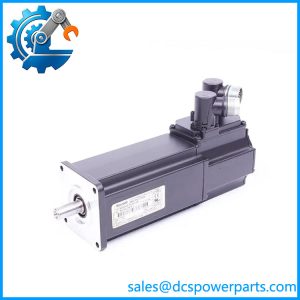
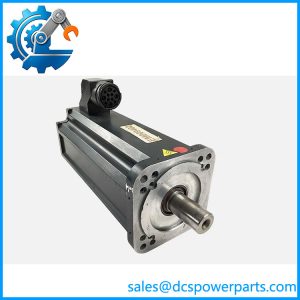
Bosch Rexroth MKD025B-144-KG1-UN Servo Motor
Key Technical Specifications
| Parameter | Specification |
|---|---|
| Manufacturer | Bosch Rexroth / Indramat |
| Model | MKD025B-144-KG1-UN |
| Material Number | R911288403 |
| Product Type | Digital AC synchronous servo motor |
| Series | MKD |
| Motor Size | 025 |
| Motor Length | B |
| Winding Code | 144 |
| Continuous Torque at Standstill | 0.9 Nm |
| Maximum Speed | 6000 rpm |
| Holding Brake | Yes |
| Holding Brake Torque | 1 Nm |
| Feedback | Resolver with integrated encoder |
| Position Detection | Absolute, >4096 revolutions |
| Cooling | Natural convection |
| Shaft Design | Plain shaft |
| Shaft Seal | Yes |
| Flange Size | 54 mm |
| Centering Diameter | 40 mm |
| Connection Direction | Adjustable through 270° |
| Weight | Approx. 1.5 kg |
The published technical references identify as a servo motor with 0.9 Nm continuous standstill torque and 6000 rpm maximum speed. The motor uses resolver feedback with integrated multiturn absolute position detection, while the mechanical specification includes a 54 mm flange, 40 mm centering diameter, plain shaft, shaft seal, and 270° adjustable connection direction.
Product Introduction
The is a compact digital AC synchronous servo motor from the Indramat MKD family, designed to provide controlled rotary motion in machine-tool and industrial automation axes. It operates as the electromechanical actuator in a servo system, with the associated drive regulating motor current, torque, velocity, and position according to the machine application.
The is particularly relevant when maintaining older Indramat-based motion equipment where the original motor, feedback arrangement, mechanical mounting, and drive parameters must remain consistent. Material number R911288403 should be retained during procurement because visually similar MKD motors can have different winding, feedback, shaft, brake, or mechanical configurations.
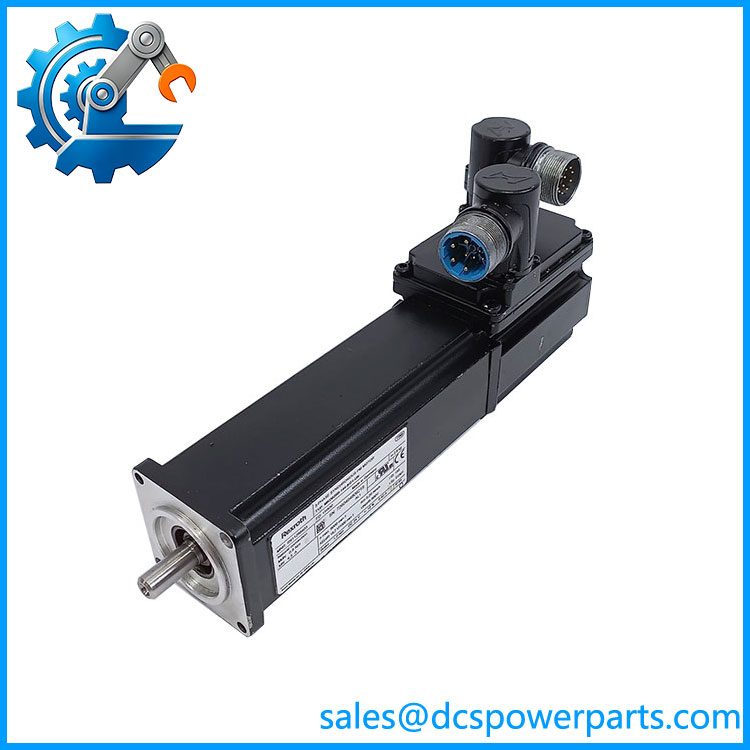
MKD025B-144-KG1-UN
Application Scenarios & Field Pitfalls — The Engineer’s Perspective
Engineering Pain Point
Servo motor replacement is often treated as a simple mechanical swap. That is risky with legacy Indramat equipment. Two motors can have the same MKD025 frame designation while differing in winding, feedback, brake, shaft, or connection configuration. Installing a physically compatible motor with the wrong electrical characteristics can result in incorrect commutation, feedback faults, poor positioning, or drive trips.
Typical Applications
- Packaging machinery — Rotary positioning, indexing, cutting, feeding, and synchronized machine axes.
- Machine tools — Compact servo axes requiring controlled speed and position.
- Material handling equipment — Conveying and positioning mechanisms requiring coordinated motion.
- Legacy Indramat motion systems — Replacement of original MKD-series motors where the existing drive and machine mechanics remain in service.
Technical Pitfalls
1. Match the complete type code.
The difference between and another variant is not cosmetic. The 144 winding code, KG1 configuration, and UN suffix form part of the motor’s complete electrical and mechanical identity. The material number R911288403 provides another important cross-check.
2. Verify the feedback system before commissioning.
This motor is identified with resolver feedback and integrated multiturn absolute position detection. Do not substitute a motor with a different feedback arrangement simply because the flange and shaft appear compatible. The drive’s feedback interface and parameter set must correspond to the installed motor.
3. The holding brake is part of the machine-safety equation.
The specified holding brake is rated at 1 Nm. It is intended for holding rather than routine dynamic stopping. If the motor is installed on a vertical axis, verify the complete machine brake-control circuit and load requirements rather than assuming the brake rating alone determines safe load holding.
4. Check mechanical coupling carefully.
The published configuration uses a plain shaft and a 54 mm flange with a 40 mm centering diameter. Coupling alignment, pilot fit, shaft engagement, and axial loading should be checked before startup. A mechanically forced installation can damage bearings even when the motor appears to fit.
5. Do not transfer the 6000 rpm figure directly to the machine operating speed.
6000 rpm is the published maximum speed, not a recommended continuous machine speed for every application. Actual permissible speed depends on the drive, load, torque requirements, acceleration profile, thermal conditions, and machine mechanics.
6. Legacy spare condition matters.
MKD motors are frequently encountered as maintenance and replacement components for older motion systems. For surplus or previously installed units, inspect shaft bearings, brake operation, connectors, seals, insulation condition, and feedback behavior. A clean housing does not establish that the resolver or brake is electrically healthy.
Related Products
- Bosch Rexroth -144-KG0-KN — Same /144 family but different configuration; do not treat as automatically interchangeable.
- Bosch Rexroth -144-KG1-KN — Closely related KG1 configuration with a different suffix arrangement.
- Bosch Rexroth -144-GG0-KN — Alternative /144 motor configuration.
- Bosch Rexroth -144-GG1-KN — Another /144 configuration requiring complete type-code matching.
- Bosch Rexroth -144-GP0-KN — Different winding/mechanical configuration within the same motor family.
- Bosch Rexroth MKD025A-144-KG0-KN — MKD025A variant; frame family similarity does not establish interchangeability.
- Bosch Rexroth MKD041B-144-KG1-KN — Larger MKD motor family member with different mechanical/electrical characteristics.
- Bosch Rexroth MHD series — Later/alternative Indramat synchronous motor family used in other motion applications.
- Bosch Rexroth MSK series — Newer synchronous motor family; migration requires mechanical, feedback, drive, and parameter verification.
Procurement Note
For , purchase against the complete type code and material number, not merely “.” Before accepting a replacement, compare the nameplate, winding code, brake configuration, feedback connector, shaft arrangement, flange dimensions, and cable/connector condition.
For a used or surplus motor, a meaningful inspection should include bearing condition, brake resistance and release behavior, insulation testing, feedback verification, shaft condition, and connector integrity. If replacing an operating motor during a planned outage, record the existing drive parameters and motor identification first; this can substantially reduce commissioning time after installation.