Description
Product Overview
The Baumüller DSD28M65U6054 is identified in available product records as a DSD2-family permanent-magnet synchronous servo motor, associated with the size-028 motor frame. The DSD2 series is designed for applications requiring rapid acceleration, frequent start-stop cycles, and precise speed or position control. Typical uses include packaging equipment, textile machinery, plastics processing, automated handling systems, and compact robotic mechanisms. In these applications, the motor converts electrical power from a compatible servo drive into rotary motion, allowing a machine controller to coordinate axis movement with the production sequence.
Motor selection depends on more than frame size. Baumüller’s DSD2 range includes multiple winding configurations, speed ratings, feedback options, cooling arrangements, and optional holding brakes. The manufacturer publishes a nominal speed range of 1,000–6,000 rpm across the overall DSD2 family; the applicable operating range for this specific motor must be confirmed from its full type code and nameplate. The size-028 family spans approximately 0.3–0.6 kW, with standstill torque ranging from 0.7 to 1.2 Nm across its variants. These are family-level figures, not guaranteed ratings for every DSD28M65U6054 configuration.
For maintenance engineers, the Baumüller DSD28M65U6054 may serve as a replacement motor in an existing servo axis, provided its electrical and mechanical configuration matches the installed unit. Before procurement, compare the complete motor designation, rated speed, winding data, feedback device, brake specification, connector arrangement, flange dimensions, shaft geometry, and cooling requirements. The compatible drive must also support the motor’s electrical characteristics and feedback system. Do not commission a motor based on a partial model match alone; an incorrect winding or feedback variant can prevent startup or cause drive faults. The exact suffix-specific specifications remain subject to confirmation against the manufacturer’s documentation.
Product Introduction (Non-Templated)
A servo motor replacement can fit the machine mechanically and still fail at commissioning if its winding, feedback device, or brake configuration differs from the original. The Baumüller DSD28M65U6054 belongs to the compact DSD2 servo motor family, intended for dynamic positioning and speed-controlled applications.
The DSD2 size-028 range covers approximately 0.3–0.6 kW and 4,500–6,000 rpm, depending on variant. For a legacy servo motor replacement, confirm the complete type code and drive compatibility before installation.
Key Technical Specifications
| Parameter | Value |
|---|---|
| Manufacturer | Baumüller |
| Model | DSD28M65U6054 |
| Product Family | servo motors |
| Frame Size | 028, subject to nameplate confirmation |
| Motor Type | Permanent-magnet synchronous servo motor |
| Rated Power | -028 family range: approximately 0.3–0.6 kW |
| Rated Speed | -028 family range: approximately 4,500–6,000 rpm |
| Standstill Torque | -028 family range: approximately 0.7–1.2 Nm |
| Maximum Standstill Torque | -028 family range: approximately 2–3.9 Nm |
| Feedback | Resolver, SinCos encoder, or digital encoder options across the family; exact variant unconfirmed |
| Holding Brake | Optional; presence and rating must be verified |
| Cooling | Uncooled, air-cooled, or liquid-cooled options across the range |
| Protection Rating | Up to IP65, depending on motor configuration and installation |
| Mounting | Flange-mounted; exact flange and shaft dimensions require verification |
| Compatible Drive | A drive configured for the motor’s exact electrical and feedback specifications |
| Condition | Confirm actual unit condition and testing status |
Important: The power, speed, torque, cooling, and protection values above describe the -028 family, not verified individual ratings for DSD28M65U6054. Use the exact nameplate and the manufacturer’s technical documentation for final engineering selection.
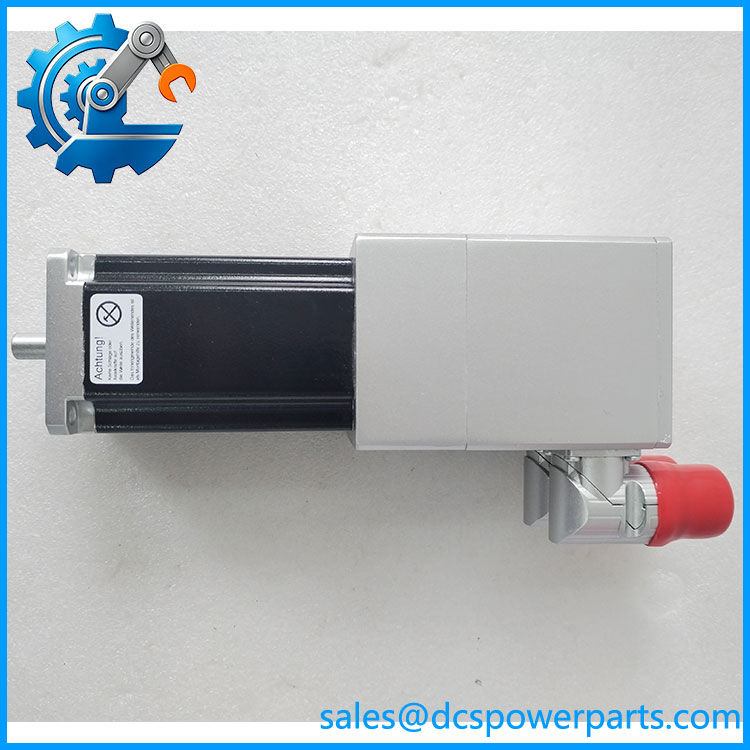
DSD28M65U6054
Related Products
These related Baumüller products can help with motor-family comparisons and drive-system maintenance. The larger or smaller frame sizes listed below are not direct substitutes without mechanical and electrical verification.
-028
The same nominal frame-size family as the target motor. Start here when checking replacement options, but match the complete winding and option designation rather than relying on the frame number alone.
-036
A larger frame-size option, with a family-level power range of approximately 0.4–0.9 kW. Consider it for a redesigned axis requiring a different torque or power range; flange and shaft compatibility must be established separately.
-045
A higher-capacity frame family with a broad published power range. It may suit a machine redesign with different load requirements, but it is not a drop-in replacement for a size-028 motor.
-056
A larger servo motor family with a higher torque capacity. Useful when engineering a replacement axis around a different load or acceleration requirement; drive sizing and mounting must be recalculated.
-071
A larger-frame option for applications needing substantially higher torque and power. It belongs to the same product family but requires a separate mechanical and electrical design assessment.
Baumüller b maXX Servo Drive
The b maXX drive family provides servo control for compatible motors. Select the specific drive model based on the motor’s voltage, current, feedback type, peak torque demand, and required control interface. Compatibility with this exact motor code must be confirmed.
Baumüller BPx Planetary Gearbox
A gearbox family designed for combinations with selected Baumüller servo motors. It can change output torque and speed through its gear ratio, but the exact motor flange, shaft interface, ratio, and permissible input speed must be checked.
Frequently Asked Questions (FAQ)
1. Is the Baumüller compatible with my existing servo drive?
Compatibility depends on the motor winding, rated current, voltage characteristics, feedback device, and brake configuration. A drive that supports the family may still require different parameter settings for a particular motor variant.
Before installation, compare the motor nameplate with the drive’s approved motor data and configuration software. Verify feedback wiring and motor identification before enabling torque.
2. Can I replace this motor with anot model?
Not automatically. Motors within the same frame family can have different rated speeds, winding characteristics, feedback options, and brake arrangements.
Check these details before approving a substitute:
- Full motor type code and nameplate data.
- Rated speed and torque requirements.
- Feedback type and connector pinout.
- Brake presence, voltage, and release requirements.
- Flange, shaft, and coupling dimensions.
A replacement should match the application’s electrical and mechanical requirements, not merely the frame size.
3. Does the support a specific encoder or resolver?
The family offers resolver, SinCos, and optional digital feedback configurations. The exact feedback device fitted to has not been independently confirmed from the model string alone.
Inspect the nameplate, connector labels, wiring documentation, and existing drive parameters. Using the wrong feedback configuration can cause startup faults, incorrect position readings, or uncontrolled behavior.
4. Does this motor include a 24 VDC holding brake?
A 24 VDC brake should not be assumed from the model designation alone. Baumüller lists brakes as an option across the family, but the exact brake arrangement must be established for the individual motor.
Request the motor’s complete type code or inspect the nameplate and connector documentation. If a brake is installed, confirm its release voltage, current, wiring, and control sequence. A holding brake must not be treated as a safety-rated stopping device unless the machine’s approved safety design explicitly permits it.
5. What should I inspect before installing a surplus ?
Inspect the motor shaft, bearings, mounting flange, connectors, housing, and cable entries. Check for signs of moisture, impact damage, corrosion, or contamination.
For a used or surplus unit, request a documented test covering winding insulation, winding condition, feedback operation, and brake function if fitted. A visual inspection alone does not establish electrical or mechanical serviceability.
6. Can the motor operate at 6,000 rpm continuously?
family includes variants with nominal speeds reaching 6,000 rpm, but that does not confirm the continuous operating limit for this specific motor.
Confirm the exact winding, duty rating, torque-versus-speed curve, cooling arrangement, and compatible drive limits. Continuous operation at the upper speed limit may not be permissible under every load and thermal condition.
7. What warranty and testing records should accompany a replacement motor?
Warranty coverage depends on the supplier’s written terms and the unit’s actual condition. For a critical servo axis, request the warranty period, return procedure, and specific inspection or test records.
Ideally, documentation should identify the tested motor by serial number and state which checks were performed. If the motor has a brake or feedback device, ask whether those functions were tested independently rather than assuming that a basic electrical check covers the complete assembly.