Description
Applied Materials 0010-23716 PMAX Pyrometer Assembly
Product Overview
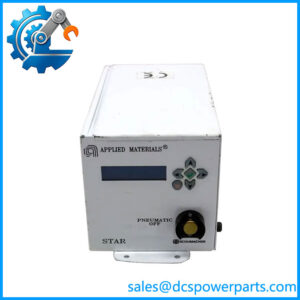
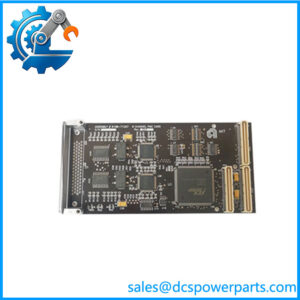
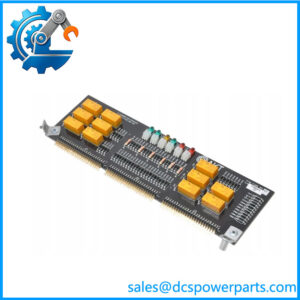
The Applied Materials 0010-23716 is identified in available equipment-part records as a PMAX pyrometer assembly used in semiconductor manufacturing equipment. The part number is specifically associated with PMAX pyrometry and RTP applications rather than with a conventional PLC, DCS, or generic analog-I/O module. A Radwell equipment record describes 0010-23716 as “ASSEMBLY PMAX PYROMETER,” while independent semiconductor-equipment records associate the same Applied Materials part number with PMAX pyrometer/RTP equipment.
Functionally, a pyrometer performs non-contact temperature measurement by detecting thermal radiation from the process target. In an RTP environment, that measurement is important because wafer temperature directly affects process behavior and repeatability. The Applied Materials 0010-23716 therefore belongs to the measurement layer of the process tool, not the machine-control processor layer. Its output ultimately becomes part of the temperature-control loop, but the exact electrical interface, calibration range, optical configuration, and compatible PMAX revision should be confirmed from the equipment documentation or the assembly nameplate rather than inferred from the part number.
From a maintenance standpoint, this distinction matters. Several online listings incorrectly characterize 0010-23716 as a generic signal-conditioning module or even a chamber-interface assembly. Those descriptions conflict with the more specific PMAX pyrometer identification. For a semiconductor tool, substituting a generic temperature sensor is not a reasonable equivalency test; optical path, calibration, mechanical mounting, detector characteristics, and controller compatibility can all affect the actual measurement.
Product Introduction
Temperature measurement in an RTP tool is not simply a matter of installing a thermocouple and reading a number. The Applied Materials 0010-23716 is identified as a PMAX pyrometer assembly, placing it in the optical temperature-measurement chain of the semiconductor process equipment.
For legacy-tool maintenance, the useful replacement question is therefore not “what sensor has the same temperature range?” It is “what PMAX assembly and calibration configuration was originally specified for this tool?”
Key Technical Specifications
| Parameter | Specification |
|---|---|
| Product Model | 0010-23716 |
| Manufacturer | Applied Materials |
| Product Type | PMAX Pyrometer Assembly |
| Application | Semiconductor manufacturing / RTP |
| Measurement Method | Non-contact optical/infrared pyrometry |
| Primary Function | High-temperature process measurement |
| Process Target | Wafer/process temperature, depending on tool configuration |
| Equipment Interface | Tool-specific; exact interface requires equipment documentation |
| Calibration | Tool/assembly specific; verify before replacement |
| Operating Temperature | Not reliably established from the available documentation |
| Supply Voltage | Not reliably established for this exact assembly |
| Output Signal | Not reliably established for this exact assembly |
| Dimensions | Not reliably established from authoritative documentation |
| Lifecycle | Legacy / discontinued |
Procurement accuracy note: Public sources do not provide enough reliable documentation to state an exact voltage, analog-output range, temperature range, connector pinout, or calibration specification for 0010-23716. Those values should not be copied from similarly named PMAX or signal-conditioning components.

0010-23716
Major Features / Practical Advantages
1. Non-Contact Temperature Measurement
A pyrometer measures thermal radiation from the target rather than requiring a physical temperature probe to contact the wafer. That is particularly useful in semiconductor processing, where introducing a conventional contact sensor into the process environment can interfere with wafer handling, chamber geometry, or process conditions.
The available equipment records consistently associate 0010-23716 with a PMAX pyrometer/RTP function.
2. Direct Relevance to RTP Process Control
RTP equipment depends heavily on accurate temperature feedback. A temperature-measurement error can propagate into heater-control decisions and ultimately affect process repeatability.
For maintenance engineers, this makes the pyrometer part of the measurement chain, not merely an accessory. Sensor alignment, optical cleanliness, calibration status, and the associated controller configuration can all matter when diagnosing temperature instability.
3. PMAX-Specific Hardware
The PMAX designation is important when sourcing a replacement. Available records identify 0010-23716 specifically as an assembly PMAX pyrometer rather than a generic temperature transmitter.
That is why a technically similar infrared sensor should not automatically be considered interchangeable. The mechanical interface and optical characteristics may differ even when the underlying measurement principle is the same.
4. Legacy Equipment Support
The part is listed as discontinued by the manufacturer in current secondary inventory records. For fabs operating older Applied Materials equipment, this makes condition verification particularly important.
A replacement should ideally be matched against the original tool configuration, part label, revision, and physical assembly. A visually similar pyrometer without the correct calibration or mounting arrangement can create a much larger process problem than an obvious hardware failure.
5. Diagnostic Value in Temperature-Control Problems
When an RTP tool reports unstable or implausible temperature, the pyrometer should not automatically be blamed. The fault can also originate from optical contamination, alignment, cabling, controller electronics, calibration data, or the heating system itself.
That diagnostic separation is useful when evaluating a used or refurbished 0010-23716. A simple continuity test is not enough to establish that a pyrometer assembly is production-ready.
Related Products
- Applied Materials PMAX Pyrometer Assemblies — Same general PMAX measurement family; exact interchangeability depends on tool and configuration.
- Applied Materials 0010-23715 — Adjacent Applied Materials part number frequently listed with 0010-23716; do not assume functional interchangeability without tool documentation.
- Applied Materials PMAX RTP Equipment — Process-equipment environment in which 0010-23716 is identified.
- Applied Materials Centura Platforms — Applied Materials platform family appearing in semiconductor-equipment records; exact 0010-23716 compatibility must be verified by tool configuration.
- Applied Materials Endura Platforms — Another major Applied Materials platform family; a platform name alone does not establish compatibility with this pyrometer.
- Applied Materials Producer Platforms — Process-tool family associated with semiconductor manufacturing; exact part applicability requires the equipment BOM.
- RTP Temperature Measurement Assemblies — Functional category rather than a direct substitute; optical and calibration characteristics must be matched.
- PMAX Temperature Measurement Components — Related PMAX hardware; revision and calibration compatibility remain critical.
FAQ
What exactly is Applied Materials 0010-23716?
Available equipment records identify it as an Applied Materials PMAX pyrometer assembly, associated with RTP semiconductor-processing equipment.
Is 0010-23716 a PLC or DCS I/O module?
No. It should be treated as a process measurement assembly associated with semiconductor equipment, not as a conventional PLC/DCS I/O card.
Can I hot-swap 0010-23716?
Do not assume so. The available public documentation does not establish a universal hot-swap procedure for this exact assembly. Follow the Applied Materials tool-specific maintenance procedure and isolate the applicable equipment before disconnecting process hardware.
Does 0010-23716 support firmware v3.1?
There is no reliable evidence that the part number itself identifies a firmware version. A pyrometer assembly may depend on associated controller and calibration software, but those versions cannot safely be inferred from 0010-23716.
What should I verify before buying a replacement?
At minimum, compare the complete part number, physical assembly, PMAX/tool configuration, connector arrangement, optical interface, revision, and calibration status. If possible, provide the original equipment model and the label photograph when sourcing a replacement.
Can another infrared pyrometer replace it?
Not simply because both devices measure temperature without contact. The optical characteristics, wavelength response, target geometry, calibration, mounting, communications, and controller integration must be compatible with the Applied Materials tool.
Is a New Surplus 0010-23716 equivalent to factory-new equipment?
Not automatically. For a legacy pyrometer, unused storage does not prove calibration validity. Procurement should distinguish between unused surplus, tested/refurbished, and fully calibrated equipment. Ask for the actual part label and test/calibration evidence rather than relying solely on the seller’s condition description.
Procurement Note
0010-23716 should be sourced as an Applied Materials PMAX pyrometer assembly, not as a generic analog temperature module. The strongest available identification is the Applied Materials part number and the repeated PMAX pyrometer/RTP association in equipment records.
There is conflicting information online about this part, including descriptions as a signal-conditioning module, chamber interface assembly, and high-temperature measurement device. Those claims should not be treated as equivalent. The specific PMAX identification is the one supported by the clearest part-level records.
For a production-tool replacement, the safest procurement package includes the 0010-23716 nameplate information, equipment/tool model, assembly revision, photographs of the optical/mechanical interface, and available calibration or test records. Those details are more useful than an assumed voltage or output specification that cannot be verified from the part number alone.