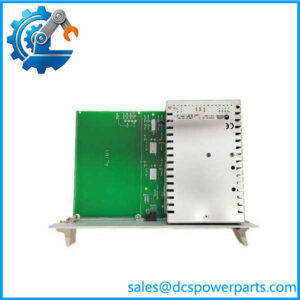
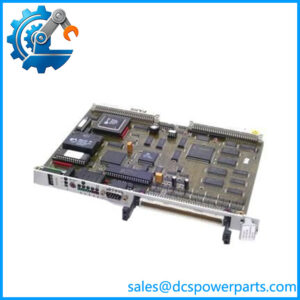
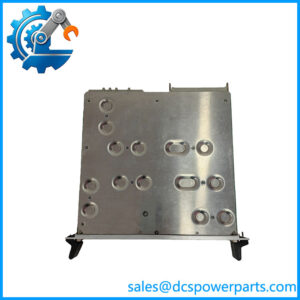
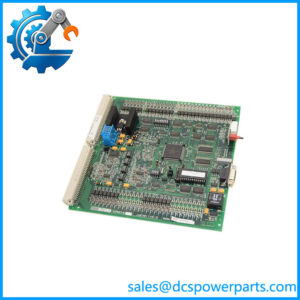
Description
Key Technical Specifications
| Parameter | Specification |
|---|---|
| Product Model | N897164611M |
| Manufacturer | ALSTOM |
| Product Type | TX-RX Board / Signaling Interface Board |
| System | SDTC |
| Channel Designation | F8 / Group 8 |
| Functional Description | TX-RX SDTC Gruppo 8 |
| Board Configuration | SCH.VERNICIATE |
| Application | Railway signaling / train-control infrastructure |
| Installation | Dedicated signaling equipment rack |
| Hardware Architecture | Legacy ALSTOM proprietary system |
| Compatibility | System-, channel-, and revision-dependent |
| Replacement Basis | Exact P/N, board revision, rack position, and signaling configuration |
| Condition | New Surplus or Fully Tested Refurbished |
A current railway procurement specification identifies N897164611M specifically as the F8 Tx-Rx Board, while neighboring part numbers are assigned to other SDTC groups: N897164610L for F7, N897164612N for F9, N897164614Q for F11, and so forth. That sequence is strong evidence that the final letter/number combination is not merely a catalog variation; it identifies a particular signaling channel configuration.
Technical caution: Publicly available documentation does not provide enough reliable evidence to state the board’s exact supply voltage, connector pinout, channel current, operating temperature, or transmission frequency. Those values should be taken from the applicable ALSTOM system documentation, not guessed from the part number.
Application Scenarios & Pain Points
A signaling board failure is rarely isolated from the system around it. When the F8 transmit/receive path stops behaving correctly, the fault can appear farther downstream as a communication, track-circuit, or signaling-chain problem.
- Railway signaling: N897164611M is documented as the F8 Tx-Rx board within an SDTC signaling architecture.
- SDTC transmission/reception: The board handles the transmit/receive function assigned to Group 8 rather than serving as a conventional PLC analog or digital I/O card.
- Metro and rail infrastructure: Its presence in a formal railway signaling procurement specification makes rail signaling the clearest documented application.
- Legacy signaling maintenance: Particularly relevant when an installed ALSTOM SDTC system remains operational and the maintenance team needs an exact board-level spare.
Field note: Keep the neighboring channel cards visible when photographing the failed unit. The sequence matters. N897164610L, N897164611M, and N897164612N correspond to F7, F8, and F9 respectively in the documented SDTC arrangement. Ordering only by “N8971646xx” is asking for trouble.
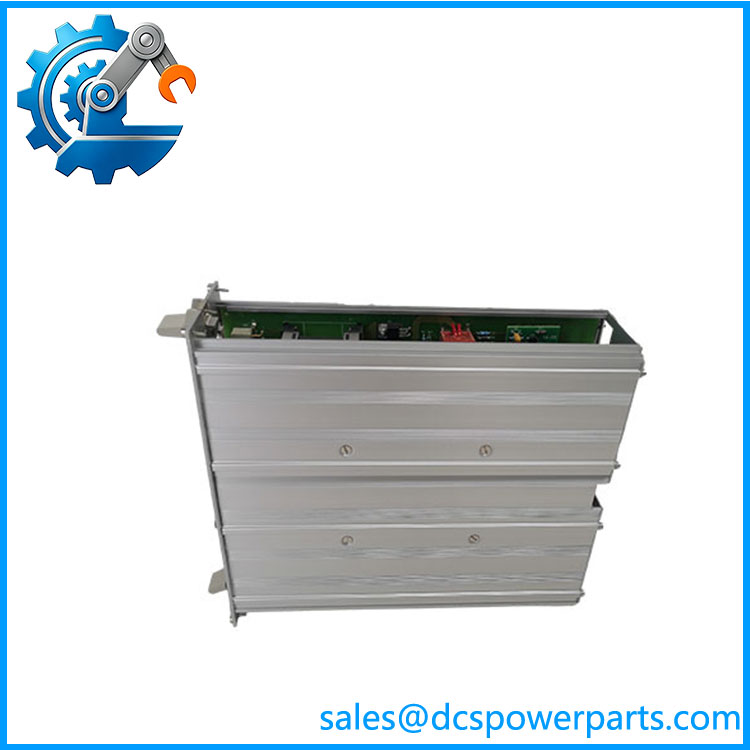
N897164611M
Related Products
- N897164610L — SDTC F7 Tx-Rx Board. Same general board family, but assigned to Group 7 rather than Group 8. It should not be treated as a direct substitute for N897164611M.
- N897164612N — SDTC F9 Tx-Rx Board. Similar hardware family with a different signaling-group assignment.
- N897164614Q — SDTC F11 Tx-Rx Board. Intended for Group 11 and therefore configuration-dependent.
- N897164615R — SDTC F12 Tx-Rx Board. Same Tx-Rx family, but assigned to F12.
- N897164616S — SDTC F13 Tx-Rx Board. Used for the F13 channel/group arrangement.
- N897164617T — SDTC F14 Tx-Rx Board. Another channel-specific member of the same documented board family.
- N897164627D — SDTC switching board for F14L/F12, combining specific transmit/receive channel paths. It is complementary rather than a direct replacement.
- N897164628E — SDTC switching board for F13L/F11. Its switching role differs from the direct Tx-Rx function of N897164611M.
- N897164629F — SDTC switching board for F13L/F10. Used for another channel-pair arrangement.
- N897120135T — TU board associated with an F8/F11 configuration. This is a supporting interface board rather than an equivalent to the Tx-Rx board.
The Engineer’s Guide: Field Pitfalls to Avoid
Warning 1 — Do not classify as a generic pulse-output card.
Some equipment listings describe it that way, but a formal railway specification identifies the part as the F8 Tx-Rx Board for SDTC Group 8.
How to avoid it: Use the installed board’s complete designation, rack position, channel marking, and system drawing. The F8 designation should be treated as a compatibility parameter.
Warning 2 — Neighboring N8971646xx parts are not automatically interchangeable.
The documented sequence assigns different part numbers to F7, F8, F9, F11, F12, F13, and F14. That is a clear warning against substituting based on physical similarity.
How to avoid it: Match the exact part number and channel assignment. If a substitute is proposed, obtain engineering confirmation that the board’s channel configuration and system revision are equivalent.
Warning 3 — Do not rely on a bench power-up test.
A TX-RX board may initialize normally while its actual signaling interface has degraded performance.
How to avoid it: For a refurbished unit, request functional testing of the transmit and receive paths under the appropriate SDTC test configuration. Inspect connector contacts closely—especially on older rail equipment where contamination or oxidation can cause intermittent faults.
Frequently Asked Questions (FAQ)
What is ALSTOM ?
is an ALSTOM SDTC Tx-Rx board assigned to F8 / Group 8. A formal railway signaling specification identifies it as the “Tx-Rx Board (F8)” with the corresponding SDTC Group 8 description.
Is a pulse-output module?
Some secondary equipment listings describe it as a pulse-output module. However, the stronger application-specific evidence identifies it as an SDTC F8 TX-RX board. For procurement, I would use the railway-system identification rather than the generic “pulse output” description.
What does F8 mean on ?
F8 identifies the specific signaling channel/group associated with the board. The same procurement specification assigns N897164610L to F7 and N897164612N to F9, showing that the channel designation follows the part-number sequence.
Can N897164610L replace ?
Not as a blind substitution. Both are SDTC Tx-Rx boards, but N897164610L is assigned to F7, while is assigned to F8.
A substitution would require confirmation from the applicable signaling-system documentation.
How should I test a refurbished ?
A useful inspection should include:
- Exact P/N and board-revision verification.
- Confirmation of the F8 designation.
- PCB and connector inspection.
- Power-up test.
- Transmit-path test.
- Receive-path test.
- Communication verification within the applicable SDTC test setup.
- Inspection for oxidation, damaged contacts, or rework.
- Test report and warranty documentation.
A simple “powers on” statement is not adequate evidence for a railway communication board.
What information should I provide when purchasing this spare?
Provide the complete identification:
ALSTOM — SDTC — F8 Tx-Rx Board — Group 8
Also provide photographs of the front label, PCB markings, connectors, installed rack position, and neighboring boards. If available, include the signaling-system model and revision.
What is the main procurement risk with ?
The biggest risk is channel/configuration mismatch. , , N897164612N and other related boards can look like members of one interchangeable family, but the documented system assigns them to different SDTC groups.
For a live railway signaling installation, I would approve a replacement only after confirming part number + F8 channel assignment + board revision + system configuration.