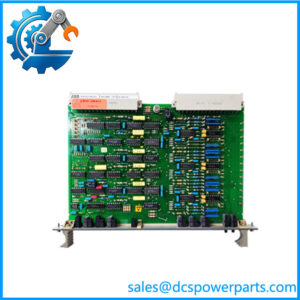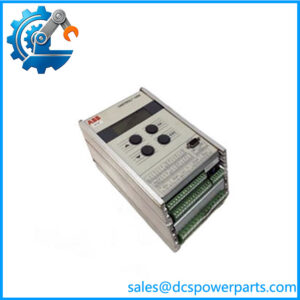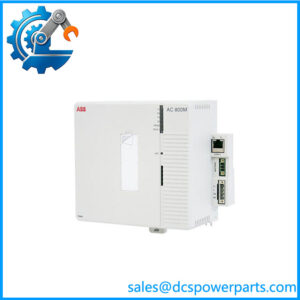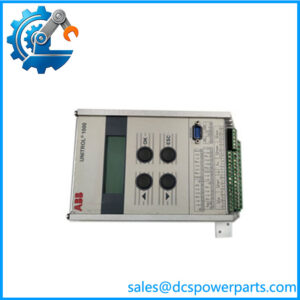
Description
Key Technical Specifications
- Manufacturer: ABB
- Product ID: VBX01BA
- ABB Type Designation: VBX01BA
- Product Type: HN800 Bus Extender
- System Family: Symphony Plus / S+ SD I/O
- Bus Architecture: HN800 / CW800
- Mounting Orientation: Vertical
- Position: Bottom of HN800 device column
- Primary Function: Connects and extends the bus to a vertically arranged HN800 device column
- Coating: Conformal coating
- Dimensions: Approximately 180 mm depth × 80 mm height × 160 mm width
- Customs Classification: 85371091
ABB’s product information categorizes VBX01BA under Control System Products → I/O Products → S+ SD I/O → SD I/O – HN800 Bus Extenders → VBX01 Bus Extenders and identifies it specifically as “HN800 Bus Extender, Vertical Bottom Coated.”
Application Scenarios & Pain Points
The most common mistake with bus-extender hardware is treating it like a generic connector. It is not. On a vertically arranged I/O column, orientation and physical position determine whether the bus can actually be continued through the rack.
- ABB Symphony Plus SD I/O cabinets: VBX01BA provides the bottom bus connection for vertically installed devices.
- /CW800 installations: The module forms part of the bus-extension arrangement rather than performing signal conversion itself.
- Conformal-coated installations: The coated version is intended for environments where additional protection of the electronics is required.
- Legacy system maintenance: Useful when an existing S+ SD I/O column has a damaged bottom bus interface and the original mechanical arrangement must be retained.
Field note: Before removing a bus extender, photograph the complete column—not just the module label. The top/bottom position, adjacent modules, orientation, and connector arrangement can tell you more than the part number alone.
Brief Field Case
A replacement extender can arrive looking almost identical to the original while having the wrong orientation. In a tight vertical cabinet, that becomes obvious only when the installer tries to complete the column. Confirm VBX01BA = vertical bottom before releasing the spare to the field.
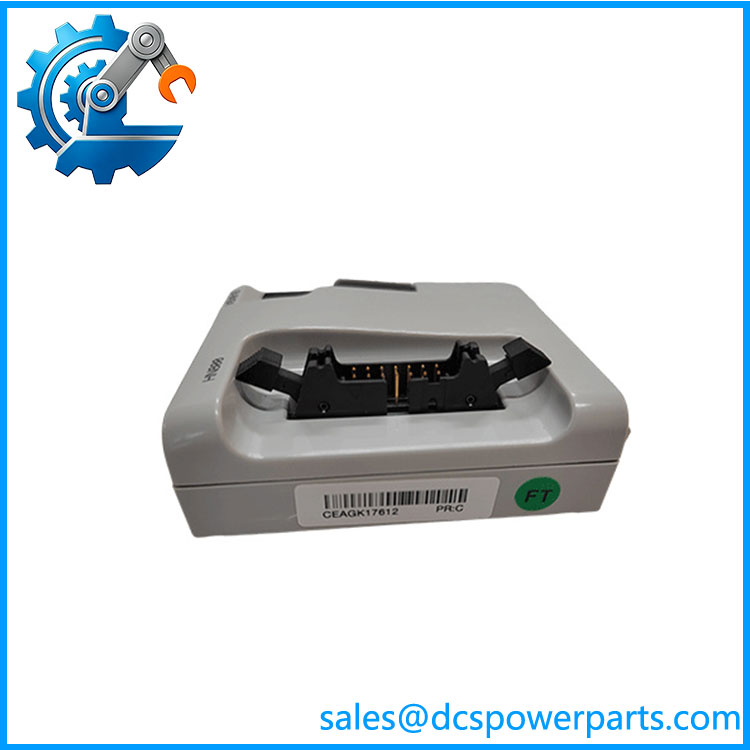
VBX01BA
Related Products
- ABB VBX01BA — Subject bus extender. Designed for the bottom of a vertical device column and supplied in a conformal-coated configuration.
- ABB VBX01TA — Vertical top bus extender. It performs the complementary top-of-column function and should not be substituted for without confirming the cabinet arrangement. ABB identifies VBX01TA as the Bus Extender, Vertical Top Coated.
- ABB I/O Modules — These are the actual field-I/O devices connected through the bus-extender arrangement. The does not replace an I/O module.
- ABB S+ SD I/O — Parent I/O platform containing the bus-extender family. Useful when checking the complete cabinet architecture before replacement.
- ABB CW800 I/O Components — Related ABB I/O architecture referenced in the description. Compatibility must be checked against the specific system configuration.
- ABB VBX01 Bus Extender Family — The family includes different physical configurations, so the suffix is important when selecting a replacement.
- ABB Symphony Plus Controller Components — Higher-level control-system hardware that communicates with the S+ I/O architecture; these should not be confused with the passive/extension role of .
The Engineer’s Guide: Field Pitfalls to Avoid
WARNING 1 — Do not confuse with VBX01TA.
This is the biggest procurement trap. ABB identifies as Vertical Bottom and VBX01TA as Vertical Top.
How to avoid it: Match the physical location first. If the existing unit is installed at the bottom of the vertical column, specify rather than simply ordering a “VBX01 bus extender.”
WARNING 2 — Do not treat the part as an I/O module.
does not provide analog input, digital output, or signal conditioning. Its job is associated with the /CW800 bus-extension architecture.
How to avoid it: When troubleshooting an I/O failure, inspect the extender and bus connections, but do not expect the itself to provide field-channel diagnostics.
WARNING 3 — Check the coating and physical condition.
ABB identifies this version as coated.
How to avoid it: On used equipment, inspect the connector surfaces for oxidation, contamination, cracked coating, bent contacts, and mechanical stress. Conformal coating does not make the connector interface immune to cabinet humidity or handling damage.
Frequently Asked Questions (FAQ)
What is ABB ?
is an ABB Bus Extender for the Symphony Plus S+ SD I/O architecture. Its specific role is the vertical bottom bus connection for an device column. ABB classifies it as an Bus Extender, Vertical Bottom Coated.
It should therefore be viewed as I/O infrastructure rather than a conventional PLC/DCS signal module.
Is an analog or digital I/O module?
No. is a bus-extender component. It does not provide field signal channels in the way an analog-input or digital-output module does.
If the I/O channel itself has failed, replacing would not normally correct the problem unless the actual fault is in the bus interface.
What is the difference between and VBX01TA?
The critical difference is position.
- Vertical Bottom
- VBX01TA: Vertical Top
ABB’s documentation places both within the Bus Extender family but assigns them different positions in the vertical column.
For a replacement, match the physical location and cabinet drawing rather than relying only on the shared “VBX01” prefix.
What systems use the ABB ?
ABB documentation places within the S+ SD I/O / Bus Extender architecture and describes the bus as supporting devices.
The exact system configuration should still be checked against the installed Symphony Plus hardware and cabinet documentation.
Does require software configuration?
Normally, the important issue is not software parameterization of the extender itself but correct physical installation and bus continuity.
After replacement, verify:
- Correct vertical position.
- Correct mating connectors.
- Proper mechanical seating.
- No bent contacts.
- Correct adjacent modules.
- Normal I/O communication after system startup.
What should I inspect on a used ?
For a refurbished spare, pay particular attention to the connector area. Check for:
- Bent or recessed contacts
- Oxidation
- Contamination
- Cracked PCB
- Damaged mounting points
- Coating damage
- Evidence of overheating
- Mechanical distortion
A visual power-on test is not meaningful for a bus extender by itself. Continuity and interface testing within a compatible setup are much better acceptance checks.
Can I use instead of ?
Do not assume so. The two parts have different physical roles: is the bottom extender, while is the top extender. ABB explicitly distinguishes these configurations.
For a production system, replacement should follow the original cabinet drawing and physical arrangement rather than relying on family-level similarity.