Description
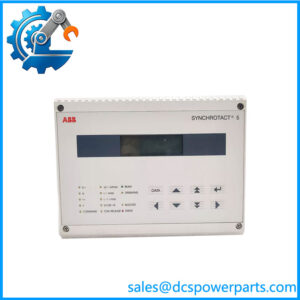
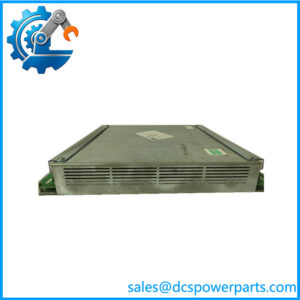
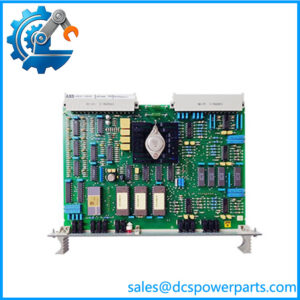
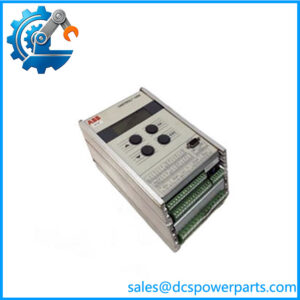
ABB UNITROL 1000-15 3BHE006720R0200 Automatic Voltage Regulator
Product Introduction
The ABB UNITROL 1000-15 3BHE006720R0200 is a compact automatic voltage regulator designed for excitation control of synchronous generators and synchronous motors. The UNITROL 1000-15 combines measurement, control processing, excitation power electronics, operator controls, and communication interfaces in one excitation controller. Its excitation output is designed for applications requiring up to 15 A continuous field current, making it suitable for smaller synchronous machines and generator excitation systems. ABB documentation identifies the UNITROL 1000-15 as an AVR rather than a general-purpose PLC or DCS controller.
The control architecture supports automatic terminal-voltage regulation as the primary operating mode, with additional operating modes for manual excitation-current control, power-factor or reactive-power regulation, and open-loop operation. Voltage-droop compensation and reactive-power allocation functions are available for appropriate operating arrangements, including island operation. The controller also provides analog and digital I/O for interfacing with the generator, excitation system, and plant control circuitry.
For plant maintenance teams, the ABB UNITROL 1000-15 3BHE006720R0200 should be treated as an excitation-system component, not simply as a replaceable electronic module. Generator voltage sensing, field-current feedback, control parameters, firing/power-stage behavior, external interlocks, and operating-mode configuration all affect commissioning. ABB has classified the UNITROL 1000-15 as a legacy product and identifies the UNITROL 1020 as the replacement family for most UNITROL 1000-15 configurations, with important exceptions for units using PSS functions.
Technical Specifications
| Specification | Details |
|---|---|
| Product Model | UNITROL 1000-15 |
| Order / Part Number | 3BHE006720R0200 |
| Manufacturer | ABB |
| Product Type | Automatic Voltage Regulator / Excitation Controller |
| Primary Application | Synchronous generators and synchronous motors |
| Excitation Output | Up to 15 A continuous |
| Excitation Overload | Up to 30 A for 10 s; up to 20 A for 4 min, subject to operating conditions |
| Auxiliary Supply | 9–250 VAC, 50–250 VAC single-phase, or 18–300 VDC |
| Power Electronics Supply | 0–250 VAC or 0–300 VDC; 40–600 Hz for AC input |
| Generator Voltage Measurement | Up to 250 V |
| Generator Current Measurement | 1 A input |
| Network Voltage Measurement | Up to 150 V |
| Communication | RS-485 / MODBUS, CAN bus |
| Service Interface | RS-232 |
| Analog I/O | Multiple configurable analog inputs and outputs |
| Digital I/O | Configurable digital inputs/outputs |
| Operating Temperature | 0 to 60 °C |
| Storage Temperature | -20 to +75 °C |
| Protection Class | IP20 |
| Mounting | Rack or wall mounting |
| Approx. Dimensions | 245 × 190 × 142 mm |
| Approx. Weight | 5 kg |
The electrical and mechanical values above are based primarily on ABB UNITROL 1000-15 documentation. The exact 3BHE006720R0200 configuration should still be checked against the unit nameplate and project documentation before a replacement is ordered.
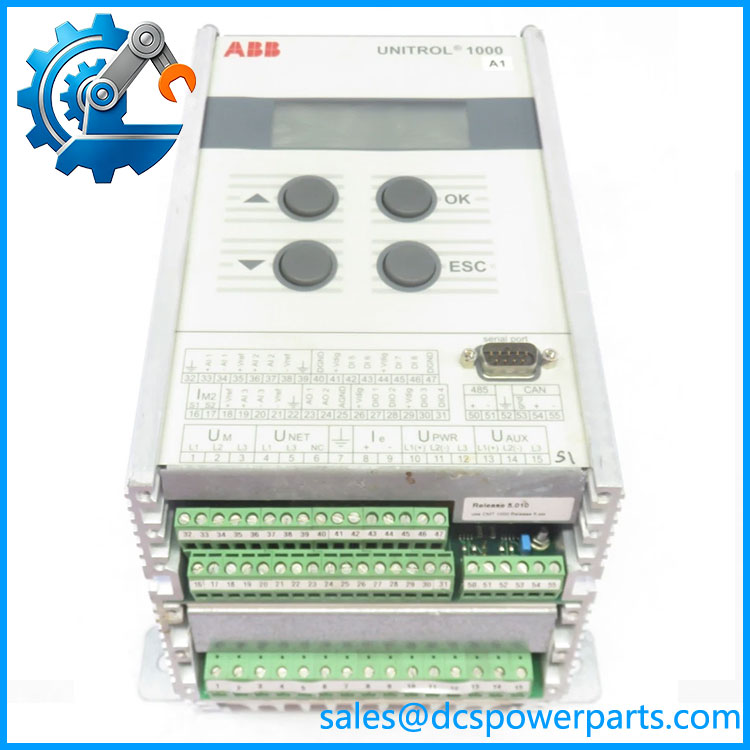
Unitrol 1000-15 3BHE006720R0200
Main Features and Engineering Considerations
Dedicated Excitation Control
The UNITROL 1000-15 is purpose-built for synchronous-machine excitation. Its automatic voltage regulator measures generator electrical quantities and adjusts the excitation output to maintain the configured voltage reference. This is fundamentally different from a conventional PLC analog-output application because the AVR is part of a closed-loop generator excitation system.
Multiple Operating Modes
The controller supports automatic voltage regulation, manual field-current regulation, power-factor control, reactive-power control, and open-loop operation. Bumpless changeover between operating modes is supported by the control architecture. The available mode and limiter behavior must be checked against the actual commissioning configuration rather than assumed from the generic product family.
Integrated Excitation Power Stage
The UNITROL 1000-15 contains its excitation control and power electronics in the compact controller assembly. The excitation output is rated for 15 A continuous, with higher short-duration overload capability. At ambient temperatures above 50 °C, the permissible continuous current is reduced, so thermal conditions inside the control cabinet need to be considered during replacement or retrofit work.
Plant Communication
RS-485 can be used for MODBUS communication, allowing external systems to access measurements and configured setpoints. An RS-232 connection is provided for PC-based commissioning and parameter management through CMT1000. CAN bus is also available in the controller interface architecture.
Legacy Product Status
This is an important procurement consideration. ABB’s upgrade documentation identifies UNITROL 1000-15 as a legacy product and maps it to UNITROL 1020 replacement variants. The correct replacement depends on the original UNITROL configuration, particularly whether synchronization, RDM, or power-system stabilizer functions are installed. A generic UNITROL 1020 should not be ordered solely because it is listed as the successor.
Application Scenarios
Synchronous Generator Excitation
Used for voltage regulation and field-current control on synchronous generators in industrial power-generation installations.
Synchronous Motors
Can provide excitation regulation for synchronous motors where controlled field excitation is required.
Industrial Generator Sets
The compact design makes the UNITROL 1000-15 suitable for smaller generator excitation systems where an integrated AVR and excitation power stage are preferred.
Stand-Alone or Island Operation
Voltage-droop compensation and reactive-power allocation functions can be used in appropriate island-operation configurations. These functions must be configured according to the generator and plant operating philosophy.
Retrofit and Maintenance
The controller can be encountered in existing ABB excitation installations as a legacy AVR. Replacement work should preserve the established machine measurement configuration, excitation parameters, control modes, and external trip/interlock logic.
Engineer’s Guide: Field Pitfalls
1. Do not treat the order number as a complete functional description.
The exact 3BHE006720R0200 suffix could not be independently decoded from ABB’s publicly available ordering tables. Verify the nameplate, hardware revision, software/control version, and installed options.
2. Check the excitation current requirement first.
The 15 A rating is a key selection parameter. A generator requiring higher continuous field current cannot simply be connected because the supply voltage appears compatible.
3. Verify the power-input arrangement.
The power electronics supply can accept AC or DC within specified ranges, but the actual installation wiring determines how the AVR is configured. Do not assume that every UNITROL 1000-15 installation uses the same supply arrangement.
4. Preserve the AVR parameters.
Voltage reference, regulator gains, limiters, droop settings, machine data, field-current limits, and operating-mode configuration can materially affect generator behavior. Record the existing parameters before replacement whenever possible.
5. Check measurement wiring carefully.
Generator voltage, generator current, and network-voltage inputs are part of the regulation system. Incorrect phase assignment or CT/VT wiring can cause incorrect regulation or protection behavior.
6. Verify communication settings.
If MODBUS is used for plant monitoring or supervisory control, record the address, baud rate, parity, register mapping, and control permissions before removing the original controller.
7. Do not assume a UNITROL 1020 is a plug-and-play replacement.
ABB provides an upgrade path from UNITROL 1000-15 to UNITROL 1020, but the exact replacement depends on the original configuration and installed options. PSS-equipped systems require particular attention.
Frequently Asked Questions
Is ABB UNITROL 1000-15 a PLC?
No. It is an automatic voltage regulator and excitation controller specifically designed for synchronous generators and synchronous motors.
What does “15” mean in UNITROL 1000-15?
It refers primarily to the excitation-current class. The documented UNITROL 1000-15 provides up to 15 A continuous excitation output under specified conditions.
Does UNITROL 1000-15 support MODBUS?
Yes. The RS-485 interface can be used for MODBUS communication. The controller also provides an RS-232 service interface and CAN bus connectivity.
What is the protection rating?
The documented UNITROL 1000-15 has an IP20 protection class. It is therefore intended for installation inside an appropriately protected electrical enclosure rather than exposed field installation.
Is UNITROL 1000-15 still a current ABB product?
ABB classifies the UNITROL 1000-15 as a legacy product and identifies UNITROL 1020 as its successor for most configurations. The exact replacement must be selected according to the installed options and excitation-system configuration.
Is 3BHE006720R0200 the same as every UNITROL 1000-15?
No. UNITROL 1000-15 is a product family with different order-code configurations. ABB’s published documentation shows several order-code variants for standard, synchronization, RDM, and PSS configurations. The exact 3BHE006720R0200 configuration should therefore be confirmed from the nameplate or original ABB documentation before procurement.
Procurement Note
For ABB UNITROL 1000-15 3BHE006720R0200, matching the model family alone is not sufficient for a controlled replacement. Request photographs of the complete nameplate, terminal layout, hardware revision, installed option information, and—where available—the saved CMT1000 parameter file.
For an operating generator, replacement acceptance testing should include voltage sensing, excitation-current feedback, AVR operation, manual field-current control, limiter operation, external trip/interlock signals, communication, and transfer between applicable operating modes. The existing excitation configuration should be documented before removal because the controller parameters are part of the functional system, not merely user preferences.