Description
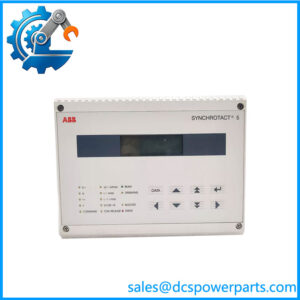
ABB SPA-ZC302BA Profibus-DPV1 / SPA Gateway
Key Technical Specifications
| Parameter | Specification |
|---|---|
| Product Model | SPA-ZC302BA |
| ABB Designation | SPA-ZC 302-BA |
| Manufacturer | ABB |
| Product Type | Profibus-DPV1 / SPA gateway |
| Profibus Version | DP Version 1 |
| Profibus Physical Interface | RS-485 |
| Profibus Connector | 9-pin female D-sub |
| SPA Interface | RS-232 / RS-485 / TTL |
| SPA Connector | 9-pin female D-sub |
| Maximum SPA Slaves | Up to 16 |
| Auxiliary Input | 110–240 VAC / 110–220 VDC |
| Internal SPA Supply | +8 VDC unregulated when configured for supported SPA interface modes |
| Current Consumption | Less than 80 mA, according to published technical data |
| Configuration | DIP switches and configuration software |
| Data Access | SPA relay data through Profibus |
| Acyclic Communication | Supported for user-defined SPA messages |
| Relay Control | Circuit-breaker control supported in selected configurations |
| BA Cable Package | Connection cable for REX 521, RE_610 and SACO equipment |
| Typical Application | Substation relay communication and SCADA integration |
ABB’s installation manual specifically distinguishes the AA and BA package variants. The BA package contains a connection cable for REX 521, RE_610 relays and SACO annunciator units, while the AA package uses a different SPA connection cable intended for REF 54x, REM 54x and SPACOM equipment.
The gateway supports up to 16 SPA slaves and can expose relay information to a Profibus-DP master. ABB also documents user-defined SPA messages through acyclic Profibus communication and circuit-breaker control operations in selected configurations.
Product Introduction
The ABB SPA-ZC302BA is a communication gateway used to integrate ABB protection relays and other SPA-bus devices into a Profibus-DPV1 control or SCADA network. It sits between the legacy SPA protocol used by compatible protection equipment and the Profibus-DP network used by the supervisory or automation system.
The BA suffix matters during replacement. It identifies a package supplied with the SPA connection cable intended for REX 521, RE_610 and SACO equipment. The gateway hardware itself supports multiple SPA electrical interfaces, so the relay-side connection and DIP-switch configuration need to match the actual installed equipment.
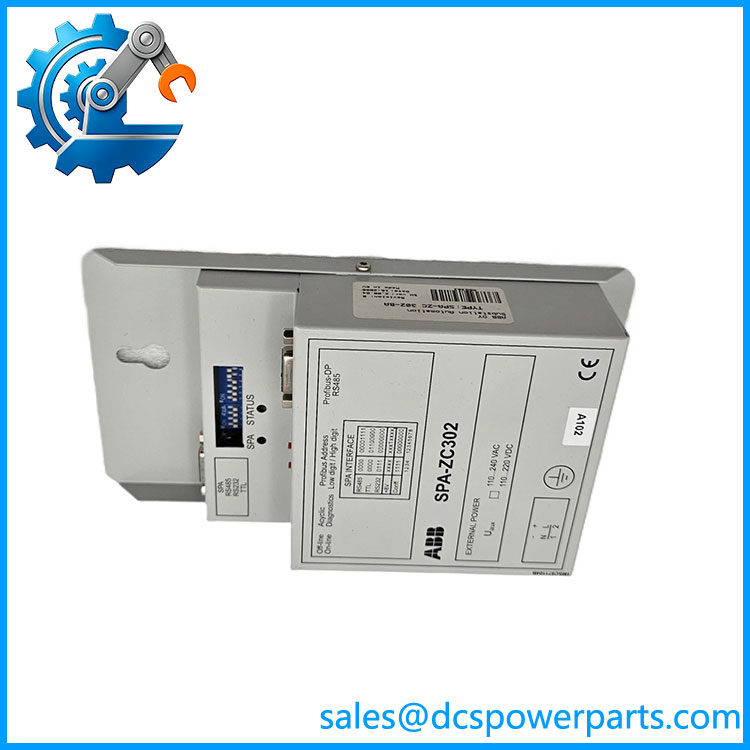
SPA-ZC302BA
Application Scenarios & Field Pitfalls — The Engineer’s Perspective
Engineering Pain Point
The main issue with the SPA-ZC302BA is not basic protocol conversion; it is configuration matching. The gateway can communicate with multiple SPA devices, but the Profibus master needs the correct configuration/template for the connected relay data. Replacing the gateway without preserving its configuration can result in a device that is physically connected and powered but does not expose the expected relay measurements, binary states, alarms, or control commands.
Typical Applications
- Substation SCADA integration: Bringing SPA-bus protection relay data into an existing Profibus-DP network.
- REX 521 communication: Connecting compatible REX 521 protection/control relays to a Profibus-DP master.
- RE_610 relay integration: Providing Profibus access to compatible ABB 610-series relays.
- SACO annunciator systems: Connecting compatible SACO units to the supervisory Profibus network.
Technical Pitfalls to Avoid
- Do not confuse SPA-ZC302BA with SPA-ZC302AA. The supplied relay-side connection cable is different. Verify the connected relay family before ordering the package.
- Check the SPA electrical interface. The gateway supports RS-232, RS-485, and TTL levels. The DIP-switch configuration must correspond to the connected equipment.
- Preserve the gateway configuration. ABB provides a dedicated configuration tool and predefined standard configuration templates. Save the existing configuration before replacement whenever possible.
- Verify Profibus master configuration. The master must use the appropriate gateway configuration/template and expected process-data structure.
- Check SPA slave addressing. With multiple connected relays, slave addressing and bus topology need to be documented before commissioning.
- Do not assume all relay data is automatically available. ABB documents standard configurations plus user-defined SPA messages; required data may depend on the selected configuration.
- Check control functions carefully. Circuit-breaker control is available only in selected configurations. Do not assume that a replacement gateway will reproduce existing control commands without configuration verification.
- Verify auxiliary power before energizing. The gateway supports power-system battery voltage levels, including 110–220 VDC, as well as 110–240 VAC.
Related Products
- ABB SPA-ZC 302-AA — Same Profibus-DPV1/SPA gateway platform but supplied with the cable arrangement intended for REF 54x, REM 54x and SPACOM devices.
- ABB SPA-ZC 302-CA — Another SPA-ZC 302 package with a connection arrangement for SACO annunciator equipment.
- ABB SPA-ZC 21 — Optical SPA-bus interface used when the connected protection relay provides only an optical SPA interface.
- ABB REX 521 — Protection and control relay family supported by the SPA-ZC 302 BA connection arrangement.
- ABB RE_610 — Relay family identified by ABB for the SPA-ZC 302 BA package.
- ABB SACO — Annunciator equipment supported by the BA connection arrangement.
- ABB SPA-ZC 400 — Later communication-adapter family providing Ethernet-based SPA integration; it is not a drop-in Profibus replacement for SPA-ZC 302.
Procurement Note
For ABB SPA-ZC302BA, retain the complete designation SPA-ZC 302-BA rather than sourcing only an unspecified SPA-ZC 302. The BA package includes a relay-side cable configuration intended for REX 521, RE_610 and SACO equipment, which can be critical during replacement.
Before approving a replacement, verify the connected SPA relay model, SPA electrical interface, DIP-switch settings, SPA slave addresses, Profibus master configuration, gateway configuration file, auxiliary supply, and required relay data/control commands. ABB’s documentation confirms that configuration templates and a dedicated configuration tool are part of the engineering workflow.