Description
Technical Specifications
| Parameter | Details |
|---|---|
| Product model | RET650 |
| Manufacturer | ABB / Hitachi Energy |
| Product family | Relion 650 series |
| Product type | Transformer protection and control IED |
| Main protection function | Transformer differential protection |
| Supported transformer applications | Two-winding and three-winding transformers, autotransformers, generator-transformer units, and shunt reactors |
| Current inputs | Configuration-dependent |
| Voltage inputs | Configuration-dependent |
| Binary inputs and outputs | Depend on the selected hardware and ordered configuration |
| Communication protocol | IEC 61850; additional protocol support depends on configuration |
| Engineering tool | PCM600 |
| Auxiliary supply | Confirm the exact ordered variant and nameplate |
| Mounting arrangement | Confirm against the specific hardware version |
| Firmware | Must match the installed protection and engineering configuration |
| Order code | Not provided; RET650 alone does not identify a complete hardware configuration |
Product Overview
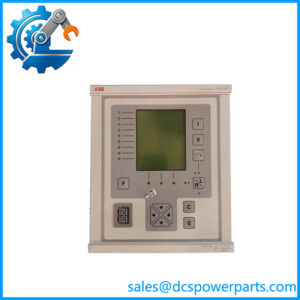
The ABB RET650 is part of the Relion 650 family of protection and control devices intended for transmission and subtransmission applications. It is used to detect transformer faults and initiate the appropriate protection response through the configured trip logic and connected circuit breakers. The relay can also support monitoring and selected control functions, depending on its ordered application package.
Transformer differential protection is particularly important because internal winding faults can develop rapidly and cause substantial equipment damage. The RET650 uses current measurements from the protected transformer to distinguish internal faults from normal operating conditions. Its documented functions include transformer ratio matching and vector-group compensation, along with restraint features intended to help avoid unwanted operation during magnetizing inrush and overexcitation conditions.
The exact RET650 configuration matters during replacement. Hardware I/O, auxiliary supply, application package, communication settings, firmware, and protection settings must match the requirements of the installed substation. A relay carrying the same family designation is not automatically a drop-in replacement for every RET650 installation.
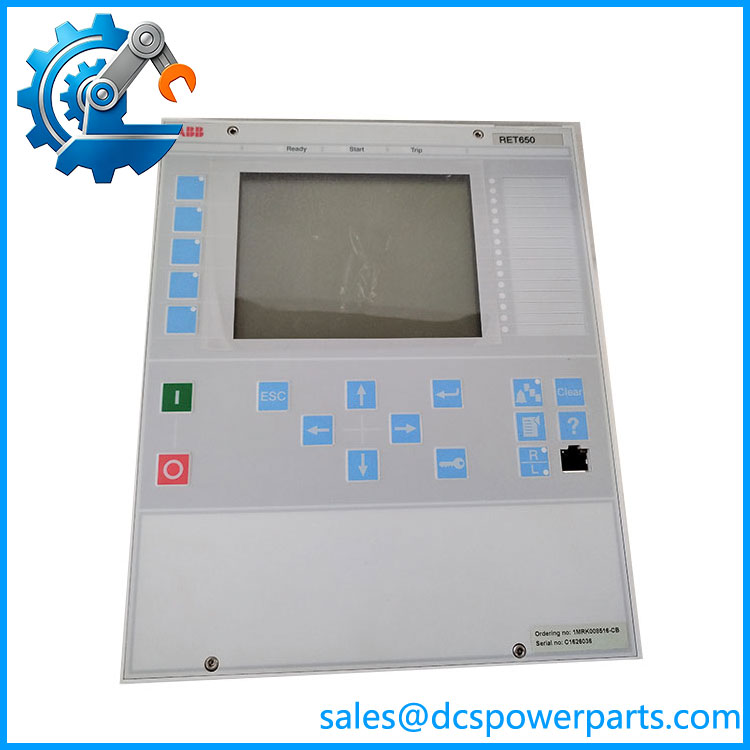
RET650
Major Features and Advantages
Transformer differential protection
The provides differential protection for transformer applications. The function compares the relevant current measurements and accounts for transformer characteristics to detect internal faults. Correct current-transformer ratios, polarity, wiring, and vector-group settings are essential for dependable operation.
Additional protection functions
Depending on the configured version, the relay can provide backup overcurrent and earth-fault protection, thermal overload protection, voltage and frequency protection, and breaker-failure protection. The available functions should be verified against the exact product version and application package.
Monitoring and disturbance analysis
The Relion 650 platform supports event recording, disturbance recording, self-supervision, and equipment-condition monitoring. These functions help protection engineers investigate relay operations and diagnose problems after a disturbance. The available records and settings depend on the installed configuration.
Substation communication and integration
The supports IEC 61850-based substation integration. Communication mapping, station-bus configuration, signal naming, and any additional protocols must be checked against the installed firmware and project engineering files. Communication compatibility should never be assumed from the model designation alone.
Typical Applications
- Power transformer differential protection
- Two-winding and three-winding transformer protection
- Autotransformer protection
- Generator-transformer unit protection
- Shunt reactor protection
- Transformer monitoring and configured control functions in substations
These applications are documented for the product family; actual protection coverage depends on the ordered configuration.
Installation and Maintenance
- Identify the complete variant. Record the full product code, hardware configuration, auxiliary supply rating, firmware version, and serial information.
- Preserve existing engineering data. Back up the relay settings, application configuration, communication parameters, and relevant disturbance records before replacement where practical.
- Verify current-transformer circuits. Check CT ratios, polarity, wiring, grounding, and terminal assignments against the approved protection drawings.
- Confirm trip-circuit integration. Validate the configured trip matrix, breaker-failure logic, interlocking, and external protection interfaces.
- Test before service. Perform the approved secondary-injection, functional, trip-circuit, and communication tests required by the site commissioning procedure.
- Document the return to service. Retain test results, final settings, and any configuration changes in the site’s maintenance records.
Transformer protection is safety-critical equipment. Installation, settings changes, and commissioning should be carried out by qualified protection personnel under approved substation procedures.
Product Assurance and Procurement Notes
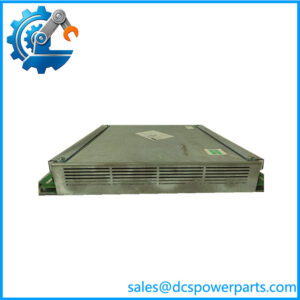
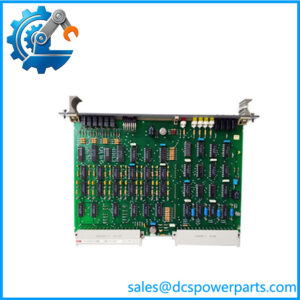
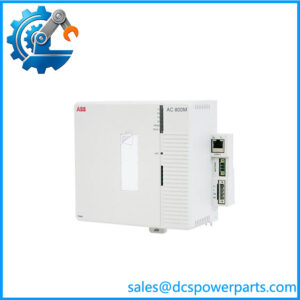
For an ABB procurement, request the complete order code and photographs of the relay nameplate, front panel, rear terminals, and installed modules. Confirm the unit’s condition, firmware information, supplied accessories, warranty, and any available functional-test records.
If the relay is intended to replace an existing unit, compare the ordered hardware configuration and application package against the installed relay before purchase. A generic designation is not sufficient to establish exact interchangeability.
Procurement recommendation: Confirm the full order code, auxiliary supply, I/O configuration, firmware compatibility, communication requirements, and approved protection settings before ordering.