Description
Technical Specifications
| Parameter | Details |
|---|---|
| Product model | PFTL101A-1.0KN |
| Order number | 3BSE004166R1 |
| Manufacturer | ABB |
| Product family | Pressductor PFTL 101 |
| Product type | Pillow block load cell |
| Nominal load | 1.0 kN |
| Measurement direction | Horizontal |
| Accuracy class | 0.5% |
| Repeatability error | Less than ±0.05% |
| Deflection at nominal load | 0.015 mm |
| Permitted transverse load | 10 kN |
| Overload capacity in measurement direction | 5.0 kN |
| Spring constant | 65 kN/mm |
| Protection rating | Confirm the exact A variant and installation; do not assume the IP66/IP67 ratings specified for other variants |
| Operating temperature | Verify against the applicable ABB documentation |
| Product condition | Confirm for the individual unit supplied |
Product Overview
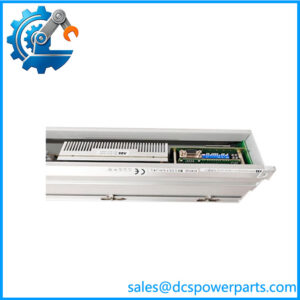
The ABB PFTL101A-1.0KN 3BSE004166R1 is used where a process requires a measurement of force acting horizontally through a roller or pillow-block mounting arrangement. In web-handling systems, that measurement can be used by the control system to monitor tension and support consistent process operation.
The sensor uses ABB Pressductor technology, which relies on the magnetoelastic effect: mechanical force changes the magnetic properties of the sensing material, producing an electrical measurement signal. ABB describes the technology as resistant to electrical interference and suitable for demanding industrial tension-measurement applications.
When replacing a load cell, nominal capacity alone is not enough to establish compatibility. The mounting dimensions, force direction, sensor variant, cable arrangement, and connected measurement electronics must match the existing installation. The PFTL101A-1.0KN should also be distinguished from the PFTL101AE/BE mill-duty versions and PFTL101AER/BER acid-resistant versions, which have different environmental and connection characteristics.
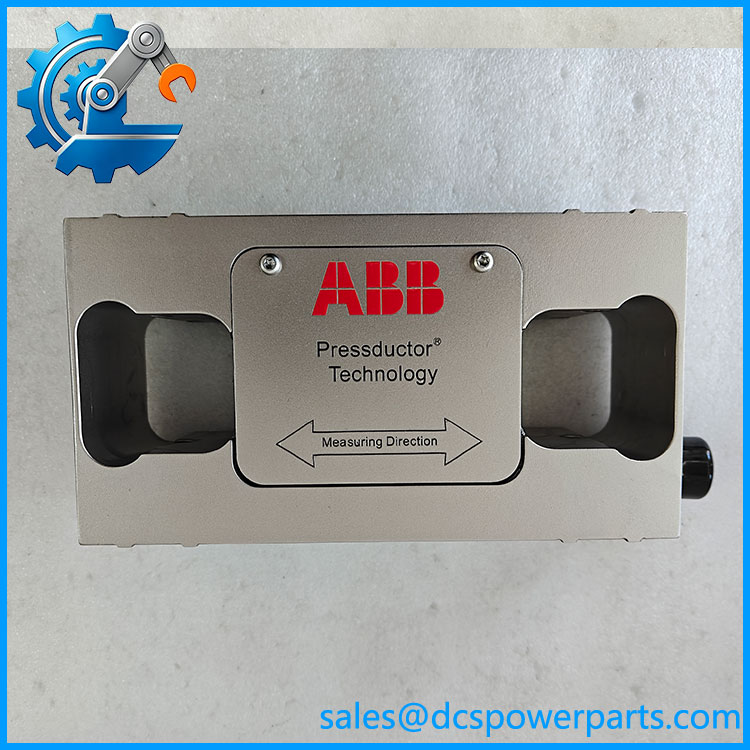
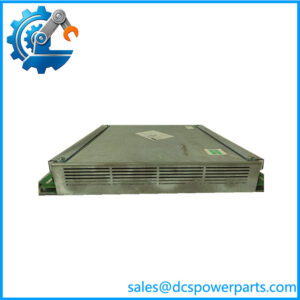
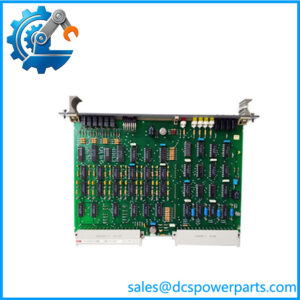
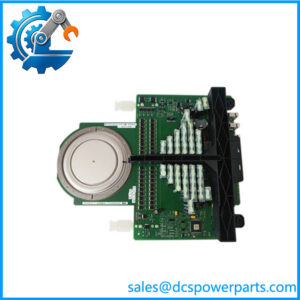
PFTL101A 1.0KN 3BSE004166R1
Major Features and Advantages
Horizontal force measurement
The sensor is designed for horizontal force measurement, making it suitable for specified roller and web-tension applications. The load path must be aligned with the intended measurement axis; an incorrectly installed sensor can produce inaccurate readings even when its electrical connections are correct.
Defined measurement capacity
The 1.0 kN nominal rating provides a reference for selecting the sensor for its intended application. ABB’s PFTL101 family data specifies a 0.5% accuracy class, repeatability error below ±0.05%, and 0.015 mm deflection at nominal load. These figures should be applied within the manufacturer’s specified installation and measurement conditions.
Pressductor sensing principle
The magnetoelastic sensing principle produces measurement signals without relying on the same mechanical deformation mechanism used by conventional strain-gauge load cells. ABB identifies high resistance to electrical interference as a characteristic of its Pressductor technology.
Defined mechanical installation
ABB’s dimension drawing for the PFTL101A-1.0 kN identifies the mounting geometry for this model and related 0.5 kN and 2.0 kN A variants. Maintenance teams should compare the drawing and installed hardware rather than relying on visual similarity alone.
Typical Applications
- Paper-machine web-tension measurement
- Calender and coating sections
- Winding and rewinding equipment
- Roller-force monitoring in web-processing machinery
- Replacement of existing ABB Pressductor PFTL101A load cells
These are applications associated with the PFTL101 product family; the final suitability depends on the mechanical and electrical design of the individual machine.
Installation and Maintenance
- Verify the complete model designation and order number on the original sensor.
- Confirm the measurement direction, nominal load, mounting dimensions, and permitted transverse load.
- Inspect the roller assembly, bearing mounts, fasteners, and load path for misalignment or mechanical binding.
- Check the specified cable and signal-conditioning equipment before reconnecting the replacement.
- After installation, verify signal polarity, measurement stability, and calibration according to the machine’s commissioning procedure.
- Investigate mechanical and electrical causes before concluding that the load cell itself has failed.
Do not exceed the permitted load in the transverse direction simply because the sensor has a higher overload rating in its measurement direction. Those ratings describe different loading conditions.
Product Assurance and Procurement Notes
For an ABB PFTL101A-1.0KN 3BSE004166R1 purchase, request photographs of the nameplate and mounting interfaces, confirmation of the complete order number, and a written description of the unit’s condition. If functional testing or calibration is claimed, ask for the actual test scope and available records.
Stock status, origin, warranty, and calibration history must be confirmed for the specific unit supplied. Do not assume that a used, refurbished, or surplus sensor has been calibrated merely because it passes a basic electrical check.
Procurement recommendation: Match the 1.0 kN rating, horizontal measurement direction, A variant, mechanical mounting, and signal-conditioning arrangement before ordering. Do not substitute an AE, AER, or other PFTL101 variant without confirming that its environmental and connection characteristics are suitable for the installation.