Description
Key Technical Specifications
| Parameter | Specification |
|---|---|
| Manufacturer | ABB |
| Model | PFEA111-20 |
| User-Supplied Part Number | 3BSE028140R0020 |
| ABB Current Product ID | 3BSE050090R20 |
| Product Type | Tension Electronics |
| Application | Web tension measurement and control |
| Load Cell Inputs | 2 |
| Load Cell Excitation | 0.5 A RMS, 330 Hz |
| Supply Voltage | 24 VDC nominal |
| Supply Range | 18–36 VDC |
| Power Consumption | Approx. 8 W at 24 V |
| Analog Outputs | Voltage and current |
| Voltage Output | -5 to +11 V |
| Current Output | 0–21 mA |
| Maximum Current Output Load | 550 Ω |
| Output Filtering | Selectable |
| Filter Step Response | 15, 30, 75, 250, 750, 1500 ms |
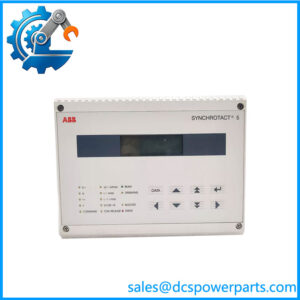
| Display | 2 × 16-character multi-language display |
| Display Functions | A, B, A+B, A-B |
| Mounting | DIN rail version |
| Enclosure Option | IP20 DIN-rail / IP65 enclosed versions |
ABB specifies the PFEA111/112/122 family for two load cells, with 24 VDC operation over an 18–36 VDC range. The PFEA111 provides voltage and current analog outputs, selectable filtering, load memory, zero-offset memory, and a 2 × 16-character display.
For PFEA111-20, ABB’s product information describes the function as two load-cell inputs with voltage and current output A+B and adjustable filtering, with individual A, B, A+B, and A-B values available on the display.
Application Scenarios & Pain Points
On a web-processing line, tension instability shows up quickly: wrinkles, telescoping rolls, broken material, poor winding quality, or excessive waste. The tension electronics therefore needs to provide a clean, repeatable signal rather than simply “read” the load cells.
- Film and flexible-web processing: Dual load-cell measurement can be used for tension monitoring where stable web force is important for winding and transport.
- Paper and converting machinery: The PFEA111 family is intended for web-tension applications where the measured tension must be scaled and filtered before reaching the machine-control system.
- Printing and coating equipment: Adjustable output filtering helps suppress unwanted signal variation while retaining the dynamic response required by the process.
- Rolling and material-handling equipment: Two load-cell signals can be displayed individually or combined as A+B or A-B, which is useful when checking mechanical load distribution.
Field note: Do not start by changing the tension electronics when the displayed A and B values suddenly diverge. First inspect the load-cell mounting, cable routing, connectors, mechanical loading, and zero condition. A damaged load-cell cable can make a healthy PFEA111 look guilty.
Brief Field Case
A web line showing unstable tension on one side of the roll may produce an apparently faulty A+B signal. Looking at A, B, A+B, and A-B separately can quickly reveal whether the problem is common to both load cells or isolated to one measurement channel. That diagnostic view is one of the more useful features of this unit.
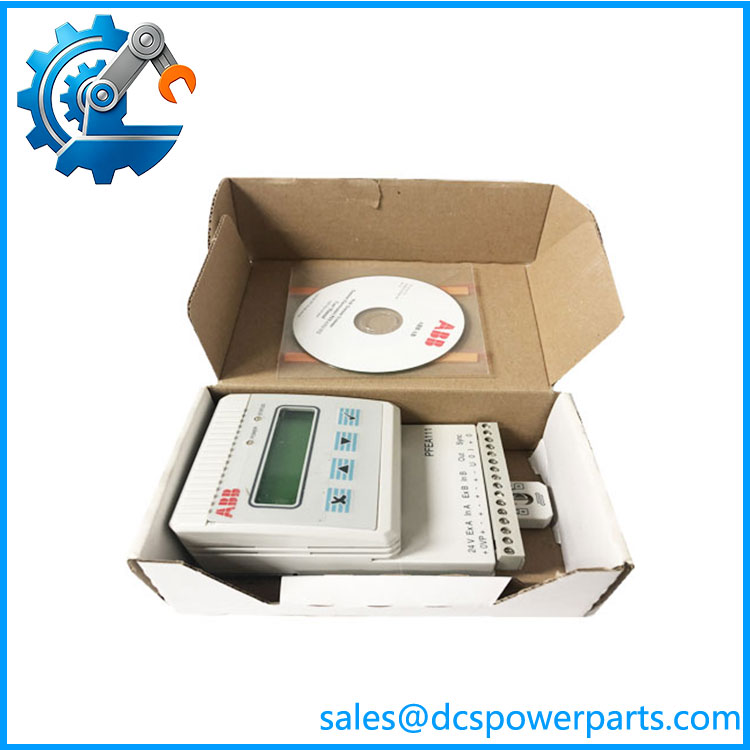
PFEA111-20
Related Products
- — Subject dual-load-cell tension electronics unit. Provides conditioned voltage/current outputs and adjustable filtering for web-tension applications.
- — Higher-range variant. The “65” designation distinguishes it from the -20 version; select according to the specified tension/load-cell system rather than assuming interchangeability.
- ABB PFEA112 — Related tension electronics model with PROFIBUS-DP communication. It is a better fit where fieldbus communication is required instead of relying solely on the analog outputs.
- ABB PFEA122 — Networked PFEA family member with PROFINET RT and EtherNet/IP communication. Its communication architecture differs substantially from -20.
- ABB PFEA113 — Higher-functionality tension electronics supporting four load cells, additional analog inputs/outputs, and digital outputs. It is intended for more complex measurement arrangements.
- ABB PFRL101 — Force/tension sensing hardware from ABB’s measurement portfolio. It belongs on the sensing side of the measurement chain rather than replacing the PFEA electronics.
- ABB PFTL Series Load Cells — Pressductor tension-sensing devices commonly associated with ABB web-tension systems. Compatibility must be checked against excitation, load range, mechanical mounting, and the PFEA configuration.
- ABB PFTL101 — A PFTL tension sensor family member used with suitable ABB tension electronics. It is a sensing element, not a signal-processing replacement.
- ABB PFC300 — ABB tension-control platform for web-processing applications. It represents a broader control architecture rather than a direct replacement for the compact electronics unit.
The Engineer’s Guide: Field Pitfalls to Avoid
WARNING 1 — Do not confuse the old and current ABB product identifiers.
ABB’s product record lists with current Product ID 3BSE050090R20 and identifies 3BSE028140R20 as the replaced product ID. The longer 3BSE028140R0020 designation is also widely used in inventory records.
How to avoid it: When ordering, provide all available identifiers:
-20 / 3BSE028140R0020 / 3BSE028140R20 / 3BSE050090R20
Then have the supplier confirm the exact physical unit being supplied.
WARNING 2 — Do not select the unit by load-cell count alone.
, PFEA112, PFEA122, and PFEA113 are related but have different communication and I/O capabilities. PFEA112 adds PROFIBUS-DP, while PFEA122 provides PROFINET RT and EtherNet/IP.
How to avoid it: Match the machine’s control interface before substitution. If the PLC expects a fieldbus node, an analog-output-only is not an equivalent replacement.
WARNING 3 — Check the filtering configuration after replacement.
The output filter is configurable, with response settings ranging from 15 ms to 1500 ms on the /112/122 family.
How to avoid it: Record the existing filter settings before replacement. An excessively slow filter can make the tension loop sluggish; an excessively fast setting may expose the control loop to unwanted signal variation.
Frequently Asked Questions (FAQ)
What is ABB -20 used for?
-20 is tension electronics for web-processing applications. It accepts signals from two load cells, processes the measurements, and provides voltage/current outputs suitable for control or monitoring.
It is best understood as the signal-processing and tension-electronics section of the measurement chain, not as the physical load cell itself.
How many load cells can -20 handle?
The family is specified for two load cells. The electronics provides excitation for the connected load cells and processes the resulting measurement signals.
For troubleshooting, the ability to view A, B, A+B, and A-B individually is particularly useful.
What is the power supp?
The nominal supply is 24 VDC, with an operating range of 18–36 VDC. ABB specifies approximately 8 W consumption at 24 V for the /112/122 group.
Before replacing the unit, measure the actual cabinet supply under load. A marginal 24 VDC supply can produce symptoms that resemble an electronics failure.
What is the difference b and PFEA112?
Both belong to ABB’s PFEA tension-electronics family and support two load cells, but their communication capabilities differ.
- Primarily analog-output based.
- PFEA112: Adds PROFIBUS-DP communication.
- PFEA122: Adds PROFINET RT and EtherNet/IP.
ABB explicitly lists PROFIBUS-DP for PFEA112 and PFEA113, while PFEA122 provides PROFINET RT and EtherNet/IP.
repla111-65?
Do not assume that it can. The two models represent different variants, and the load-cell/tension measurement configuration must match the electronics.
Before substitution, verify:
- Existing PFEA model.
- Load-cell model.
- Tension/load range.
- Machine wiring.
- Output scaling.
- Filter settings.
- Zero calibration.
- Control-system input range.
A unit that powers up and displays tension is not necessarily correctly matched to the machine.
Is 3BSE028140R0020 still the current ABB part number?
ABB’s product record identifies as Product ID 3BSE050090R20 and lists 3BSE028140R20 as the replaced product ID.
Because 3BSE028140R0020 is also widely used by industrial inventory sources, buyers should provide the full legacy number they have on their documentation and ask for confirmation of the current ABB identification before purchasing.
What should I request when buying a refur?
For a production web line, request more than a power-on photograph.
Ask for:
- Exact label
- Full ABB part number
- Display and keypad test
- Both load-cell input tests
- Voltage output test
- Current output test
- Filter-setting verification
- Zero-offset verification
- 24 VDC power test
- Physical terminal inspection
- Actual unit photographs
- Test report
- Written warranty
A useful acceptance test should demonstrate that both measurement channels and both analog output functions operate correctly. That is much more meaningful than simply confirming that the display lights up.