Description
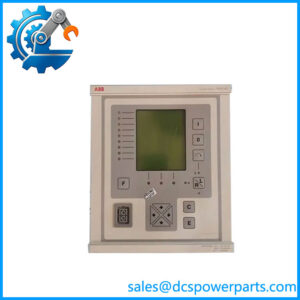
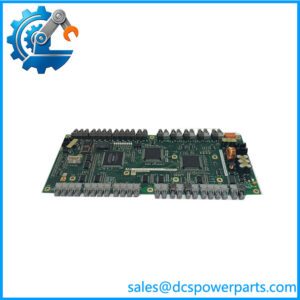
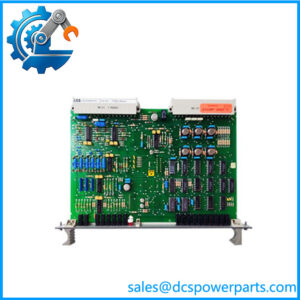
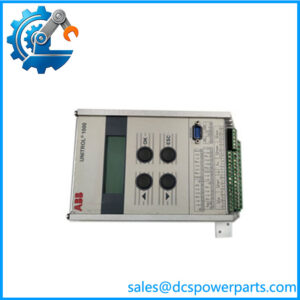
ABB MB510 3BSE002540R1 | Program Card Interface | Advant Controller 410/450
Key Technical Specifications
| Parameter | Specification |
|---|---|
| Manufacturer | ABB |
| Model | MB510 |
| Part Number | 3BSE002540R1 |
| Product Type | Program Card Interface |
| System Family | ABB Advant OCS / AC 400 |
| Controller Compatibility | Advant Controller 410 / 450 |
| Program Card Type | PCMCIA flash-PROM |
| Supported Backup Card | 2 MB — 3BSC630036R1 |
| Supported Backup Card | 4 MB — 3BSC630036R2 |
| Supported Backup Card | 10 MB — 3BSC630036R3 |
| Net Weight | 0.14 kg |
| System Role | Application-program backup / transfer interface |
ABB’s Advant Controller 450 product guide lists the as the Program Card Interface and states that it is used with PCMCIA cards for application-program backup. The same documentation notes that is not required for system software in a standard Advant Controller 450. ABB’s product record gives a net weight of 0.14 kg.
Product Introduction
The ABB 3BSE002540R1 is a dedicated Program Card Interface for ABB’s legacy Advant Controller 400 family. It provides the hardware interface required for program-card operations in Advant Controller 410 and 450 configurations, particularly where application programs are backed up or transferred using PCMCIA flash-PROM cards. ABB documentation lists 2 MB, 4 MB, and 10 MB program cards for this function.
For maintenance teams supporting older AC400 installations, the ABB 3BSE002540R1 is primarily a program-management accessory rather than a controller, communication processor, or I/O module. That distinction matters during troubleshooting: replacing will not restore a failed field I/O channel or network interface, but a failed program-card interface can prevent the maintenance team from performing the intended application-program backup or transfer operation. ABB currently classifies as Classic in its lifecycle documentation rather than Active, so spare planning is sensible for long-lived Advant installations.
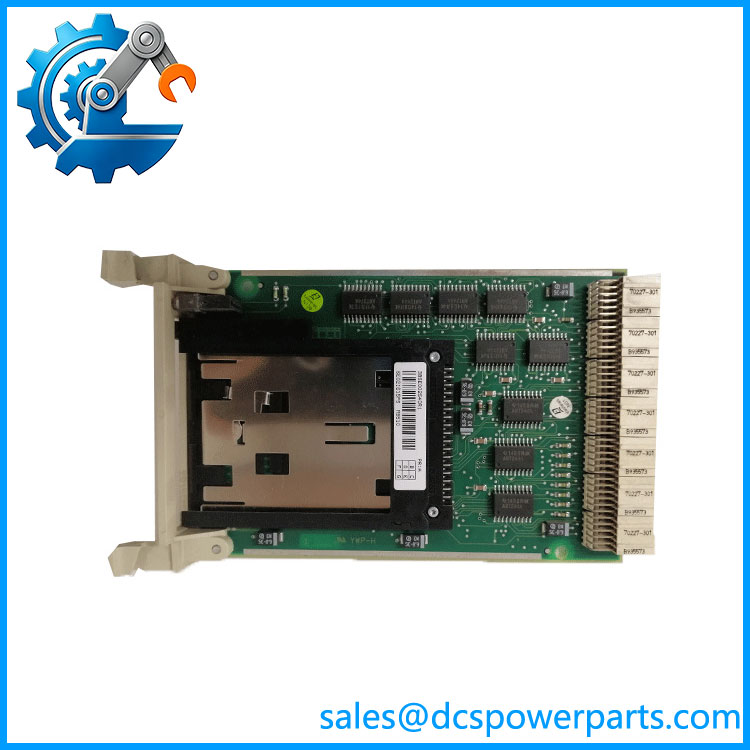
MB510 3BSE002540R1
Application Scenarios & Field Pitfalls — The Engineer’s Perspective
Engineering Pain Point
On a legacy Advant controller, program backup hardware is easy to overlook until the plant needs to recover or transfer an application program. The is one of those maintenance components that may remain unused for years, yet becomes important during controller replacement, program recovery, or planned system maintenance.
Typical Applications
- ABB Advant Controller 410 — program-card interface for application-program backup and transfer.
- ABB Advant Controller 450 — supports PCMCIA flash-PROM based application-program handling.
- Legacy DCS maintenance — maintaining program archives for installed AC400 systems.
- Controller replacement projects — useful where the existing system relies on physical program-card media.
- Safeguard 400 configurations — ABB documentation also associates the with this legacy safety-system family.
Technical Pitfalls to Avoid
- Do not classify as an I/O module. ABB identifies it specifically as a Program Card Interface. Listings that describe it as a digital input/output expansion module are incorrect.
- Do not confuse it with the AC400 backplane. The ABB Advant Controller documentation separately identifies SC510 as a submodule carrier and BB510 as a bus backplane. has a different role: program-card access.
- Check the actual program-card requirement. The documented compatible media include 2 MB, 4 MB, and 10 MB PCMCIA flash-PROM cards. Confirm the controller revision and existing card type before assuming that any PCMCIA memory card will perform the required function.
- Understand its lifecycle position. ABB’s current lifecycle documentation lists as Classic, which is different from Active status. For a plant still dependent on Advant 410/450 hardware, keeping a tested spare is more practical than waiting until a program-recovery event exposes a missing interface.
- Avoid generic communication specifications. Public listings sometimes attribute Ethernet, RS-485, Modbus RTU, and Modbus TCP functions to . ABB’s documented product identity does not support those claims; those specifications should not be used when selecting this part.
Related Products
- ABB BB510 3BSE001693R2 — Advant Controller bus backplane, 12 SU; a rack infrastructure component and not a substitute for .
- ABB SC510 3BSE003832R1 — submodule carrier used in Advant Controller 450 configurations; different mechanical and functional role from the program-card interface.
- ABB SC520 3BSE003816R1 — carrier module with processor for MasterBus 300/300E applications; not a program-card replacement.
- ABB CI522A 3BSE018283R1 — Advant Fieldbus 100 interface for S800 I/O communications; relevant to system communication rather than program backup.
- ABB CI541V1 3BSE014666R1 — PROFIBUS-DP interface submodule for legacy Advant systems; a communication component, not a program-card interface.
- ABB CI534V02 3BSE010700R1 — MODBUS interface submodule; used for controller communications rather than application-program storage.
- ABB 3BSC630036R1 — 2 MB PCMCIA flash-PROM application-program backup card specified with .
- ABB 3BSC630036R2 — 4 MB PCMCIA flash-PROM card for the same program-backup function.
- ABB 3BSC630036R3 — 10 MB PCMCIA flash-PROM card for Advant application-program backup.
Procurement note: For a replacement order, specify the complete / 3BSE002540R1 designation. If the purpose is program recovery or transfer, also identify the installed Advant controller model and the PCMCIA card capacity being used. This prevents the common mistake of purchasing a visually similar AC400 accessory that performs an entirely different function.