Description
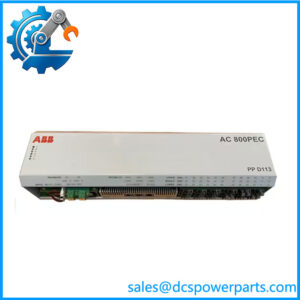
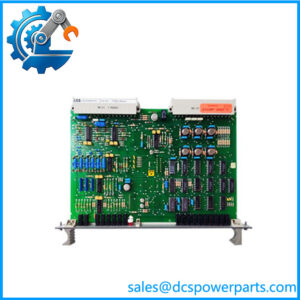
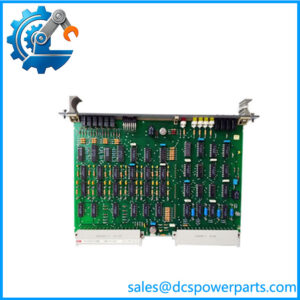
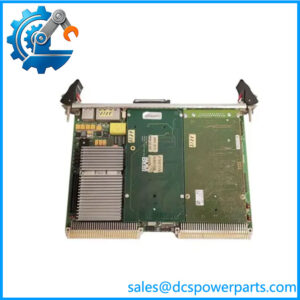
ABB Bailey IMASI13 Isolated Analog Input Module
Product Introduction
Process plants rarely run every measurement on the same signal type. Temperature may arrive from a thermocouple or RTD, while pressure, flow, and level instruments commonly use 4–20 mA transmitters. The ABB Bailey IMASI13 addresses this mixed-signal requirement as a 16-channel isolated analog input module for Harmony Rack control systems. Each input can be configured independently for supported current, voltage, millivolt, thermocouple, and RTD signals.
The module uses a dedicated A/D converter for each input channel and communicates with the controller through the I/O expander bus. Bailey documentation identifies function codes 215, 216, and 217 for module definition, input-channel definition, and enhanced calibration. For a legacy DCS replacement, the important issue is not simply matching “16-channel analog input”; the termination unit, input configuration, module address, firmware, and controller function-code configuration must also match the installed system.
Key Technical Specifications
| Parameter | Specification |
|---|---|
| Product Model | IMASI13 |
| Manufacturer | ABB Bailey |
| Product Family | INFI 90 / Net 90 / Harmony Rack |
| Product Type | Isolated Analog Input Module |
| Number of Inputs | 16 |
| Channel Configuration | Independently configurable |
| Current Input | 4–20 mA |
| Millivolt Inputs | -100 to +100 mV; 0 to 100 mV |
| Voltage Inputs | 1–5 VDC; 0–5 VDC; 0–10 VDC; -10 to +10 VDC; user-defined range within ±10 VDC |
| Thermocouples | E, J, K, L, N, R, S, T, U; selected Chinese E/S types |
| RTD Inputs | 10 Ω Cu; 100 Ω Pt; 120 Ω Ni; Chinese 53 Ω Cu variants |
| RTD Connection | 3-wire |
| A/D Resolution | 24-bit |
| Conversion Time | Approximately 180 ms for all 16 channels |
| A/D Architecture | Dedicated converter for each channel |
| Module Supply | +5 VDC |
| Typical Current | 500 mA |
| Maximum Current | 750 mA |
| Operating Temperature | 0 to 70°C |
| Relative Humidity | 5–95% up to 55°C; 5–45% at 70°C, noncondensing |
| Altitude | Sea level to 3 km |
| Mounting | One MMU slot |
| Configuration | Function codes 215, 216, 217 |
| Field Wiring | Termination unit via module cable |
| Approx. Weight | 0.91 kg |
The original Bailey/Harmony documentation confirms the 16-channel architecture and the supported signal families. A current technical reference also lists +5 VDC at 500 mA typical and 750 mA maximum.
Application Scenarios & Pain Points
1. Mixed analog instrumentation
The IMASI13 is useful where one controller rack must acquire different process measurements without installing separate analog module types for every signal family. Each of its 16 channels can be independently configured.
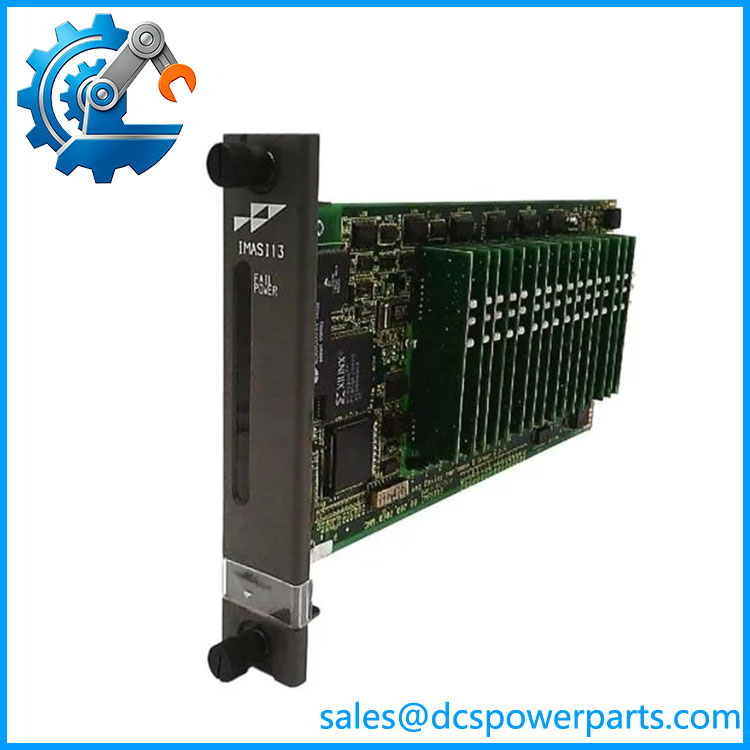
IMASI13
2. Temperature measurement
The thermocouple support covers E, J, K, L, N, R, S, T, and U types, while RTD configurations include several platinum, nickel, and copper standards. This makes the module applicable to process temperature monitoring as well as general analog acquisition.
3. Conventional 4–20 mA transmitters
Pressure, flow, level, and similar process transmitters can be connected through the 4–20 mA input configuration. The current input can use system or external power according to the installed termination arrangement.
4. Legacy DCS maintenance and migration
IMASI13 belongs to an established Bailey DCS architecture. It remains relevant when maintaining installed INFI 90/Harmony equipment or when a phased migration requires existing I/O to remain operational while higher-level control hardware is upgraded.
Related Products
- ABB Bailey IMASI03 — earlier analog input module that the IMASI13 is documented as replacing in some Bailey architectures. Verify the exact termination and configuration before substitution.
- ABB Bailey IMASO11 — analog output module for Harmony Rack systems; it performs the opposite I/O direction.
- ABB Bailey IMCIS12 — mixed control I/O module with analog and digital channels.
- ABB Bailey IMDSI13 — 16-channel digital input module for 24 VDC signals.
- ABB Bailey IMDSO14 — digital output module for discrete control signals.
- ABB Bailey IMFCS01 — frequency counter module used in turbine-control applications.
- ABB Bailey IMHSS03 — hydraulic servo module used for turbine valve and actuator control.
- ABB Bailey NTAI06 — associated termination hardware used with applicable analog input arrangements.
- ABB Bailey NIAI05 — analog input termination/interface hardware used with applicable IMASI configurations.
The exact termination-unit model should be checked against the installed configuration; the field wires terminate at the termination unit rather than directly on the front of the I/O PCB.
Engineer’s Guide — Field Pitfalls to Avoid
1. Do not treat all 16 channels as identical by default
The major advantage of is independent channel configuration. A replacement must preserve the actual signal type and range assigned to every channel. Copying a generic channel configuration can create incorrect engineering values even when the module communicates normally.
2. Verify the module address
Bailey’s diagnostic documentation specifically identifies a Missing I/O condition when communication with fails and instructs technicians to verify the expander-bus DIP-shunt setting and ensure that the module address matches the FC 215 specification.
3. Check the termination unit
The architecture separates the field termination from the I/O PCB. The termination unit contains configuration hardware such as jumpers and DIP shunts, while a cable connects it to the module. Replacing only the PCB without checking the termination arrangement can create a configuration mismatch.
4. Preserve calibration data
Bailey documentation uses FC 217 for enhanced calibration. If the replacement module is being installed into a measurement-critical application, check the existing calibration configuration rather than assuming the replacement has identical calibration data.
5. Watch for the IMASI03/ distinction
The is not simply an interchangeable label for every older IMASI module. Some procurement references identify it as a replacement for IMASI03, but the installed controller, termination hardware, and channel configuration still need to be checked.
6. Do not confuse analog and digital input hardware
A procurement description that only says “16-channel input module” is inadequate. is an analog input module, while modules such as IMDSI13 are digital input modules. The distinction is fundamental to both wiring and controller configuration.
7. Inspect the A/D and field-interface condition on legacy stock
For used or refurbished inventory, inspect the edge connector, board contamination, terminal interfaces, and evidence of previous repair. A published 24-bit converter specification describes the original design; it does not establish the electrical condition of a particular spare.
FAQ
What is the ABB Bailey ?
The is a 16-channel isolated analog input module for ABB Bailey Harmony/INFI 90 control systems. It accepts multiple analog signal types, including 4–20 mA, voltage, millivolt, thermocouple, and RTD signals.
How many analog inputs does have?
It provides 16 independently configurable analog input channels. Each channel can be programmed for the required supported signal type rather than forcing the entire module to use one input standard.
Does support thermocouples?
Yes. Supported thermocouple types include E, J, K, L, N, R, S, T, and U, with specific N-wire and Chinese E/S configurations also documented.
Does support RTD inputs?
Yes. The documented RTD configurations include 10 Ω copper, 100 Ω platinum, 120 Ω nickel, and Chinese 53 Ω copper, with several 100 Ω platinum standards supported. The RTD interface is specified as a 3-wire arrangement.
What is the resolution of ?
The technical references specify 24-bit A/D conversion, with a dedicated A/D converter associated with each input channel. The documented conversion time is approximately 180 ms for all 16 channels.
What voltage does require?
The module uses the system +5 VDC supply. Published specifications give 500 mA typical consumption and 750 mA maximum.
Which function codes are used with ?
The Harmony documentation identifies FC 215 for enhanced analog module definition, FC 216 for enhanced analog input definition, and FC 217 for enhanced calibration.
Can be used as a general-purpose modern PLC analog card?
No. It is designed around the Bailey INFI 90/Harmony Rack architecture and its I/O expander bus and controller function-code system. It should be treated as legacy DCS I/O hardware, not as a standalone universal PLC analog card.
What should procurement verify before buying ?
Match the , hardware revision, module address, termination-unit type, cable, channel configuration, and controller firmware/function-code configuration. For surplus or refurbished units, verify actual board condition and testing status separately; the original specifications do not guarantee the condition of a particular spare.