Description
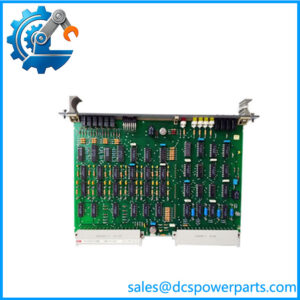
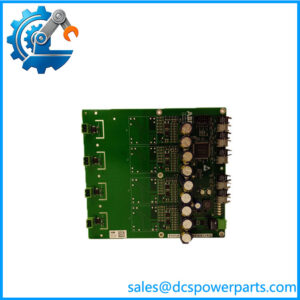
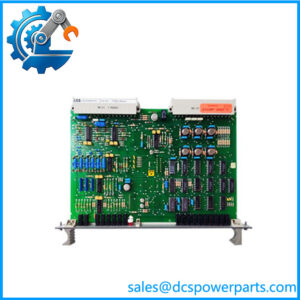
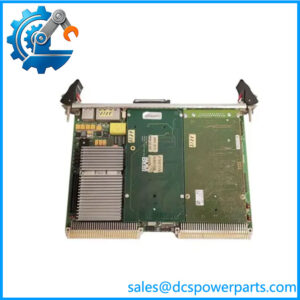
ABB HVC-02B 3HNA024966-001 | High Voltage Controller for Robotic Painting Systems
Key Technical Specifications
| Parameter | Specification |
|---|---|
| Product Model | HVC-02B |
| ABB Part Number | 3HNA024966-001 |
| Product Type | High-voltage controller |
| Primary Application | Robotic painting / electrostatic coating |
| Associated Equipment | ABB painting robot systems |
| ABB RB1000i-S Compatibility | HVC-02B / HVC-02C |
| RB1000i-S Applied Voltage | -60 kV constant, system-level specification |
| RB1000i-S Maximum HV Current | 100 μA with constant-current mode |
| Replacement Model | HVC-02C, 3HNA029043-001 |
| Net Weight | Approx. 0.89 kg |
| Dimensions | Approx. 175 × 162 × 60 mm |
| Software Compatibility | IPS versions must be checked against the robot/controller configuration |
The -60 kV / 100 μA values above come from ABB’s RB1000i-S equipment documentation and describe the associated high-voltage painting application; they should not be interpreted as a standalone HVC-02B output rating. ABB specifically states that the RB1000i-S requires a dedicated high-voltage controller and lists HVC-02B/HVC-02C as compatible controllers.
Public reseller data also contains conflicting claims for HVC-02B input voltage, communication interfaces, IP rating, and I/O count. Those values should not be used for replacement engineering without the controller nameplate, electrical drawing, and ABB system documentation.
Product Introduction
The ABB 3HNA024966-001 is a high-voltage controller used in ABB robotic painting and coating equipment. Its role is tied to the electrostatic high-voltage portion of the painting process rather than general PLC logic or conventional robot motion control. ABB documentation for the RB1000i-S identifies /HVC-02C as the dedicated high-voltage controller options.
For maintenance teams, the important point is system matching. A physically similar controller should not be treated as a direct substitute unless the ABB robot configuration, IPS software version, atomizer configuration, and high-voltage solution are compatible.
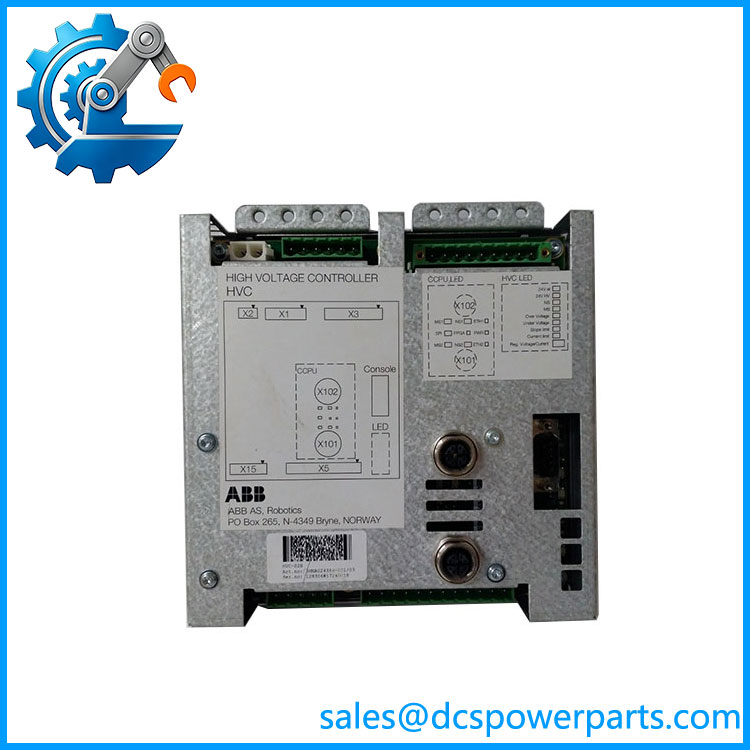
HVC-02B
Application Scenarios & Field Pitfalls — Engineer’s Perspective
Engineering Pain Point
A failed can stop an electrostatic painting cell even when the robot controller, motion axes, and paint delivery equipment remain operational. The difficult part is often not identifying a replacement board; it is confirming that the replacement controller matches the installed atomizer and high-voltage architecture.
Typical Applications
- Automotive painting: Electrostatic coating processes where controlled high voltage assists paint transfer to vehicle surfaces.
- Industrial coating: Robotic spray applications requiring controlled electrostatic charging.
- ABB painting robots: Used as part of ABB’s dedicated high-voltage painting equipment.
- RB1000i-S systems: ABB specifically documents /HVC-02C as compatible high-voltage controller options.
Technical Pitfalls to Avoid
- Do not treat as an AC500 PLC module. Several reseller pages misclassify the part. The stronger evidence identifies it with ABB robotic painting high-voltage equipment, and ABB’s own documentation names as a high-voltage controller.
- Do not substitute HVC-02C solely because the part appears similar. The replacement path needs to be checked against the installed IPS software, robot configuration, atomizer configuration, and high-voltage solution. Available technical data identifies specific ACK boards for certain F1515 high-voltage controller solutions.
- Do not use generic voltage specifications from reseller listings. Published values for ‘s supply and interfaces conflict significantly. For a live replacement, the machine electrical drawing and the actual nameplate should take precedence.
- Verify the complete part number. is associated with 3HNA024966-001, while some listings show extended forms such as 3HNA024966-001/03 or 3HNA024966-00103. Match the physical identification and installed configuration before purchasing.
Related Products
- — 3HNA029043-001
Newer replacement associated with the high-voltage controller family. Compatibility must be checked against the installed robot and IPS configuration. - H311CC-SE
Another high-voltage controller identified by ABB for the RB1000i-S application. It is an application alternative, not evidence that it is a universal drop-in replacement for . - ACK-01 — 3HNA029236-001
Atomizer Configuration Key associated with the F1515-2 High Voltage Controller Solution 10A configuration. - ACK-02 — 3HNA029236-002
Atomizer Configuration Key associated with the F1515-1 High Voltage Controller Solution 2A configuration. - RB1000i-S
ABB electrostatic painting equipment documented with / high-voltage controller compatibility. - 3HNA024966-001/03
Extended identification appearing in secondary product records for . Verify the physical label before treating it as equivalent to another variant.
Procurement Note
For an replacement, provide the supplier with / 3HNA024966-001, the complete suffix shown on the existing unit, the ABB robot/controller model, installed IPS software version, and the high-voltage/atomizer configuration.
A clean-looking is not enough for acceptance. For a used or surplus unit, confirm the connector condition, enclosure condition, configuration identification, and whether the unit can be tested with the actual high-voltage system before returning the painting cell to production.