Description
Product Overview
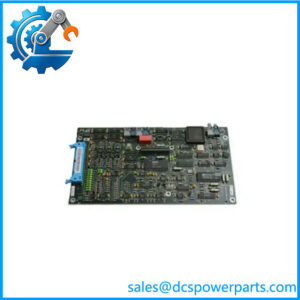
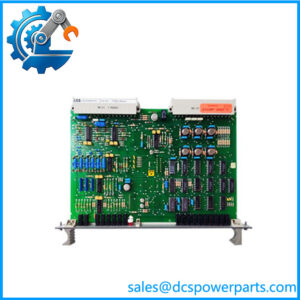
ABB DATX130 3ASC25H214 is a rotor feedback interface board designed for ABB industrial drive systems where accurate motor position and speed information is required for closed-loop control. The board receives feedback signals from motor sensing components and transfers processed feedback information to the drive control electronics, enabling accurate regulation of torque, speed, and motor operating behavior.
Within an ABB drive architecture, the ABB DATX130 is not a standalone controller or general-purpose I/O module. Its role is dedicated to feedback acquisition and signal conditioning. In applications using vector control or other closed-loop motor control methods, the drive controller depends on reliable rotor feedback information to maintain stable motor operation under changing load conditions.
The ABB 3ASC25H214 DATX130 belongs to ABB’s legacy drive electronics family and is typically found in industrial converter and motor-control equipment. The board is associated with feedback measurement functions rather than power switching itself. It works together with the main drive control electronics, power section, and motor feedback devices to complete the control loop.
For maintenance engineers, replacing a DATX130 3ASC25H214 requires more than matching the physical board dimensions. Feedback boards are closely linked to drive configuration, motor encoder/resolver type, parameter settings, and control firmware. A physically compatible board may still require verification of signal scaling, feedback channel configuration, and commissioning parameters before returning equipment to service.
Technical Specifications
| Parameter | Specification |
|---|---|
| Manufacturer | ABB |
| Model | DATX130 |
| Part Number | 3ASC25H214 |
| Product Type | Rotor Feedback Board |
| Primary Function | Motor position and speed feedback processing |
| Application | ABB industrial drives and converter systems |
| Feedback Role | Closed-loop motor control interface |
| Signal Resolution | 12-bit (reported) |
| Operating Voltage | 5 VDC (reported) |
| Signal Output Type | Analog (reported) |
| Temperature Coefficient | 0.01%/°C (reported) |
| Weight | Approx. 0.14 kg (board weight reported) |
| Mounting Type | Internal drive control board installation |
| System Compatibility | ABB drive platforms (application dependent) |
Reported technical data identifies the board as a DATX130 rotor feedback board with 12-bit signal resolution and 5 VDC operating voltage. Actual operating parameters depend on the installed drive system configuration.
Main Features and Advantages
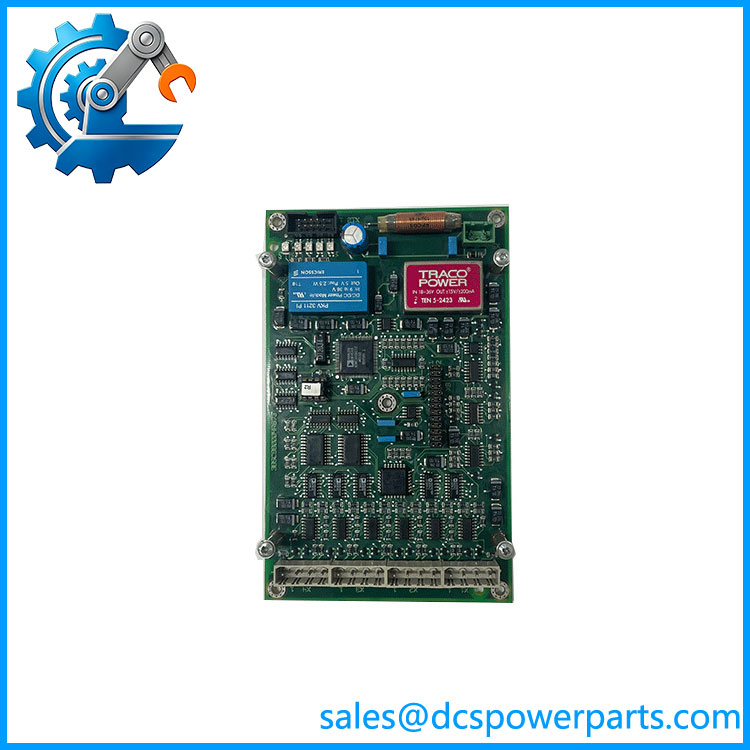
DATX130
Motor Feedback Signal Processing
The main purpose of ABB 3ASC25H214 is handling rotor feedback information required by closed-loop motor control systems.
Typical feedback sources may include:
- Encoders
- Resolvers
- Rotor position sensors
- Speed feedback devices
The feedback signal allows the drive controller to determine actual motor behavior and adjust output commands accordingly.
Closed-Loop Drive Control Support
Open-loop control can operate without direct rotor feedback, but many demanding industrial applications require feedback for improved control accuracy.
Applications requiring feedback include:
- High starting torque
- Precise speed regulation
- Rapid load changes
- Position-sensitive operation
- Heavy mechanical loads
The contributes to the feedback path that supports these operating requirements.
Integration With ABB Drive Electronics
The is designed as a board-level component within ABB drive architectures. It works together with:
- Drive control boards
- Power converter assemblies
- Motor feedback sensors
- Communication interfaces
It should be evaluated as part of the complete drive system rather than as an independent automation module.
Legacy Drive Maintenance Support
Many ABB drive installations remain in operation for long service periods. Maintaining a tested spare rotor feedback board can reduce downtime caused by:
- Feedback signal loss
- Sensor interface faults
- Aging PCB components
- Connector failures
Compact Board-Level Replacement
The design allows replacement at the circuit-board level instead of replacing a complete drive assembly. This approach is often practical for legacy equipment where the main converter hardware remains serviceable.
Application Scenarios
Variable Frequency Drives
Used in ABB drive systems requiring motor speed and position feedback.
Heavy Industrial Motors
Typical applications include:
- Steel processing equipment
- Hoists and cranes
- Mining machinery
- Large pumps
- Compressors
Closed-Loop Motor Control Systems
The board supports applications where motor feedback is required for accurate regulation.
Industrial Converter Systems
May be found in ABB legacy converter platforms where rotor feedback monitoring is part of the control architecture.
Related Components
- ABB DATX100 3ASC25H208
Pulse transformer board used in ABB power-electronics control applications. - ABB DATX133 3ASC25H219B
Related DATX-series feedback/control board. - ABB Drive Control Boards
Main processing boards responsible for drive regulation and communication. - ABB Motor Feedback Devices
Encoder/resolver equipment providing rotor position information.
Engineer’s Guide: Field Pitfalls
⚠️ Do Not Replace Based Only on DATX Series Number
DATX-series boards may look similar but perform different functions.
Examples:
| Model | Function |
|---|---|
| 3ASC25H214 | Rotor feedback board |
| DATX100 3ASC25H208 | Pulse transformer board |
These boards are not interchangeable.
⚠️ Verify Motor Feedback Type
Before installation, confirm:
- Encoder or resolver type
- Feedback voltage level
- Wiring configuration
- Drive parameter settings
- Sensor compatibility
A mismatched feedback interface can cause:
- Speed instability
- Incorrect motor direction
- Overcurrent trips
- Loss of synchronization
⚠️ Inspect Connectors and Signal Quality
Feedback problems are often caused by external issues.
Check:
- Encoder cable shielding
- Connector contacts
- Grounding
- Cable insulation
- Noise interference
- Sensor condition
⚠️ Refurbished Board Testing Requirements
A proper evaluation should include:
- Visual PCB inspection
- Connector inspection
- Power supply verification
- Feedback signal simulation
- Channel response testing
- Communication/interface verification
- Drive startup test where possible
A simple power-on check does not confirm correct feedback operation.
Frequently Asked Questions
What is ABB 3ASC25H214?
It is an ABB Rotor Feedback Board used in industrial drive systems for processing motor feedback signals.
Is a CPU board?
No. It is a dedicated feedback interface board.
What is the function of the board?
It receives and processes rotor feedback information used by the drive controller for closed-loop motor regulation.
Can replace DATX100?
No. DATX100 is a pulse transformer board, while is a rotor feedback board. Their functions are different.
What should be checked before replacement?
Verify:
- ABB part number: 3ASC25H214
- Type designation:
- Drive model
- Motor feedback device
- Firmware compatibility
- Parameter configuration
- Connector condition
- Functional feedback test
Recommended procurement description:
ABB Rotor Feedback Board, P/N 3ASC25H214, for ABB industrial drive systems — verify drive model, motor feedback type, and configuration compatibility before replacement.