Description
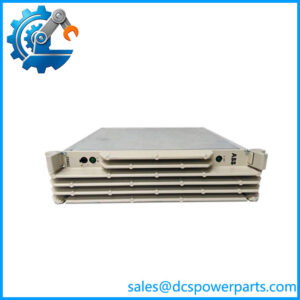
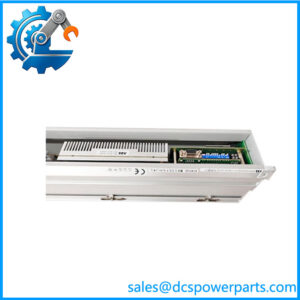
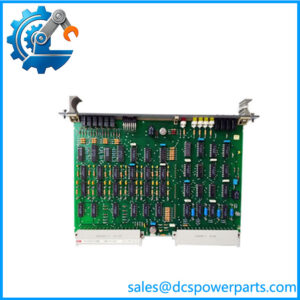
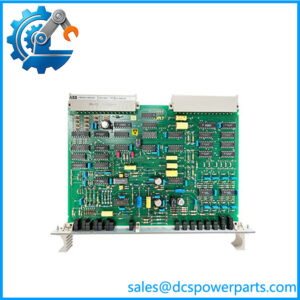
ABB CI867AK01 3BSE092689R1 Modbus TCP Communication Interface
Product Overview
The ABB CI867AK01 3BSE092689R1 is a Modbus TCP communication interface for ABB AC 800M controllers. It provides the Ethernet communication path required to exchange Modbus TCP data between an AC 800M controller and external Ethernet-based equipment. ABB identifies the CI867A as a single-channel Ethernet interface supporting both Modbus TCP master and slave functionality, with a transmission rate of 10/100 Mbps.
Architecturally, the ABB CI867AK01 3BSE092689R1 belongs to the AC 800M CEX-Bus communication interface family. The CI867A expansion unit contains CEX-Bus logic, the communication electronics, and a DC/DC converter that derives the required internal voltages from the +24 V supply through the CEX-Bus. The Ethernet connection is intended to pass through an Ethernet switch rather than functioning as a direct point-to-point controller interface.
One revision detail deserves attention during procurement. CI867A is the later single-channel version of the CI867 family. ABB specifically states that the earlier CI867 could use two Ethernet ports, while CI867A uses only one Ethernet port at 100 Mbps. Therefore, CI867AK01 3BSE092689R1 should not be treated as a simple port-for-port replacement for every older CI867 installation without checking the controller configuration and network architecture.
For current AC 800M projects, ABB packages the CI867A together with the TP867 baseplate under article number 3BSE092689R1. ABB also identifies module redundancy and hot-swap support, which can be valuable when maintaining a running control system, although the actual replacement procedure still depends on the configured AC 800M architecture and site maintenance rules.
Product Introduction
When an AC 800M controller needs native Modbus TCP communication rather than a separate protocol gateway, the CI867A provides the dedicated CEX-Bus communication interface. It supports both master and slave operation and allows up to 70 slave and 8 master units per according to ABB’s current data sheet.
For a legacy replacement or DCS system upgrade, the software baseline matters just as much as the hardware label. ABB specifies compatibility with System 800xA 6.0.3.3, 6.1.1, and subsequent versions, along with the corresponding Compact Control Builder versions.
Key Technical Specifications
| Parameter | Value |
|---|---|
| Product Model | CI867AK01 |
| ABB Article Number | 3BSE092689R1 |
| Manufacturer / Brand | ABB |
| Product Family | AC 800M / Compact Product Suite |
| Product Type | Modbus TCP Communication Interface |
| Communication Protocol | Modbus TCP |
| Communication Mode | Master / Slave |
| Number of Ethernet Channels | 1 |
| Transmission Speed | 10/100 Mbps |
| Ethernet Operation | Full duplex at 100 Mbps on Ch1 |
| Ethernet Connector | RJ-45 female, 8-pin |
| Bus Interface | AC 800M CEX-Bus |
| Maximum Units on CEX-Bus | 12 |
| Module Redundancy | Yes |
| Line Redundancy | No |
| Hot Swap | Yes |
| HI Controller Support | Yes |
| Maximum Slave Units | 70 per |
| Maximum Master Units | 8 per |
| Operating Temperature | 0 to +55°C (+32 to +131°F) |
| Storage Temperature | -40 to +70°C (-40 to +158°F) |
| Relative Humidity | 5–95%, non-condensing |
| Protection Class | IP20 |
| Maximum Operating Altitude | 2000 m |
| Corrosion Protection | G3, ISA 71.04 |
| Width | 59 mm |
| Height | 185 mm |
| Depth | 127.5 mm |
| Weight Including Base | 700 g |
| Standard Package | communication interface + TP867 baseplate |
ABB’s current data sheet provides the communication, environmental, dimensional, redundancy, and connection specifications above.
Major Features / Practical Advantages
Native Modbus TCP connectivity
The primary purpose of the CI867AK01 is straightforward: it gives an AC 800M controller a dedicated Modbus TCP communication interface for external Ethernet devices. Modbus TCP retains the request-response model of Modbus while using standard Ethernet and TCP/IP networking.
In an operating plant, that can eliminate an additional protocol-conversion layer when integrating compatible Modbus TCP equipment. Typical engineering targets can include third-party PLCs, instrumentation gateways, packaged equipment controllers, and other Ethernet devices that expose process data through Modbus TCP.
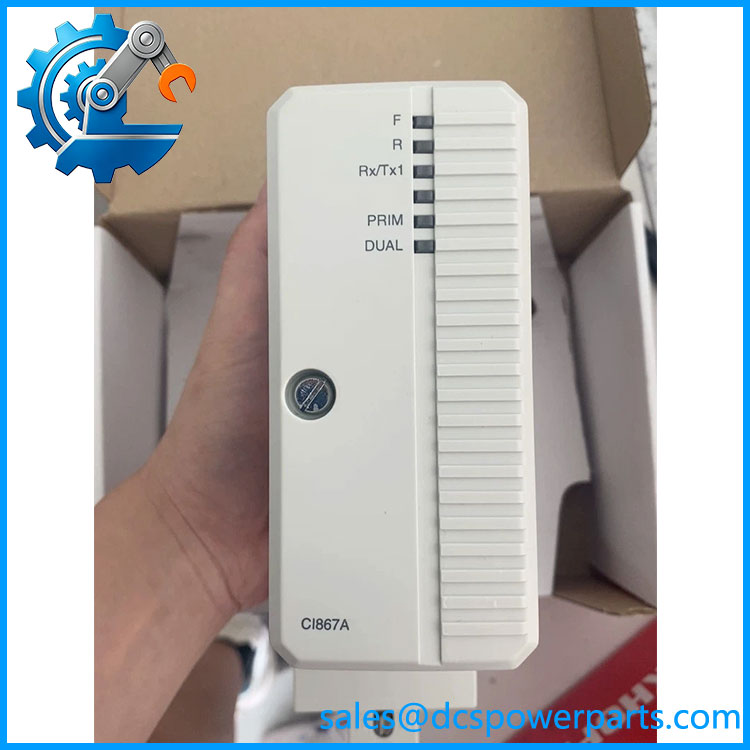
CI867AK01
Master and slave operation
The supports both Modbus TCP master and slave functionality. That matters during system design because the AC 800M controller can participate in different communication arrangements rather than being restricted to one fixed role. ABB specifies a maximum of 70 slave units and 8 master units per .
The actual practical limit of a project is not necessarily the catalog maximum. Register count, polling intervals, controller execution load, network traffic, device response times, and application architecture still need to be considered during configuration.
Single 100 Mbps Ethernet channel
uses one Ethernet communication channel. ABB specifically contrasts this with the earlier CI867, which could use two Ethernet ports operating at 100 Mbps and 10 Mbps. The channel supports 10/100 Mbps communication, with full-duplex 100 Mbps operation documented for Ch1.
This is the specification to check carefully when replacing an older CI867. If the existing network design relies on two physical Ethernet interfaces, the newer should not be assumed to reproduce that topology without engineering changes.
CEX-Bus integration
The is an AC 800M expansion unit rather than a standalone Ethernet gateway. ABB describes its internal architecture as including CEX-Bus logic, communication electronics, and a DC/DC converter supplied through the CEX-Bus from the +24 V system.
That makes the TP867 baseplate and AC 800M CEX-Bus architecture part of the compatibility check. Purchasing the communication module as an isolated Ethernet component misses an important part of the installation requirements.
Module redundancy
ABB specifies module redundancy for . This allows redundant configurations to be engineered where communication availability is important.
Do not confuse this with Ethernet line redundancy. ABB explicitly lists line redundancy as No. Redundant communication modules and redundant physical network paths are separate engineering functions.
Hot-swap support
ABB lists hot swap as supported for .
That is useful for maintenance planning, but a field engineer should still follow the approved AC 800M maintenance procedure. “Hot swap supported” does not mean every installation can have the module removed without considering controller state, redundancy configuration, network behavior, or process consequences.
Industrial environmental specification
The documented operating range is 0 to +55°C, with storage from -40 to +70°C. Relative humidity is specified at 5–95% non-condensing, with IP20 protection and G3 corrosion protection according to ISA 71.04.
The module is also documented for UL/cULus Class 1, Zone 2 hazardous-location applications and carries listed marine certification information in ABB’s current hardware documentation. Certification should still be checked against the exact installation and project approval requirements.
Software compatibility is a procurement requirement
ABB’s documentation states that is compatible with System 800xA 6.0.3.3, 6.1.1, and subsequent versions, with corresponding Compact Control Builder compatibility.
This is one of the easiest details to overlook when buying a spare. A physically correct does not automatically prove that an older controller project can use it. Check the installed controller type, 800xA version, Compact Control Builder version, controller firmware, and configured communication library before approving a replacement.
Related Products
- CI867K01 / CI867 — Earlier two-channel Modbus TCP interface family. It differs from in Ethernet-channel architecture and should not be assumed to have identical network behavior.
- TP867 — Baseplate supplied with . It provides the physical/CEX-Bus interface and Ethernet connector arrangement for the communication unit.
- CI871AK01 3BSE092693R1 — PROFINET IO communication interface for AC 800M. It serves a different Ethernet protocol and device ecosystem.
- CI873A 3BSE092695R1 — EtherNet/IP / DeviceNet communication interface. This is the appropriate family to investigate when the external network uses EtherNet/IP rather than Modbus TCP.
- CI868A 3BSE092691R1 — IEC 61850 communication interface supporting MMS and GOOSE functions for electrical/substation integration.
- CI854BK01 3BSE069449R1 — PROFIBUS-DP/V1 communication interface for AC 800M. It uses a different fieldbus architecture.
- CI853K01 3BSE018103R1 — Dual RS232-C communication interface used for protocols including Modbus RTU and COMLI. This is a serial rather than Ethernet communication solution.
- CI857 3BSE018144R1 — ABB INSUM communication interface for motor-management integration. It is not a general Modbus TCP replacement.
FAQ
Can I replace an older directly with ?
Not without checking the network architecture. The has one Ethernet channel, while ABB documents the earlier with two Ethernet ports. If the existing installation uses the second physical channel, the replacement may require network or configuration changes.
Can I hot-swap this module?
Yes, ABB lists Hot Swap: Yes for .
That does not eliminate the need to follow the site’s AC 800M maintenance procedure. For a redundant installation, verify which module is active, which unit is standby, and whether the configured network topology will tolerate the maintenance operation.
Does support Modbus RTU?
No. The documented protocol is Modbus TCP. If the field device exposes Modbus RTU over RS-232/RS-485, a CI853-family serial interface or another appropriate architecture should be evaluated instead. ABB identifies CI853K01 specifically for RS232-C applications including Modbus RTU.
Does have two Ethernet ports?
No. The has one Ethernet communication channel. ABB explicitly notes that this is different from the earlier , which could use two Ethernet ports.
Can I use it as a Modbus TCP master and slave?
Yes. ABB specifies Master/Slave operation. The current data sheet states a maximum of 70 slave units and 8 master units per . Actual project capacity should still be validated against controller and network loading.
Does this support firmware v3.1?
The model number does not establish a firmware revision by itself. Software compatibility should be checked against the installed AC 800M controller, System 800xA version, Compact Control Builder version, and configuration requirements.
Is compatible with all 800xA versions?
No. ABB’s documentation specifies compatibility beginning with System 800xA 6.0.3.3 and 6.1.1, with corresponding Compact Control Builder requirements, and subsequent versions.
For an older 800xA installation, verify the software baseline before purchasing a replacement.
Does the package include the baseplate?
ABB’s product catalog identifies as a package containing the communication interface and TP867 baseplate.
When buying used or surplus inventory, however, verify that the quoted physical package actually includes the TP867. A supplier’s listing can represent a module-only unit even when the original ABB article was supplied as a package.
Is module redundancy the same as Ethernet line redundancy?
No. ABB specifies module redundancy: Yes but line redundancy: No.
A redundant arrangement therefore should not automatically be described as a redundant Ethernet network. The physical switch and network topology remain separate engineering considerations.
Procurement Note
For ABB 3BSE092689R1, the most important checks are the AC 800M controller type, System 800xA and Compact Control Builder versions, CEX-Bus configuration, baseplate, Modbus TCP device count, and existing Ethernet topology.
Pay particular attention when replacing an older . The newer uses one Ethernet channel, whereas the earlier architecture could use two. A replacement that fits physically can therefore still require network engineering changes.
ABB specifies module redundancy and hot-swap capability, which makes suitable for architectures where communication availability and online maintenance are important. It does not, however, provide line redundancy by itself.
For new-surplus or refurbished procurement, verify the actual label , the presence and condition of the baseplate, RJ-45 connector condition, enclosure and terminal condition, and any available test documentation. For a safety- or production-critical AC 800M system, software compatibility should be confirmed before the spare is released for installation.