Description
Product introduction
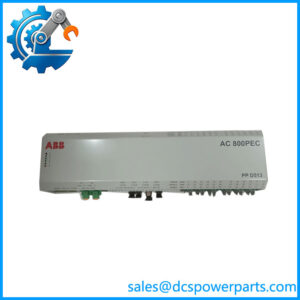
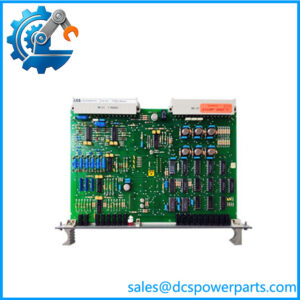
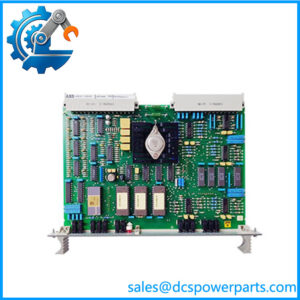
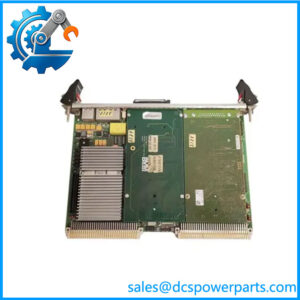
The ABB CBC11-P 3BDH000734R1 is an open-loop control module designed for discrete control tasks within a compatible ABB process automation system. Its documented applications include relay coupling, transmitter power supply, motor-drive control, and solenoid-actuator control. The module provides grouped galvanic isolation, which helps separate electrical groups and reduce unwanted interaction between circuits. The precise channel allocation and field wiring arrangement depend on the installed configuration and associated termination hardware.
In maintenance work, this module should be treated as part of a configured control system rather than as a generic relay-output card. Before installing a spare, check the existing module designation, software requirements, channel configuration, wiring accessories, and the host system’s documentation. A replacement may fit the assembly yet still require configuration checks before being returned to service. For procurement, request confirmation of the full part number and actual unit condition, particularly when sourcing surplus or refurbished stock.
Key technical specifications
| Specification | Details |
|---|---|
| Product model | CBC11-P |
| Order number | 3BDH000734R1 |
| Manufacturer | ABB |
| Product type | Open-loop control module |
| Automation platform | ABB process automation; verify exact system compatibility |
| Channel configuration | 7/14 channels, according to catalog description |
| Channel isolation | Galvanic isolation by group |
| Software reference | Version 1.31 and later, per listed description |
| Typical control applications | Relay coupling, transmitter supply, motor drives, solenoid actuators |
| Dimensions | 204 × 340 × 45 mm, reported in supplier listings |
| Weight | Approximately 0.69 kg, reported in supplier listings |
| Working voltage | Not independently verified |
| Communication protocol | Not established as a standalone communications module |
| Operating temperature | Confirm against the applicable ABB technical manual |
| Mounting / installation | Compatible ABB system assembly; confirm installation details |
| Accessories | Four CI 100/101 cable clamps and a cable clamp, as listed |
| Protection rating | Not verified |
Specification caution: Some reseller listings show inconsistent input/output counts. The more specific product description identifies 7/14-channel operation. Do not interpret other channel totals as verified CBC11-P specifications without an authoritative ABB data sheet.
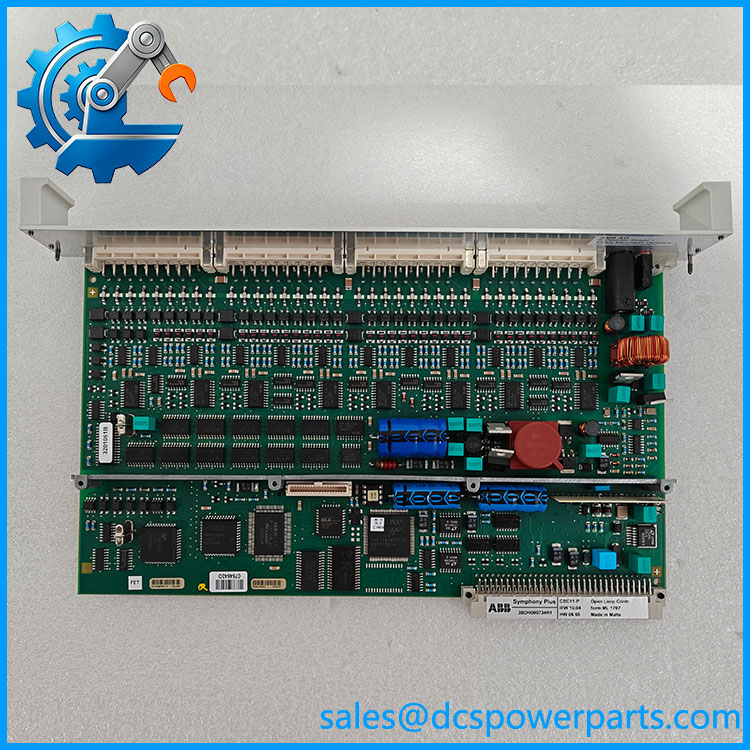
CBC11-P 3BDH000734R1
Application scenarios and common pain points
- Discrete actuator control: Supporting control signals for solenoid actuators and related field devices.
- Relay interface applications: Connecting control logic to relay-coupling circuits.
- Motor-drive interface tasks: Supporting designated control functions associated with compatible drive equipment.
- Transmitter power applications: Supporting the transmitter supply function described for the module.
- Maintenance and spare-parts planning: Replacing a failed module while preserving the original system’s configuration and wiring arrangement.
The principal field risk is assuming that the CBC11-P is interchangeable with a conventional digital I/O card. Its open-loop control function, grouped isolation, software requirements, and accessory arrangement should all be checked before substitution.
Related products
These ABB modules are relevant when checking neighboring functions in the same broader product family. They are not confirmed drop-in replacements for CBC11-P.
| Model | Listed function | Relationship |
|---|---|---|
| CBO 22-P — 3BDH000736R1 | Binary output module | Related discrete output function |
| CFI 10-P — 3BDH000735R1 | Frequency input module | Different signal-acquisition function |
| CTI 21-P — 3BDH000740R1 | Temperature input module | Temperature measurement |
| CTI 21-P Ex — 3BDH000741R1 | Ex temperature input module | Temperature input for applicable hazardous-area systems |
| CCF 10-2 — 3BDH000756 | Coupling module | Related interface function |
Engineer’s guide: field pitfalls to avoid
- Check the software and system generation. The product description references software Version 1.31 and later. Confirm the actual compatibility requirements for the installed system before commissioning.
- Verify the wiring accessories. Check whether the required CI 100/101 clamps and cable clamp are included. Missing accessories can delay a replacement even when the module itself is correct.
- Confirm the actual channel configuration. Do not base wiring changes on reseller tables with conflicting I/O counts. Use the ABB documentation and the site’s approved drawings.
Frequently asked questions
Q1: What is the ABB CBC11-P 3BDH000734R1?
It is an open-loop control module for compatible ABB process automation equipment.
Q2: What does the module control?
Listed applications include relay coupling, transmitter power supply, motor drives, and solenoid actuators. The precise application depends on the system design.
Q3: What does 7/14-channel operation mean?
The product description specifies 7/14-channel operation. The exact channel arrangement should be confirmed from the relevant ABB manual and configuration.
Q4: Does the provide galvanic isolation?
Yes. The catalog description specifies galvanic isolation by group. Check the technical documentation for the applicable isolation boundaries and wiring requirements.
Q5: Which software version does it support?
The listed product description references software Version 1.31 and later. Verify the exact firmware and system compatibility requirements before replacing a module.
Q6: What accessories should be checked?
Supplier catalog information lists four CI 100/101 cable clamps and a cable clamp. Confirm the required accessories against the original installation documentation.
Q7: What should be checked before purchasing a replacement?
Confirm the full order number, host system, software compatibility, channel configuration, accessories, physical condition, and available functional test evidence. For refurbished units, ask what was tested rather than relying on a generic “tested” label.